

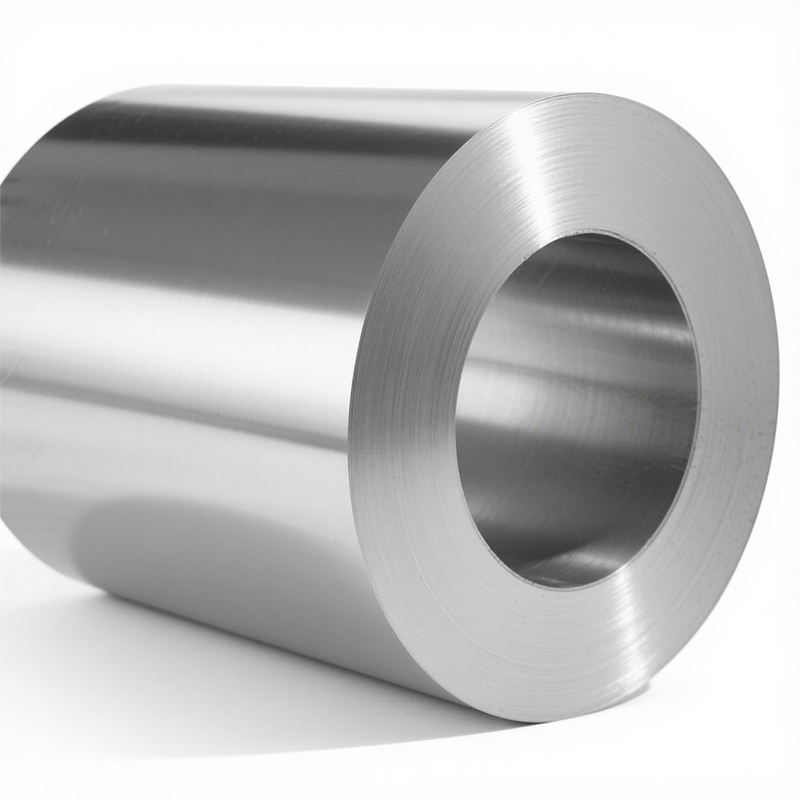
Producing stainless steel foil is not simply a matter of pressing ordinary sheet metal until it becomes thinner. Transforming a hot-rolled stainless steel coil into precision foil as thin as 0.01 mm requires controlled metallurgy, multiple rolling stages, repeated heat treatment, specialized machinery, and strict quality inspection.
At extremely low thicknesses, even a small variation in rolling pressure, tension, temperature, lubrication, or surface cleanliness can affect the final material. Problems such as waviness, edge cracking, surface marks, inconsistent hardness, and thickness deviation become increasingly difficult to control as the foil gets thinner.
This is why high-quality stainless steel foil manufacturing depends on experience, advanced equipment, and continuous process monitoring.
Ultra-thin foil is now used in electronics, batteries, medical equipment, aerospace components, heat-treatment systems, precision stamping, shielding, sensors, and many other demanding applications.
For a focused overview of the complete production process, read the guide explaining how stainless steel foil is made.
What Makes Stainless Steel Foil Manufacturing Different?
Standard stainless steel sheet and plate are manufactured in relatively thick dimensions. Stainless steel foil, however, may be produced at thicknesses ranging from approximately 0.30 mm down to 0.01 mm.
As thickness decreases, the production challenge increases.
Manufacturers must control:
- Thickness variation
- Strip tension
- Flatness
- Edge quality
- Surface roughness
- Mechanical properties
- Coil shape
- Material hardness
- Width tolerance
- Internal stress
A small defect that might be acceptable in thick sheet could make ultra-thin foil unusable in a precision application.
For example, electronic stamping requires consistent thickness and flatness so that dies operate correctly. Battery components may require uniform foil dimensions to support stable performance. Medical applications demand clean surfaces and reliable corrosion resistance.
This level of precision requires far more than conventional rolling.
Understanding Stainless Steel as a Raw Material
Stainless steel is an iron-based alloy containing chromium and, depending on the grade, nickel, molybdenum, carbon, manganese, silicon, and other elements.
Chromium helps create a protective passive oxide layer on the surface. This layer gives stainless steel its characteristic resistance to oxidation and corrosion.
Different alloying elements influence:
- Corrosion resistance
- Strength
- Ductility
- Work-hardening behavior
- Heat resistance
- Weldability
- Formability
- Magnetic characteristics
Choosing the correct alloy is therefore the first important decision in the manufacturing process.
Common Stainless Steel Grades Used for Foil
Manufacturers select foil grades according to the performance requirements of the final component.
Common choices include:
301 Stainless Steel
301 work-hardens rapidly and can achieve high strength after cold rolling. It is widely used for springs, clips, connectors, fasteners, and precision stamped components.
A detailed explanation is available in the guide on what 301 stainless steel foil is.
304 Stainless Steel
304 offers an excellent balance of corrosion resistance, formability, availability, and cost. It remains one of the most widely used grades for general industrial foil and precision strip.
Manufacturers requiring custom dimensions can consult an experienced 304 stainless steel strip supplier.
304L Stainless Steel
304L contains less carbon than standard 304. The lower carbon content reduces the risk of carbide precipitation during welding and improves corrosion performance around welded areas.
316 Stainless Steel
316 contains molybdenum, which improves resistance to chloride-related corrosion. It is commonly considered for chemical-processing, food, coastal, and marine environments.
Buyers can review an available 316 stainless steel coil product.
316L Stainless Steel
316L combines molybdenum-enhanced corrosion resistance with low carbon content. This makes it suitable for welded components and demanding corrosive environments.
For coastal and seawater exposure, read whether 316L is better than 304 for marine applications.
430 Stainless Steel
430 is a ferritic stainless steel that contains chromium but little or no nickel. It is generally more economical than austenitic grades but offers lower corrosion resistance in aggressive environments.
Step 1: Melting and Alloy Preparation
The manufacturing process begins with carefully selected raw materials.
These may include:
- Iron
- Recycled stainless steel
- Chromium
- Nickel
- Molybdenum
- Manganese
- Other alloying elements
The materials are melted in a furnace and refined to achieve the required chemical composition.
During refining, the producer controls:
- Carbon level
- Sulfur
- Phosphorus
- Oxygen
- Nitrogen
- Alloy balance
- Inclusion content
Accurate chemical control is important because small compositional differences can influence rolling behavior, annealing response, corrosion resistance, and final mechanical properties.
Once the desired composition is achieved, the molten steel is cast into slabs.
Step 2: Slab Reheating and Hot Rolling
The cast slabs are too thick for direct foil production. They must first be reheated and passed through a hot rolling mill.
Hot rolling reduces the slab into a much thinner strip while the metal remains at an elevated temperature.
During this stage, the material experiences:
- Significant thickness reduction
- Grain deformation
- Shape development
- Width control
- Coil formation
The result is a hot-rolled stainless steel coil that may measure several millimeters thick.
This material is still far thicker than foil, but it provides the starting point for the precision cold-rolling process.
Manufacturers purchasing or processing continuous material can review available stainless steel coil products.
Step 3: Annealing and Pickling the Hot-Rolled Coil
Hot rolling creates oxide scale on the stainless steel surface.
This dark surface layer must be removed before precision cold rolling begins. If scale remains on the strip, it may become pressed into the surface and create defects such as scratches, pits, and roughness.
The hot-rolled coil therefore undergoes annealing and pickling.
Annealing
Annealing helps create a more uniform structure and prepares the material for additional deformation.
Pickling
Pickling uses controlled chemical solutions to remove:
- Oxide scale
- Heat discoloration
- Surface contamination
- Residual iron particles
- Processing deposits
After pickling, the strip is rinsed and prepared for cold rolling.
Surface cleanliness at this stage strongly influences the final appearance of ultra-thin foil.
Step 4: Primary Cold Rolling
Cold rolling takes place below the recrystallization temperature of the metal, generally close to room temperature.
The stainless steel strip passes through precision rolls that gradually reduce its thickness.
Manufacturers do not normally attempt the full reduction in one pass. Instead, they use multiple controlled passes.
Cold rolling improves:
- Thickness accuracy
- Surface finish
- Strength
- Hardness
- Flatness
- Dimensional consistency
However, cold rolling also increases internal stress and reduces ductility.
As the material becomes harder, additional rolling becomes more difficult. This is why cold reduction must be combined with intermediate annealing.
How Rolling Mills Control Foil Thickness
Modern foil rolling mills use a combination of mechanical systems and electronic sensors.
Important controls include:
- Roll gap
- Rolling force
- Entry tension
- Exit tension
- Strip speed
- Lubrication
- Roll temperature
- Coil alignment
- Thickness feedback
Automatic gauge-control systems continuously measure the strip and adjust the rolling conditions.
At ultra-thin dimensions, the manufacturer may need to control variation within only a few microns.
This degree of accuracy is essential because a deviation that appears small in millimeters can represent a large percentage of the total foil thickness.
Step 5: Intermediate Annealing
Cold rolling causes work hardening.
As the strip becomes harder and less ductile, continuing to roll it without heat treatment may cause:
- Cracking
- Edge splitting
- Poor flatness
- Excessive rolling force
- Reduced elongation
- Unstable mechanical properties
Intermediate annealing restores ductility.
During annealing, the strip is heated under controlled conditions. Recovery and recrystallization reduce internal stress and create a more workable grain structure.
The material can then return to the rolling mill for further thickness reduction.
Several rolling-and-annealing cycles may be required before the foil reaches its target thickness.
The number of cycles depends on:
- Starting thickness
- Final thickness
- Alloy grade
- Required temper
- Surface specification
- Mechanical-property targets
Step 6: Secondary and Precision Cold Rolling
After intermediate annealing, the strip undergoes additional cold rolling.
Each stage moves the material closer to the final foil dimension.
As the material becomes thinner, controlling the process becomes increasingly difficult. Ultra-thin foil may respond strongly to small changes in:
- Tension
- Roll alignment
- Lubrication
- Temperature
- Coil shape
- Surface condition
Specialized multi-roll mills are often used because smaller work rolls can apply controlled pressure more effectively than large conventional rolls.
Sendzimir-type or cluster rolling mills are commonly associated with high-reduction stainless steel strip and foil production.
These mills support:
- High rolling pressure
- Small work-roll diameter
- Improved thickness control
- Better flatness
- Consistent surface quality
Step 7: Rolling Stainless Steel Foil Down to 0.01 mm
Producing stainless steel foil at 0.01 mm is one of the most demanding stages in the manufacturing process.
At this dimension, the material is only a small fraction of a millimeter thick. It may wrinkle, stretch, tear, or develop shape defects if tension and rolling conditions are not precisely controlled.
The mill must monitor:
- Thickness across the width
- Thickness along the coil length
- Strip tension
- Edge condition
- Center buckle
- Edge wave
- Surface marks
- Roll vibration
- Coil alignment
Advanced inspection and control systems make continuous adjustments during rolling.
For more information about ultra-thin manufacturing limits, read the guide explaining how thin stainless steel foil can actually get.
Step 8: Final Annealing and Temper Control
The final mechanical properties of stainless steel foil depend on the amount of cold work and the final heat-treatment condition.
Some applications require soft, highly formable foil. Others need hard or spring-temper material.
Manufacturers may supply foil in conditions such as:
- Annealed
- Quarter hard
- Half hard
- Three-quarter hard
- Full hard
- Extra hard
- Custom temper
Final annealing may be used to restore softness and ductility.
If higher strength is required, the manufacturer may retain a controlled amount of cold work instead of fully annealing the foil.
The final temper influences:
- Tensile strength
- Yield strength
- Elongation
- Springback
- Formability
- Stamping behavior
- Fatigue performance
Step 9: Surface Finishing
The surface finish of stainless steel foil affects appearance, cleanability, corrosion performance, bonding, coating, and forming.
Common finishes include:
| Surface finish | Typical characteristics | Common uses |
|---|---|---|
| 2B | Smooth, lightly reflective | General industrial components |
| BA | Bright and reflective | Electronics and medical applications |
| Matte | Low reflectivity | Functional industrial uses |
| Precision rolled | Controlled smoothness | Batteries and precision stamping |
| Polished | Enhanced appearance | Decorative components |
| Custom roughness | Application-specific texture | Bonding or coating processes |
Surface quality becomes especially important in ultra-thin foil because scratches or pits may weaken the material or interfere with precision manufacturing.
Step 10: Tension Leveling and Flatness Correction
Rolling can introduce residual stress that affects strip shape.
Common flatness problems include:
- Edge wave
- Center buckle
- Coil set
- Crossbow
- Camber
- Uneven tension
Tension leveling helps correct these issues by stretching and bending the strip under controlled conditions.
The goal is to produce foil that remains stable when uncoiled and processed by the customer.
Flatness is particularly important for:
- Precision stamping
- Electronic components
- Laminating
- Coating
- Automated feeding
- Battery manufacturing
- Sensor production
Step 11: Slitting the Master Coil
After the foil reaches the required thickness and condition, the master coil may be slit into narrower widths.
Precision slitting systems use circular knives to separate the material into customer-specified dimensions.
Slitting must control:
- Width tolerance
- Edge burr
- Edge shape
- Camber
- Coil tension
- Winding alignment
Thin foil is highly sensitive to poor slitting conditions. Excessive burrs or edge damage may cause cracking during forming or stamping.
Manufacturers can explore available stainless steel strip products for narrow-width applications.
A separate review of precision stainless steel strip specifications can help buyers compare grades, widths, tempers, and thicknesses.
Step 12: Rewinding and Coil Formation
After slitting, the narrow foil is rewound into coils.
Rewinding must maintain even tension to avoid:
- Telescoping
- Edge damage
- Loose winding
- Wrinkles
- Coil collapse
- Surface rubbing
The winding core, coil diameter, and packaging method may be customized according to the customer’s equipment.
Some customers require small precision coils, while others need large coils for automated production lines.
Step 13: Cleaning and Degreasing
Rolling oils and processing residues may remain on the foil surface.
Depending on the final application, the manufacturer may clean or degrease the material before shipment.
This is especially important for:
- Medical components
- Food-processing equipment
- Electronics
- Adhesive bonding
- Coating
- Welding
- Vacuum systems
- Precision stamping
Food-related manufacturers can review the guide to selecting stainless steel foil for food applications.
Cleaning requirements depend on the intended use, surface finish, and customer specification.
Step 14: Quality Inspection
High-quality stainless steel foil must undergo detailed inspection before shipment.
Typical tests include:
Chemical Composition Testing
Spectrometers or laboratory methods verify that the material matches the required stainless steel grade.
Thickness Measurement
Precision gauges measure foil thickness across the width and along the coil length.
Width Measurement
Inspectors confirm that slit widths meet the required tolerance.
Tensile Testing
Tensile tests determine strength, yield behavior, and elongation.
Hardness Testing
Hardness testing confirms temper and cold-work condition.
Surface Inspection
Optical or automated systems identify:
- Scratches
- Pits
- Pinholes
- Stains
- Roll marks
- Contamination
- Surface inconsistency
Flatness Inspection
The coil is checked for edge wave, center buckle, camber, and other shape defects.
Edge Inspection
Slit edges are inspected for burrs, cracks, and deformation.
Why Thickness Tolerance Is Critical
Thickness consistency directly affects the performance of ultra-thin foil.
In electronics, inconsistent material may create unstable contact or shielding performance.
In stamping, thickness variation can change forming pressure and increase tool wear.
In battery systems, non-uniform material may affect assembly consistency.
In medical manufacturing, dimensional variation can affect component fit and reliability.
Because of these risks, precision foil manufacturers monitor thickness continuously rather than relying only on occasional manual measurements.
Typical Stainless Steel Foil Thicknesses and Applications
| Thickness | Example applications |
|---|---|
| 0.30 mm | Industrial forming and fabrication |
| 0.20 mm | Automotive and mechanical components |
| 0.10 mm | Electronics, shielding, and stamped parts |
| 0.05 mm | Precision springs and formed components |
| 0.03 mm | Medical and sensor applications |
| 0.02 mm | Battery and electronic components |
| 0.01 mm | High-precision electronics and specialized engineering |
These examples are general. The actual thickness must be selected according to strength, forming method, operating temperature, fatigue, corrosion resistance, and dimensional requirements.
Applications of Ultra-Thin Stainless Steel Foil
Electronics
Stainless steel foil is used in:
- Connectors
- Shielding
- Sensors
- Precision contacts
- Flexible components
- Micro-stamped parts
Batteries and Energy Storage
Ultra-thin foil may be used in specialized battery structures, current-collection systems, separators, and precision support components.
Medical Equipment
Medical manufacturers use stainless steel foil for:
- Diagnostic devices
- Surgical components
- Precision springs
- Instrument parts
- Sterilization-compatible components
Aerospace
Aerospace applications benefit from stainless steel foil’s:
- Strength-to-weight ratio
- Temperature resistance
- Corrosion resistance
- Dimensional stability
Automotive Manufacturing
Automotive manufacturers use thin stainless material for:
- Sensors
- Gaskets
- Heat shields
- Springs
- Electrical components
- Exhaust-related systems
Food Processing
Food equipment may use stainless steel foil for liners, heat barriers, machine components, gaskets, and corrosion-resistant surfaces.
Marine and Coastal Applications
316 and 316L foil may be considered where chloride resistance is important.
Industrial Heat Treatment
Stainless steel foil can be used as a protective wrap to reduce oxidation and scaling during furnace processing.
For detailed technical information, consult the stainless steel foil heat-treatment guide.
The required gauge depends on the size and geometry of the wrapped component. Read the guide on choosing stainless steel foil thickness for heat-treat wrap.
Stainless Steel Foil vs Aluminum Foil
Aluminum foil is lighter, softer, and generally less expensive. It is widely used in packaging and household applications.
Stainless steel foil offers several advantages in demanding industrial environments:
- Higher strength
- Better wear resistance
- Higher temperature capability
- Better puncture resistance
- Longer service life
- Stronger corrosion resistance in selected environments
However, the correct material depends on the application.
Aluminum foil should not automatically be substituted for stainless steel foil in high-temperature or high-strength applications.
For a related household-use topic, read whether aluminum foil can be used to clean stainless steel.
How Product Form Affects Manufacturing
Stainless steel may be supplied as foil, strip, sheet, or coil.
Foil
Foil is selected for ultra-thin, lightweight, flexible, and high-precision applications.
Explore the available stainless steel foil product range.
Strip
Strip is generally used for narrow-width stamping, springs, clips, fasteners, gaskets, and mechanical components.
Coil
Coil supports continuous production processes such as roll forming, slitting, stamping, coating, and automated feeding.
The complete stainless steel product catalog allows buyers to compare different forms and grades.
Additional product listings are available for customers evaluating foil, strip, and coil options.
Packaging and Storage
Ultra-thin stainless steel foil must be protected during transportation and storage.
Packaging may include:
- Moisture-resistant wrapping
- Protective film
- Edge protectors
- Rigid cartons
- Wooden cases
- Desiccants
- Sealed plastic packaging
The material should be stored:
- In a clean environment
- Away from water
- Away from corrosive chemicals
- Off the floor
- Away from carbon-steel dust
- In the original packaging until use
Poor handling can damage the foil even when the manufacturing quality is excellent.
How to Choose a Stainless Steel Foil Manufacturer
Supplier selection has a direct effect on final product quality.
A qualified manufacturer should provide:
- Verified alloy composition
- Precise thickness control
- Consistent width tolerances
- Multiple temper options
- Surface-finish selection
- Custom slitting
- Flatness control
- Mill test certificates
- Batch traceability
- Technical support
- Secure export packaging
Buyers should clearly define:
- Grade
- Thickness
- Width
- Temper
- Surface finish
- Edge condition
- Coil weight
- Core diameter
- Application
- Required tolerance
The main Stainless Steel Foil website provides information about stainless steel foil, strip, coil, grades, and custom manufacturing options.
Final Summary
Stainless steel foil manufacturing is a multi-stage precision process.
The material begins as carefully formulated stainless steel that is cast into slabs and transformed into hot-rolled coil. The coil is then annealed, pickled, cold rolled, heat treated, precision rolled, leveled, slit, cleaned, inspected, and packaged.
Producing foil down to 0.01 mm requires:
- High-precision rolling mills
- Repeated annealing cycles
- Automatic thickness control
- Careful tension management
- Surface-quality monitoring
- Accurate slitting
- Extensive testing
Every stage influences the final foil’s strength, flatness, corrosion resistance, surface condition, and dimensional consistency.
For electronics, batteries, medical devices, aerospace components, heat-treatment systems, and precision manufacturing, selecting an experienced supplier is essential.
For assistance with grade, thickness, temper, finish, or custom dimensions, contact the stainless steel technical team.
Frequently Asked Questions
How is stainless steel foil made?
Stainless steel foil is produced through hot rolling, pickling, repeated cold rolling, intermediate annealing, precision rolling, surface finishing, slitting, and quality inspection.
Can stainless steel foil be manufactured at 0.01 mm?
Yes. Specialized multi-roll mills and automated thickness-control systems can produce foil at approximately 0.01 mm for demanding precision applications.
Why is intermediate annealing necessary?
Cold rolling makes stainless steel harder and less ductile. Intermediate annealing restores ductility so the material can undergo further thickness reduction without cracking.
Which stainless steel grade is best for foil?
The best grade depends on the application. 301 is used for high-strength spring components, 304 for general industrial purposes, and 316 or 316L for stronger corrosion resistance.
What is the difference between foil and strip?
Foil normally refers to ultra-thin material, while strip generally describes narrow-width material that may be thicker and used for stamping, springs, clips, and formed components.
Why is thickness accuracy important?
Thickness affects strength, forming behavior, electrical performance, stamping pressure, fit, fatigue life, and product consistency.
What surface finishes are available?
Common options include 2B, bright annealed, matte, polished, precision rolled, and custom surface roughness.
Is stainless steel foil suitable for food equipment?
Yes, selected grades and finishes may be suitable for food-processing applications. Material certification, cleanability, corrosion resistance, and applicable food-contact requirements must be considered.
Is 316L foil suitable for marine environments?
316L generally performs better than 304 in chloride-rich coastal and marine environments because it contains molybdenum and has low carbon content.
How should stainless steel foil be stored?
Store it in clean, dry packaging, away from moisture, corrosive chemicals, carbon-steel contamination, and physical damage.