
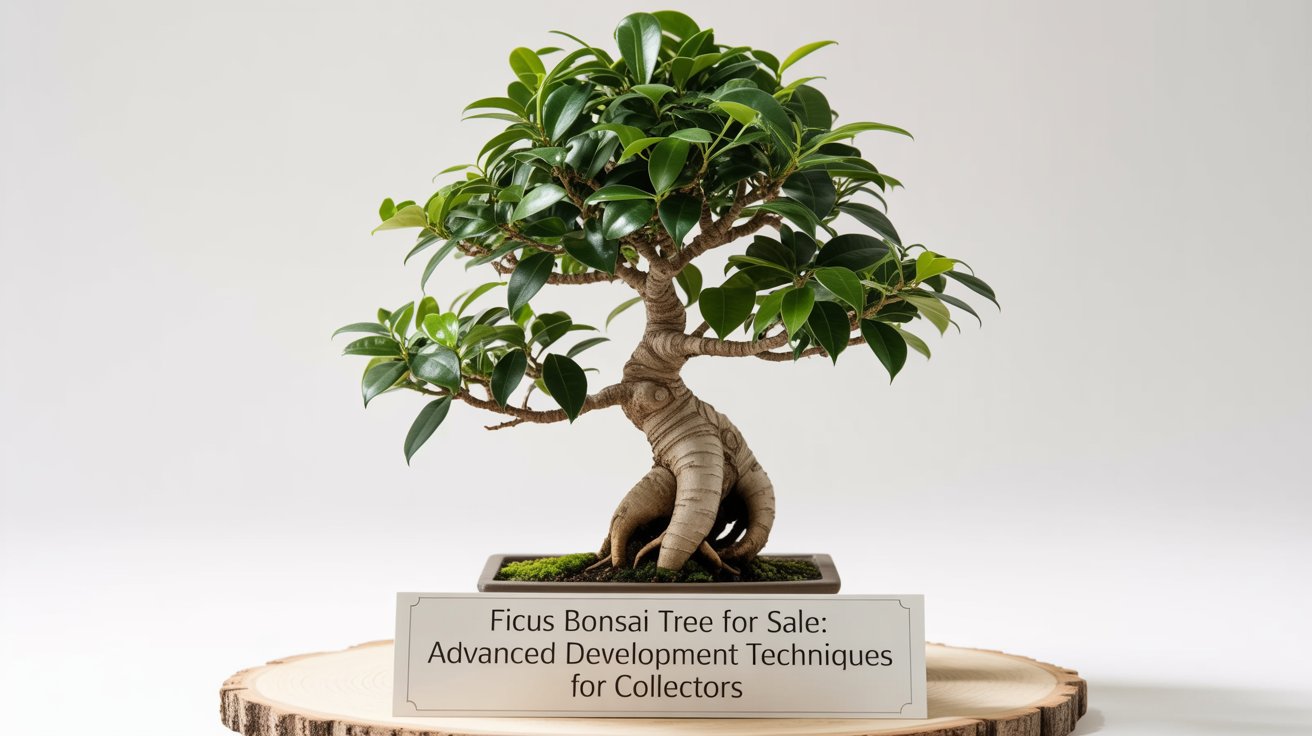
For experienced bonsai collectors who have moved beyond basic care and maintenance into the realm of active artistic development, understanding the advanced techniques used to develop exceptional ficus bonsai tree for sale quality specimens is essential. The most impressive ficus bonsai trees in commercial and collector markets did not arrive at their current state of development by accident. They are the result of years or decades of deliberate, skilled cultivation work guided by a clear artistic vision.
Developing Trunk Girth and Character
The trunk is the most important element of any bonsai composition, and developing a trunk with impressive girth, natural taper, and interesting character is the primary development objective for most focus bonsai in their early and middle stages of cultivation.
Sacrifice branch cultivation is the most effective technique for accelerating trunk development in a ficus bonsai tree for sale quality specimens. A sacrifice branch is a branch that is allowed to grow without pruning restriction, drawing large amounts of energy from the tree’s photosynthesis and directing that energy into thickening the trunk below the branch. A single vigorous sacrifice branch can add significant girth to the trunk section below its attachment point within a single growing season.
The placement of the sacrifice branch determines where trunk thickening is concentrated. A sacrifice branch positioned low on the trunk near the nebari thickens the base of the trunk most aggressively. A branch positioned higher thickens the trunk above the nebari but below the branch attachment point. Strategic use of multiple sacrifice branches at different heights can create natural, gradual taper in the trunk section that gives the finished tree the convincing illusion of great age.
Ground planting or large container growing accelerates trunk development in young ficus bonsai by removing the root restriction of a bonsai pot and allowing unrestricted root system development. Trees grown in the ground or in large nursery containers can develop trunk girth two to five times faster than the same trees maintained in bonsai pots. Periodically lifting the tree, pruning the root system to encourage surface root development, and replacing it in the ground or container extends the trunk development phase while refining the nebari.
Aerial Root Development Techniques
The aerial root systems that are the most distinctive and commercially valuable feature of the most impressive ficus bonsai tree for sale specimens require specific cultivation techniques to develop effectively.
High humidity is the fundamental requirement for aerial root initiation and growth. In the natural rainforest environment where Ficus species evolved their aerial root behavior, atmospheric humidity often exceeds eighty percent throughout the growing season. Replicating this humidity level around the tree during the growing season triggers the most vigorous aerial root production.
Humidity tents constructed from clear plastic sheeting draped over the tree, with the base sealed around the pot to create a humid microenvironment around the foliage and branches, create effective aerial root development chambers for individual trees or small collections. The interior of the tent should be misted daily to maintain high humidity, and the temperature inside should be warm, ideally above twenty-five degrees Celsius, to further stimulate aerial root growth.
Sphagnum moss wrapping applied to branches from which aerial root emergence is desired creates localized high humidity conditions at specific points on the tree. Wrapping a branch section with moist sphagnum moss held in place with transparent plastic wrap or breathable fabric creates the conditions that stimulate aerial root emergence from the wrapped section. This technique gives the bonsai artist precise control over where new aerial roots initiate.
Canopy Refinement Through Pruning
The refined, dense canopy that distinguishes a high-quality ficus bonsai tree for sale from a more casually maintained tree is developed through years of consistent pruning that progressively increases the number of branches and the density of foliage at the outer canopy surface.
The pruning principle for canopy refinement is deceptively simple: prune new shoots back to one or two leaves as soon as they extend two or three nodes beyond the desired canopy surface. Each pruning cut stimulates the development of two or more new shoots from the buds below the cut, progressively doubling the number of branch tips with each pruning cycle. After multiple years of consistent application of this principle, the number of branch tips in the outer canopy reaches the density needed to create the fine-textured, convincingly tree-like silhouette that distinguishes mature quality bonsai.
Leaf size reduction naturally accompanies the increase in branching density achieved through repeated pruning cycles. As the number of leaves on the tree increases, each individual leaf receives less light and the tree responds by producing smaller leaves. This natural reduction in leaf size as canopy density increases is one of the most satisfying aspects of long-term ficus bonsai development.
Conclusion
Developing a ficus bonsai tree for sale quality specimen to its full potential is a long-term artistic and horticultural project that rewards patience, skill, and consistent application of the right techniques at the right times. The most impressive ficus bonsai trees available in the commercial market represent decades of this kind of dedicated development work, which is reflected in their prices and their enduring appeal to serious collectors. Wulala Garden cultivates its premium ficus bonsai collection using these advanced development techniques, producing trees with genuine artistic merit and significant collector appeal.
