
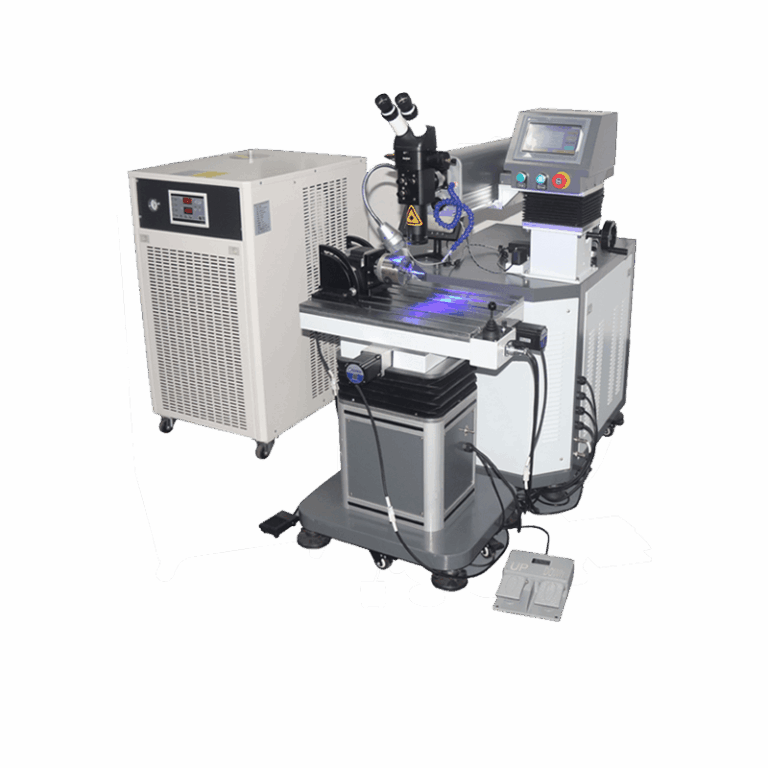
Laser welding represents one of the most technically demanding and commercially valuable applications in the portfolio of any laser equipment manufacturer serving advanced manufacturing industries. The ability to produce narrow, deep, high-quality welds with minimal heat input to surrounding material opens applications that arc welding, resistance welding, and other conventional joining processes cannot achieve, making laser welding increasingly central to manufacturing in medical devices, automotive, electronics, aerospace, and precision engineering.
The Advantages of Laser Welding Over Conventional Methods
Understanding why laser welding systems from laser equipment manufacturer are replacing conventional welding in many applications helps manufacturers identify where this technology can deliver the greatest benefit in their specific production context.
Minimal heat-affected zone is perhaps the most important advantage of laser welding compared to arc welding processes. The narrow, focused laser beam delivers high energy density in a very small area, melting the joint interface and surrounding material to a minimal depth. The heat-affected zone, meaning the material surrounding the weld that is heated above its transformation temperature without melting, is much smaller in laser welds than in arc welds of equivalent penetration. This minimal heat input reduces distortion of the welded assembly and preserves the material properties of heat-sensitive alloys and materials that arc welding would damage.
Weld quality and consistency are significantly better in laser welding than in arc welding for many applications. The laser beam is a highly reproducible energy source whose parameters can be controlled with precision that manual arc welding cannot approach. The result is welds that are dimensionally consistent from part to part, with predictable properties that can be validated through qualification testing and then produced reliably in production without the variability that manual processes introduce.
Accessibility to joints that are difficult to reach with conventional welding equipment is another advantage of laser welding systems from laser equipment manufacturers. The laser beam can be delivered through compact, flexible fiber optic delivery systems that allow the focusing optic to access joint configurations and locations that conventional welding torches cannot reach without complex fixturing.
Laser Welding System Types
Laser equipment manufacturers offer laser welding systems in several configurations that suit different production environments and joint access requirements.
Stationary laser welding workstations position the laser processing head above a fixed workpiece that is manipulated by a rotary table or manual fixturing. These systems suit small, precise components where the accuracy of the workpiece positioning relative to the laser beam is critical. Medical device components, electronic enclosures, and precision engineering parts are typically welded in stationary workstation configurations.
Robot-integrated laser welding systems mount the laser processing head on the arm of an industrial robot that moves the head along the weld path while the workpiece remains stationary. Robot integration provides the flexibility to weld complex three-dimensional joint geometries that cannot be accommodated by fixed gantry systems, making this configuration the most versatile approach for welding large or geometrically complex assemblies.
Remote laser welding systems use a scanning mirror system to rapidly redirect the laser beam across the work area without moving the processing head. The beam can be repositioned between weld locations much faster than robot or gantry motion allows, enabling very high-speed welding of assemblies with many short weld spots. Automotive body-in-white welding is the most prominent application of remote laser welding technology.
Material Considerations in Laser Welding
Different materials present different challenges for laser welding that laser equipment manufacturer address through technology selection and parameter optimization.
Stainless steel welds exceptionally well with laser technology, producing narrow, high-quality welds with minimal distortion that is difficult to achieve with arc welding. Medical devices, food processing equipment, and architectural components are frequently laser welded in stainless steel.
Aluminum presents more welding challenges due to its high reflectivity at common laser wavelengths, high thermal conductivity that dissipates heat rapidly, and porosity sensitivity. Modern fiber laser systems from quality laser equipment manufacturers with appropriate wavelength, beam quality, and parameter optimization can produce high-quality aluminum laser welds that meet the demanding requirements of automotive and aerospace applications.
Dissimilar metal joining, which is difficult or impossible with most conventional welding processes, can be achieved with laser welding in specific material combinations where the weld metallurgy is compatible. This capability opens joining applications that would otherwise require mechanical fastening or adhesive bonding.
Conclusion
Laser welding technology from capable laser equipment manufacturers enables manufacturing quality, productivity, and capability in demanding joining applications that conventional welding processes cannot match. From medical devices requiring extremely precise, contamination-free welds to automotive structural components requiring high-speed production welding, the range of applications where laser welding delivers superior results continues to expand. HS Laser Machine provides laser welding systems designed for the demanding quality and reliability requirements of advanced manufacturing applications.
