
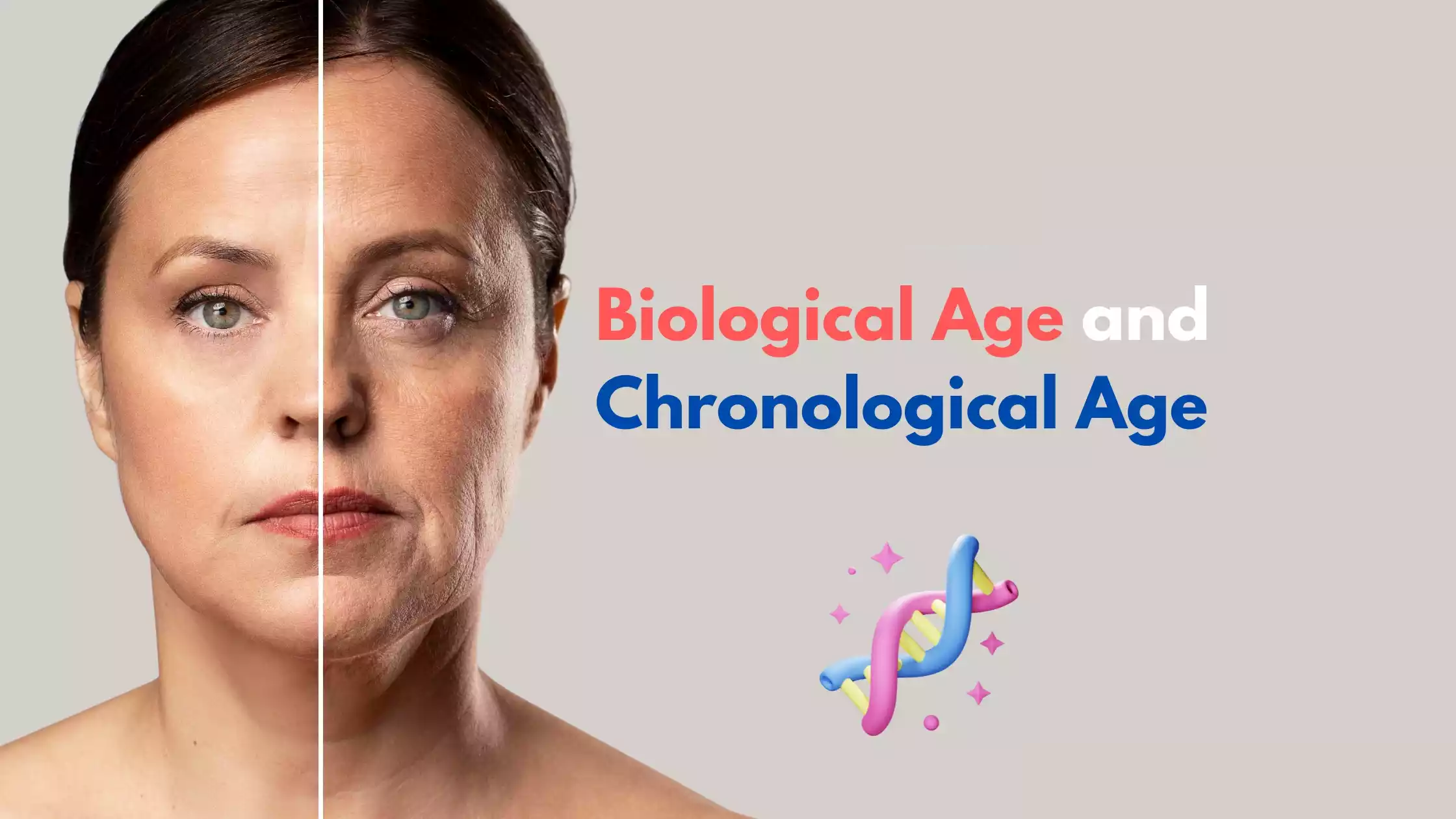
Age is something we all track, but not all age is measured the same way. You might be 30 years old on paper, yet feel more energetic or more tired than someone younger or older than you. That’s because there are two important ways to understand aging: chronological age and biological age.
While these terms are often used interchangeably, they mean very different things. Understanding the difference can give you a clearer picture of your health, lifestyle, and overall well-being.
What Is Chronological Age?
Chronological age is the simplest and most commonly used measure of age. It refers to the exact number of years, months, and days a person has lived since their birth.
It’s the age you:
- Write on official documents
- Use for school or job applications
- Need for legal requirements like voting or driving
For example, if you were born in 1995 and it’s now 2026, your chronological age is 31 (depending on whether your birthday has passed).
Because it’s purely based on time, chronological age is fixed and cannot be changed. It increases steadily every year, regardless of your health or lifestyle.
If you ever need a precise breakdown, you can easily calculate it using an online chronological age calculator to get exact years, months, and days.
What Is Biological Age?
Biological age, on the other hand, reflects how old your body actually functions. It takes into account your physical health, lifestyle habits, and even genetics.
Unlike chronological age, biological age can:
- Be higher than your actual age (if your health is poor)
- Be lower than your actual age (if you maintain a healthy lifestyle)
For example, two people who are both 40 years old chronologically may have very different biological ages. One might have the heart health and fitness level of a 30-year-old, while the other may show signs of aging closer to 50.
Biological age is influenced by several factors, including:
- Diet and nutrition
- Physical activity
- Sleep quality
- Stress levels
- Smoking or alcohol consumption
- Genetics
In short, it reflects how well your body is aging rather than how long you’ve been alive.
Key Differences Between Chronological and Biological Age
Although both terms relate to aging, they serve different purposes. Here’s a simple breakdown:
1. Basis of Measurement
- Chronological age is based on your birth date
- Biological age is based on your body’s condition
2. Flexibility
- Chronological age cannot change
- Biological age can improve or worsen over time
3. Purpose
- Chronological age is used for legal, educational, and official matters
- Biological age is used to assess health and wellness
4. Accuracy in Health Assessment
- Chronological age gives a general idea
- Biological age provides deeper insight into your physical state
Why the Difference Matters
Understanding the gap between these two types of age can be eye-opening.
For instance, if your biological age is higher than your chronological age, it may indicate that your lifestyle is putting extra strain on your body. This can increase the risk of chronic diseases such as heart problems, diabetes, or fatigue-related conditions.
On the other hand, having a lower biological age often suggests that your habits, like regular exercise, balanced nutrition, and good sleep are helping your body stay younger and healthier.
This difference is especially important in modern health and fitness. Many people now focus less on “how old they are” and more on “how well they are aging.”
Can You Change Your Biological Age?
This is where things get interesting. While you can’t turn back time and reduce your chronological age, you can influence your biological age.
Simple lifestyle changes can make a big difference:
- Eating whole, nutrient-rich foods
- Exercising regularly
- Managing stress effectively
- Getting enough sleep
- Avoiding harmful habits like smoking
Over time, these changes can improve how your body functions and potentially lower your biological age.
How to Measure Both Accurately
Measuring chronological age is straightforward, but calculating it manually can still lead to small errors, especially when months and leap years are involved. That’s why online tools are helpful for getting exact results instantly.
Biological age, however, is more complex. It often requires medical tests, fitness assessments, or specialized tools that evaluate things like heart rate, metabolism, and body composition.
Final Thoughts
Chronological age tells you how long you’ve lived. Biological age tells you how well you’re living.
Both are important, but they serve different purposes. One is used for official records and milestones, while the other offers valuable insight into your health and lifestyle.
By understanding the difference, you can move beyond just counting birthdays and start focusing on maintaining a healthier, more active life. After all, it’s not just about adding years to your life, it’s about adding life to your years.