
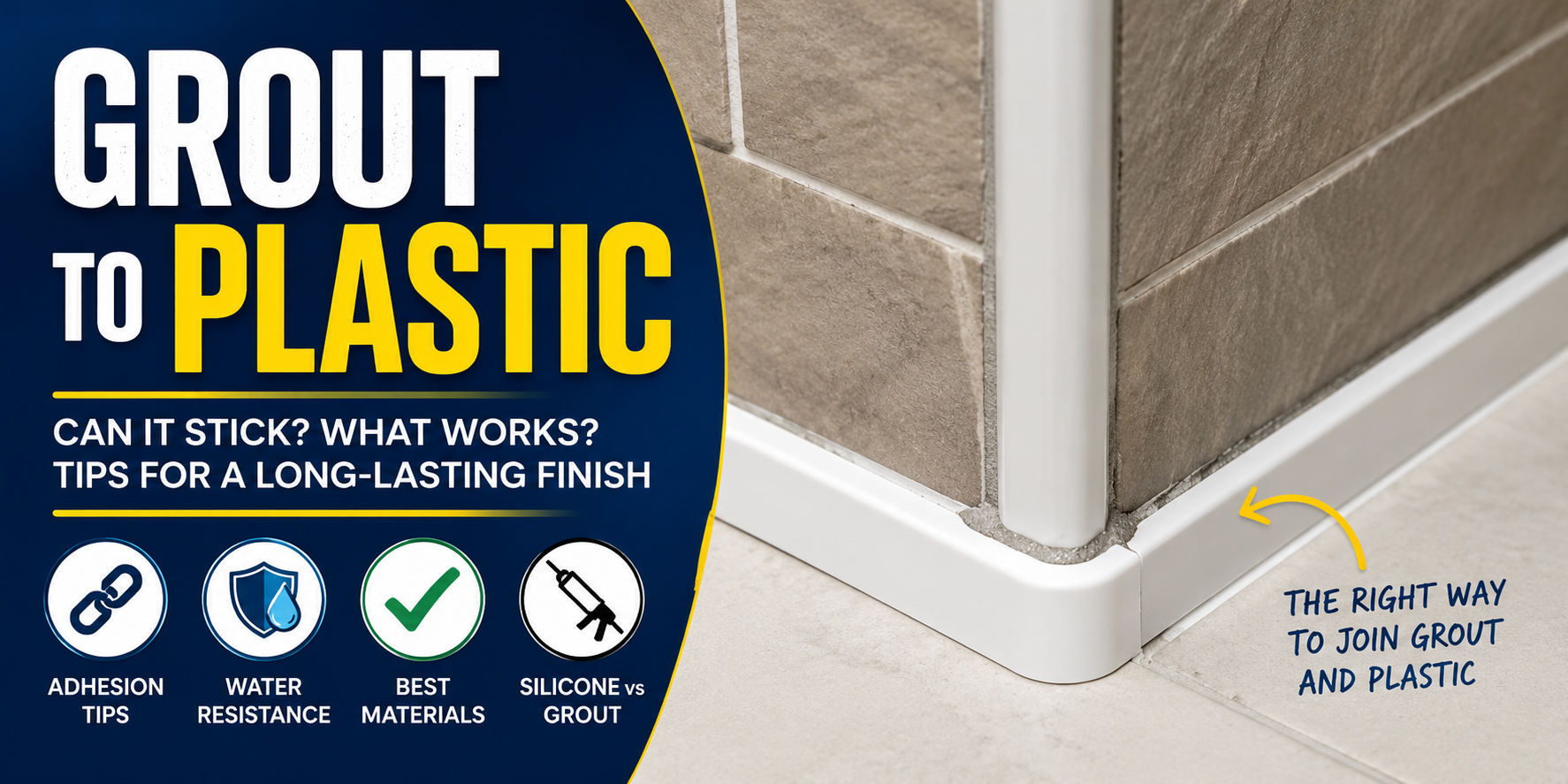
If you’re planning a bathroom renovation, kitchen backsplash, or DIY tiling project, you may wonder: will grout stick to plastic? It’s a common question, especially when working around PVC trims, plastic shower panels, or acrylic surfaces.
The simple answer is that grout does not naturally bond well to plastic. Unlike tile or cement, plastic is smooth and non-porous, making it difficult for grout to grip properly. In many cases, grout may crack, peel, or separate over time.
Still, there are situations where you can improve adhesion with proper preparation and the right products.
Why Grout Struggles to Stick to Plastic
Traditional grout is made to bond with porous materials such as ceramic, porcelain, and stone. Plastic surfaces behave differently because they repel moisture and lack texture.
If you’re asking does grout stick to plastic, the answer is usually “only temporarily” unless additional steps are taken.
Common problems include:
- Cracking around edges
- Loose grout lines
- Water seepage behind joints
- Mold buildup in wet areas
These issues are especially common in showers and bathrooms where constant moisture weakens the bond.
Will Grout Stick to Plastic Successfully?
In some cases, grout can hold near plastic surfaces if the installation is done correctly. For example, grout placed between tiles beside a plastic trim may remain stable because the tiles help support the joint.
However, applying grout directly over large plastic surfaces rarely lasts long.
The success depends on factors like:
- Surface preparation
- Moisture exposure
- Type of grout used
- Amount of movement in the area
Professionals usually avoid relying on standard grout alone when plastic is involved.
Will Tile Adhesive Stick to Plastic?
Another common DIY question is: will tile adhesive stick to plastic?
Some adhesives can bond to plastic, but not all products are designed for smooth PVC or acrylic materials.
Adhesion depends on:
- The type of plastic
- Surface roughness
- Moisture conditions
- Adhesive quality
High-performance polymer-modified adhesives generally perform better than standard mortar. Sanding the plastic lightly before application can also improve bonding.
Always test a small section first before completing the project.
Silicone Grout vs Epoxy Grout
When standard grout is not ideal, many homeowners compare silicone grout vs epoxy grout options.
Although both resist moisture better than traditional grout, they work differently.
Silicone Grout
Silicone products are flexible and waterproof, making them ideal for areas where movement occurs.
Best uses include:
- Shower corners
- Bathtub edges
- Plastic trim joints
- Sink surrounds
Advantages of silicone:
- Flexible under movement
- Excellent waterproofing
- Resistant to cracking
- Works better with plastic surfaces
Epoxy Grout
Epoxy grout is stronger and more stain-resistant than cement grout. It performs well in wet and high-traffic areas.
Benefits include:
- Strong durability
- Waterproof surface
- Stain resistance
- Long lifespan
However, epoxy is more rigid than silicone and may not handle plastic movement as effectively.
Silicone vs Epoxy Grout: Which One Is Better?
When comparing silicone vs epoxy grout, the better option depends on the location.
Silicone is usually recommended where tile meets plastic because it can flex as surfaces expand and contract. Epoxy grout is better suited for the tile joints themselves.
In many professional installations:
- Epoxy grout is used between tiles
- Silicone sealant is used at corners and plastic transitions
This combination reduces cracking and improves long-term durability.
How to Improve Grout Adhesion on Plastic
If you must apply grout near plastic, proper preparation is essential.
Clean the Surface
Remove dust, soap residue, grease, and oils before starting.
Sand the Plastic
Light sanding creates texture that helps products grip better.
Use a Bonding Primer
Special primers designed for PVC or acrylic can improve adhesion significantly.
Choose Quality Materials
Flexible or polymer-modified grout products generally perform better than cheap standard grout.
Protect Against Moisture
Water damage is one of the biggest causes of grout failure around plastic surfaces.
Common Mistakes to Avoid
Many DIY projects fail because of simple installation mistakes.
Avoid these problems:
- Applying grout directly to glossy plastic
- Ignoring movement joints
- Using low-quality adhesive
- Skipping surface preparation
- Replacing silicone with rigid grout in corners
Small mistakes can lead to cracks and leaks within months.
FAQs
1. Will grout stick to plastic permanently?
In most cases, standard grout will not permanently stick to smooth plastic surfaces. Plastic is non-porous, so grout can crack or peel over time, especially in wet areas.
2. Does grout stick to plastic shower trim?
Grout may hold temporarily around plastic shower trim, but silicone sealant is usually the better option because it handles moisture and movement more effectively.
3. Will tile adhesive stick to plastic surfaces?
Some high-quality tile adhesives can bond to plastic if the surface is cleaned and lightly sanded first. Polymer-modified adhesives generally work better than standard mortar.
4. What is better around plastic: silicone or epoxy grout?
When comparing silicone vs epoxy grout, silicone is usually better for plastic edges and corners because it remains flexible and resists cracking.
5. Can epoxy grout be used on plastic?
Epoxy grout can sometimes bond better than cement grout, but it still may struggle on smooth plastic surfaces. Proper surface preparation is important for better adhesion.
Final Thoughts
So, will grout stick to plastic? Sometimes — but usually not permanently without proper preparation. Plastic surfaces naturally resist bonding, which makes flexible sealants like silicone a better choice in many situations.
If you’re working in bathrooms, showers, or wet areas, combining epoxy grout for tile joints with silicone for plastic edges often delivers the best long-term results.
Choosing the correct material now can save you from future repairs, cracked grout, and moisture damage later.