
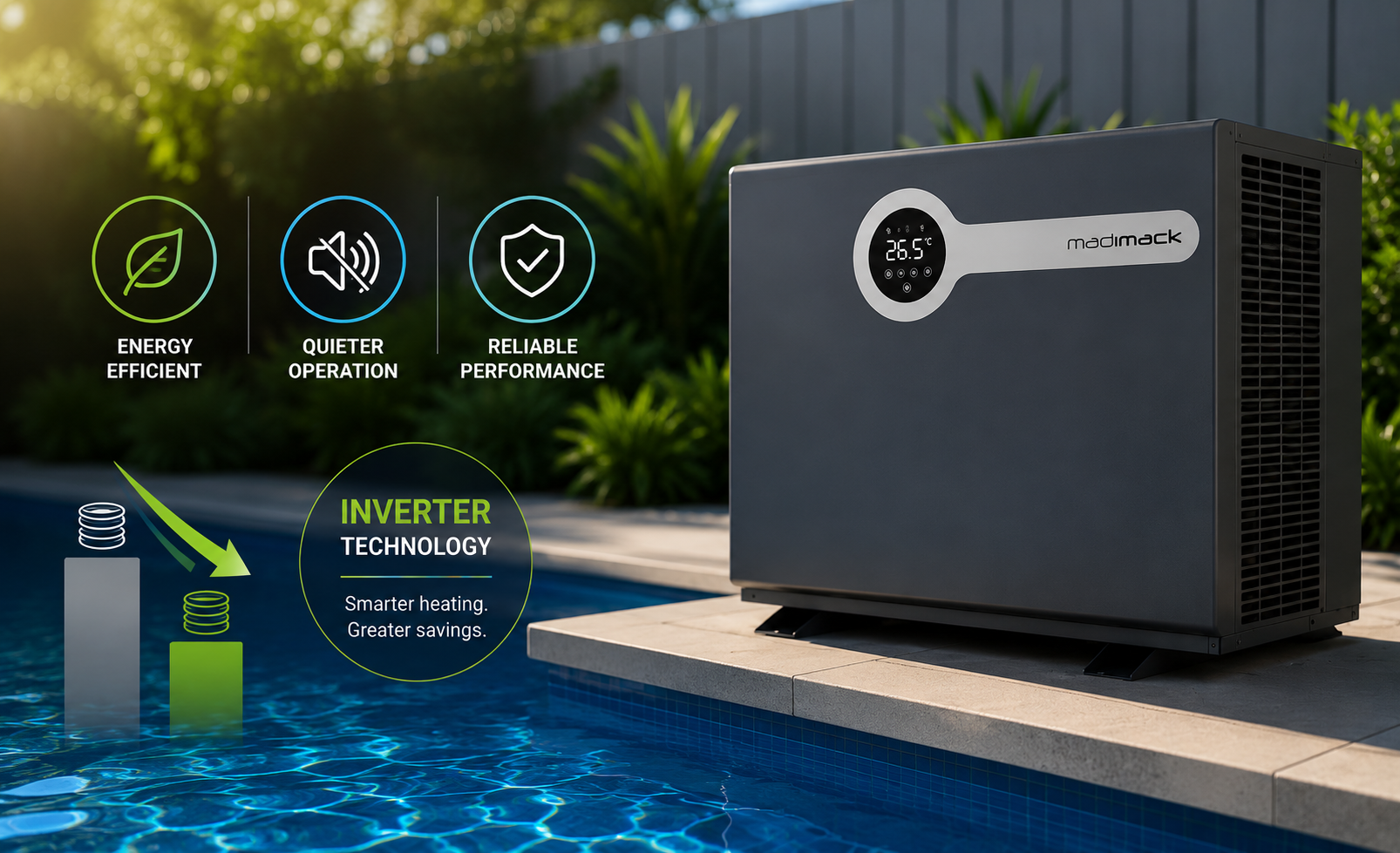
Pool heating costs can add up faster than many homeowners expect, especially when using traditional systems that run at a fixed output. As energy efficiency becomes a bigger priority, inverter heat pumps are gaining attention for their ability to maintain comfortable water temperatures while using less electricity.
But how much can you actually save? A heat pump pool calculator helps answer that question by estimating heating costs, energy consumption, and potential long-term savings, giving pool owners a clearer picture before investing in a new heating system.
Understanding Heat Pump Pool Calculators
A pool heater calculator helps estimate the energy needed to heat a pool and the associated operating costs. It typically uses details such as pool size, desired water temperature, local climate, and electricity rates to generate estimates.
The results can help homeowners compare heating options, forecast annual expenses, and identify potential savings. Many people also use a pool calculator when selecting a new pool heating system.
What is an Inverter Pool Heat Pump?
An inverter pool heat pump adjusts its output based on the pool’s heating demand rather than running at a fixed speed. Traditional heat pumps typically operate at full power until the desired temperature is reached, which can lead to higher energy consumption.
In contrast, inverter models continuously regulate compressor speed to maintain a steady water temperature using only the required amount of energy. This improved efficiency often translates into lower operating costs and greater savings when evaluated with a heat pump pool calculator.
What a Heat Pump Pool Calculator Can Reveal
1. Estimated Annual Heating Costs
A heat pump pool calculator estimates yearly heating expenses using factors such as pool size, desired water temperature, local climate, and energy rates. This helps homeowners understand potential operating costs before making a purchase.
2. Potential Energy Savings
The calculator can compare standard and inverter heat pumps to show potential energy savings. Since inverter models adjust output based on demand, they often use less electricity over time.
3. Seasonal Performance Insights
Heating needs to change throughout the year. A swimming pool pump size calculator can estimate how a system may perform during different seasons, helping homeowners plan for varying energy demands.
4. Return on Investment (ROI)
By comparing upfront costs with projected energy savings, the calculator can help estimate how long it may take for an inverter heat pump to pay for itself.
Factors That Influence Inverter Savings
1. Pool Size and Water Volume
Larger pools require more energy to heat, making efficiency even more important. A pool heat pump size calculator can help determine the right heating capacity for your pool.
2. Climate and Location
Outdoor temperatures have a direct impact on heating performance. Pools in cooler regions generally require more energy, while warmer climates may see lower operating costs.
3. Pool Usage Habits
How often you use your pool and the temperature you want to maintain can significantly affect energy consumption and overall heating expenses.
4. Pool Covers and Heat Retention
Pool covers help reduce heat loss, especially during cooler nights. Better heat retention means the heat pump runs less often, improving efficiency and increasing the savings estimated by a heat pump pool calculator.
How to Use Calculator Results Wisely
1. Compare Multiple Heat Pump Models
Do not rely on a single estimate. Compare several heat pump options to identify which model delivers the best balance of efficiency and cost.
2. Look Beyond Purchase Price
The least expensive unit is not always the most economical choice. Lower operating costs can often justify a higher initial investment.
3. Consider Long-Term Energy Costs
Energy savings accumulate over time. A heat pump pool calculator helps reveal how operating expenses may differ over several years.
4. Evaluate Total Ownership Costs
Consider installation, maintenance, repairs, and electricity consumption when making a final decision. A comprehensive view provides a more accurate picture of long-term value.
Conclusion
A heat pump pool calculator is more than a simple planning tool. It provides valuable insights into annual heating costs, potential energy savings, seasonal performance, and return on investment. For many homeowners, the results show why inverter heat pumps are becoming an increasingly popular choice.
Want a clearer picture of your potential heating costs and savings? Use Madimack’s heat pump pool calculator to compare options & find the most efficient heating solution for your pool.
Shop now!
FAQs
1. How accurate is a heat pump pool calculator?
Most calculators provide reliable estimates based on the information entered. Actual results may vary depending on weather conditions, pool usage, and maintenance practices.
2. Do inverter pool heat pumps really save money?
Yes. Inverter heat pumps generally consume less electricity because they adjust output based on demand rather than operating at full power continuously.
3. Can a heat pump pool calculator help choose the right unit size?
Yes. Many homeowners use a swimming pool pump size calculator or a pool heat pump size calculator to determine the most suitable heating capacity for their pool.
4. What factors have the biggest impact on pool heating costs?
Pool size, local climate, desired water temperature, usage frequency, and heat retention methods such as pool covers all influence overall heating expenses.