
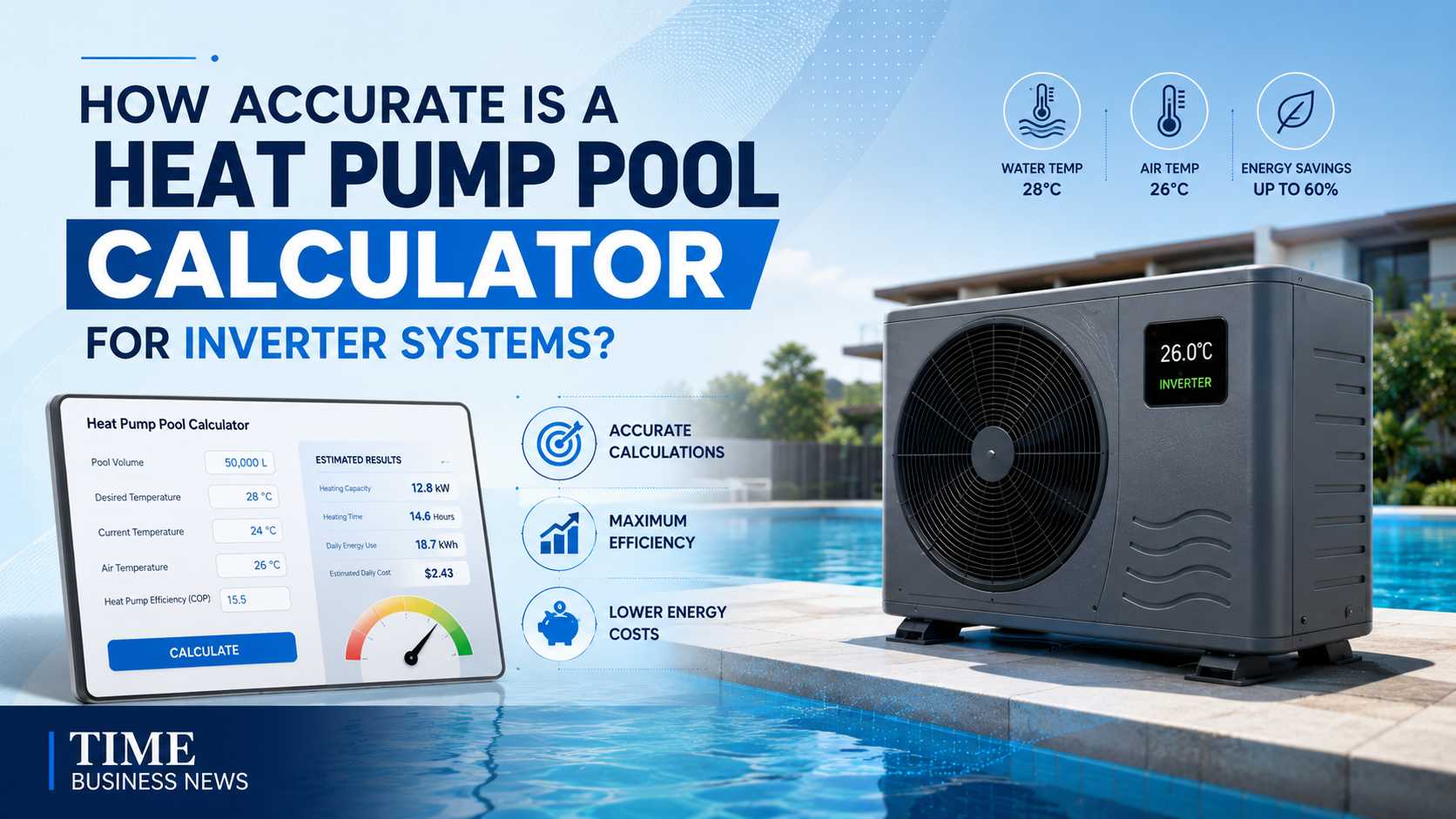
Choosing the right pool heating system can be challenging, especially with the growing popularity of inverter pool heat pumps. Many homeowners now use a heat pump pool calculator to estimate heater size, energy efficiency, and expected performance before investing in a system.
While these calculators are useful planning tools, their accuracy can vary based on factors like climate, pool size, and usage habits. Understanding how they work can help pool owners make smarter and more cost-effective heating decisions.
What is a Heat Pump Pool Calculator?
A pool heat pump calculator is an online tool that helps estimate the right heating capacity for a swimming pool. It uses details like pool size, climate conditions, desired water temperature, and usage patterns to recommend a suitable heat pump system.
These calculators help homeowners make smarter, more energy-efficient pool heating decisions without relying on guesswork.
Understanding Inverter Pool Heat Pump Systems
Inverter pool heat pumps work differently from traditional fixed-speed heaters. Instead of running at full power all the time, inverter systems automatically adjust their speed based on the heating demand of the pool.
For example, if the pool only needs a small temperature increase, the inverter system operates at a lower speed to save energy. When more heating is required, the system increases power gradually. This creates more stable water temperatures and improves overall efficiency.
Many homeowners prefer inverter pool heat pumps because they offer several benefits, including:
- Lower energy consumption
- Quieter operation
- Better temperature control
- Reduced long-term operating costs
These systems are designed for energy efficiency, which is why they are becoming increasingly common in residential pools.
How Accurate is a Heat Pump Pool Calculator for Inverter Systems?
A heat pump pool calculator can provide a reliable estimate for inverter systems when accurate pool and climate details are entered. Modern calculators use advanced data to improve sizing recommendations and energy estimates.
However, actual performance may still vary due to weather conditions, pool insulation, wind exposure, and usage habits. Since inverter systems adjust power automatically, they often perform more efficiently than traditional fixed-speed pool heaters.
Key Factors That Affect Calculator Results
1. Pool Size and Volume
Larger pools naturally require more heating power. If pool measurements are entered incorrectly, the pool heater calculator results may also be inaccurate.
2. Local Climate Conditions
Weather plays a major role in pool heating performance. Pools in warmer states like Florida or Texas usually require less heating compared to colder northern regions.
3. Pool Usage Habits
Pools used year-round or during cooler months need more heating support. Frequent use also increases heating demands.
4. Pool Insulation and Covers
Pool covers help reduce heat loss significantly. A covered pool often requires less energy to maintain comfortable temperatures.
5. System Efficiency Ratings
The efficiency rating of the inverter system also impacts performance. Higher-efficiency heat pump pool calculator systems generally provide better heating while using less electricity.
Tips for Getting More Accurate Results from a Heat Pump Pool Calculator
1. Measure Pool Size Properly
Always use accurate pool dimensions when entering information into the calculator.
2. Consider Local Climate
Choose settings that match your regional weather conditions for better estimates.
3. Set Accurate Temperature Goals
Avoid unrealistic heating expectations that may increase energy usage unnecessarily.
4. Include Pool Cover Details
If you regularly use a pool cover, include that information in the pool heat pump size calculator for more precise calculations.
5. Check System Efficiency Ratings
Compare inverter systems carefully and look at energy efficiency performance ratings.
6. Estimate Usage Correctly
Think about how often and during which seasons the pool will be used.
Conclusion
A heat pump pool calculator is a valuable tool for homeowners planning to install an inverter pool heating system. While it may not account for every real-world condition, it offers a reliable starting point for estimating heater size, energy efficiency, and operating costs.
Factors such as pool size, climate, insulation, and usage habits all influence the accuracy of the results. For the best results, combining calculator estimates with expert advice can help improve efficiency, reduce energy costs, and maintain comfortable swimming temperatures throughout the season.
Ready to upgrade your pool heating experience? Shop the latest Madimack USA heat pump calculators today!
FAQs
- Are heat pump pool calculators reliable?
Yes, they are generally reliable for estimating heating requirements, especially when accurate information is entered. - Do inverter pool heat pumps save energy?
Yes, inverter systems are designed to adjust power usage automatically, helping reduce electricity consumption. - Can weather affect calculator accuracy?
Yes, outdoor temperature, wind, and humidity can influence actual heating performance. - Why is pool size important in heat pump calculations?
Pool size determines how much heating power is needed to maintain the desired water temperature.