
Updated 2026
The best casino guest post sites are gambling or sports pages that are indexed, carry real organic traffic, and are topically relevant to your target. Domain Rating alone is misleading, because a high DR site can have pages that pull no traffic. Prioritise sites with verifiable monthly traffic and a clean link profile, and confirm the exact page your link will sit on rather than trusting the homepage metric.
Key numbers
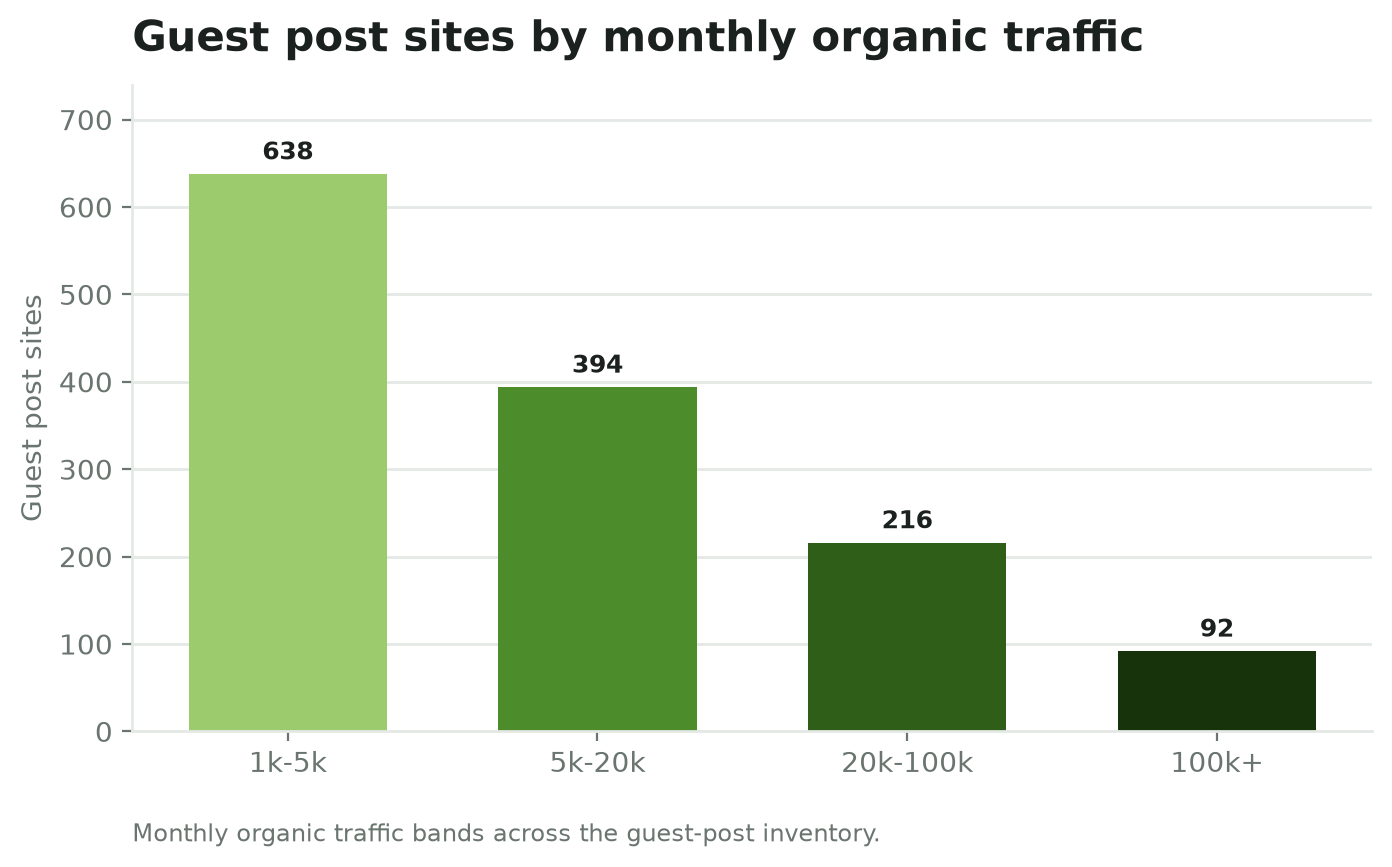
- In a set of gambling guest-post sites, 92 carried 100,000 or more monthly organic visits and 216 carried 20,000 to 100,000, so genuinely high-traffic placements exist.
- The same inventory spans more than 30 country TLDs, which matters when you target a specific market rather than global English terms.
- Guest posts typically take 5 to 7 days to go live because the article has to be written and published, unlike niche edits.
What makes a casino guest post site worth paying for?
A guest post site is worth paying for when the specific page carries real organic traffic, is topically about gambling, and sits on a domain with a clean, natural link profile. Traffic matters more than Domain Rating here, because DR describes the whole domain while your link sits on one page. A page with steady visitors passes relevance and referral value that a high-DR but dead page never will.
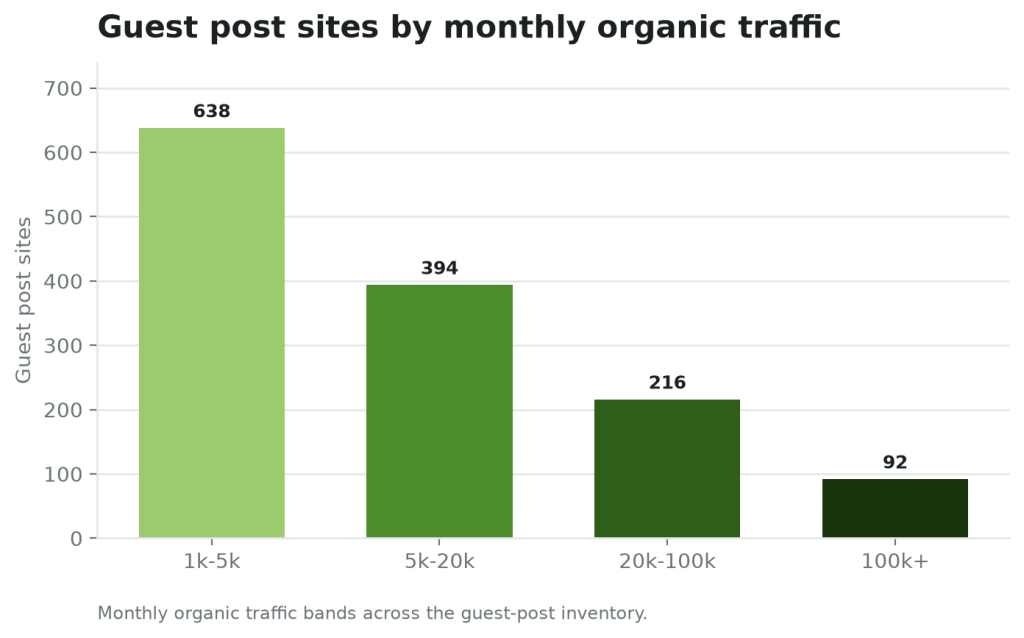
Figure 1. Guest post sites by monthly organic traffic. High-traffic gambling placements exist, but they are the minority, so they are worth identifying.
Why does the country TLD matter for casino guest posts?
A country TLD is a local relevance signal. If you are competing for German or French casino terms, a link from a .de or .fr gambling site sits inside the same market as the searcher, which a generic .com link does not carry. The spread of available markets is wide, so you can match placements to the market you actually want to rank in rather than settling for whatever is available.
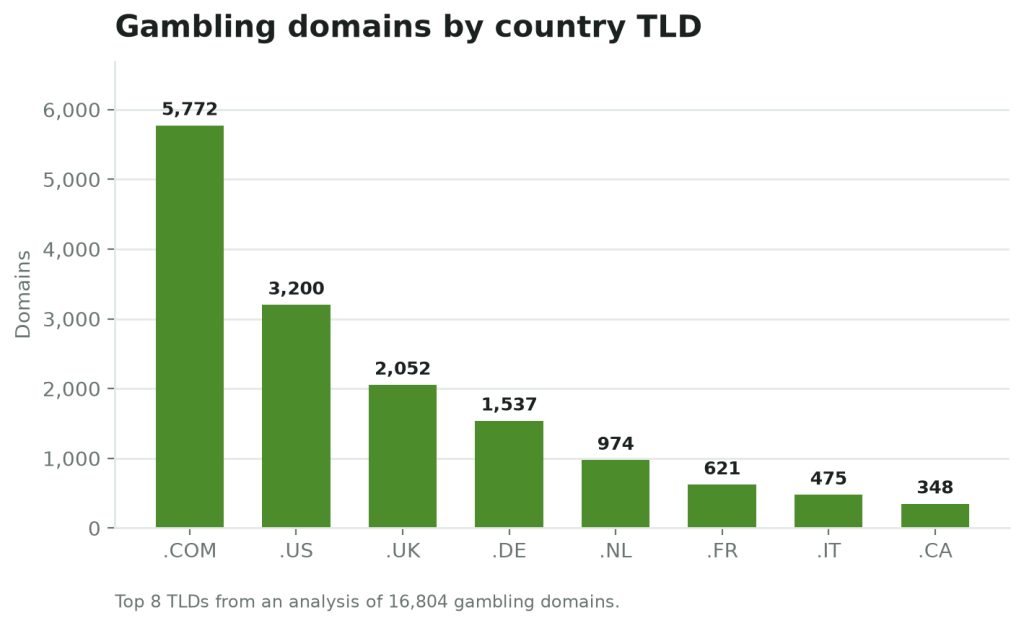
Figure 2. Gambling domains by country TLD. A broad market spread lets you match a guest post to the market you are targeting.
How do you vet a casino guest post site before ordering?
Run five checks. Confirm the site is indexed by searching its domain in Google. Check its organic traffic in Ahrefs rather than trusting DR. Read whether the content is genuinely about gambling. Confirm the link will be do-follow with your anchor. And ask to see the exact page, not just the homepage. Suppliers who will not show the placement page before payment are the ones to avoid.
| Signal to check | Good sign | Warning sign |
| Indexation | Pages appear in Google | Site or page not indexed |
| Traffic | Real organic visitors in Ahrefs | High DR but near-zero traffic |
| Relevance | Gambling content | General or unrelated blog |
| Link type | Permanent do-follow | No-follow or time-limited |
A supplier that owns its placements can show traffic, DA, DR and spam per site before you order. That transparency is on display at GamblingBacklink.com, and the full format is covered on their gambling guest posts page.
How guest posts fit alongside niche edits and PBN links
Guest posts are the editorial anchor of a gambling link profile, but they are slow to produce and the genuinely good placements are limited, so they work best as part of a mix rather than the whole plan. Use them for the links you want to look properly earned, on the highest-traffic and most relevant sites you can access, and accept that you cannot acquire hundreds of them quickly or cheaply.
Around that editorial core, niche edits add speed by placing links on pages that already rank, and PBN links add controlled volume at low cost. That combination is what keeps a profile looking natural: a spread of link types, on a spread of domains, built at a human pace. A casino site with nothing but guest posts is unusual enough to look deliberate, and a site with nothing but cheap links is easy to discount, so the balance between them is where the safety and the results both come from.
In practice, most successful gambling campaigns weight the mix to the goal of the moment. Early on, when speed matters, niche edits and PBN links carry more of the load. As the site matures and the priority shifts to defensible authority, guest posts take a larger share. The point is that the three formats are complementary, and treating any one of them as the entire strategy leaves value on the table.
It also helps to set expectations before the campaign starts. Guest posts are the slowest of the three formats and the most competitive to secure, so a realistic plan builds them steadily over months rather than promising a fixed number by a fixed date. A supplier that guarantees dozens of high-traffic gambling guest posts inside a week is either recycling low-value sites or counting placements that will not last. Steady, verifiable, traffic-backed placements beat a large batch of thin ones every time, and they are far easier to defend if a client ever audits the profile.
“The mistake operators make is buying guest posts on Domain Rating alone. The link sits on a page, not a domain, so the page has to be alive.”
GamblingBacklink.com, gambling link building team
Frequently asked questions
How much do casino guest posts cost?
Pricing depends on the site’s traffic and authority rather than a flat rate. Higher-traffic, more relevant gambling sites cost more, and that premium is usually justified because the link passes real referral value alongside the ranking signal.
Are guest posts better than niche edits for gambling?
They serve different goals. Guest posts give the strongest editorial signal and control over the surrounding content, while niche edits are faster because they use pages that already rank. Most campaigns use both.
How do I know a guest post site is not a private network in disguise?
Check for real organic traffic, a varied outbound link profile, and genuine editorial content. A site that exists only to sell links usually has thin content and an unnatural outbound link pattern.
Can I get guest posts in a specific country?
Yes. Country TLD inventory lets you target a specific market, which is worth doing when you rank for non-English casino terms where local links carry more weight.