

Every glass of water your family drinks carries a silent promise—either of health or hidden risk. With waterborne diseases affecting millions worldwide and invisible contaminants lurking in municipal and well water supplies, choosing the right purification system isn’t just a household decision; it’s a health imperative. Yet when families begin researching their options, they’re immediately confronted with a confusing choice: RO vs UV water purifiers. Both technologies promise clean, safe drinking water, but they work in fundamentally different ways and address different types of contamination. For small families especially, the decision becomes even more daunting when factoring in installation complexity, space constraints, and ongoing maintenance demands. Many households delay their purchase simply because the technical jargon feels overwhelming. This article cuts through that confusion, breaking down reverse osmosis and ultraviolet purification into plain language, comparing them side by side, and offering simplified solutions—including no-installation-required options—so your family can confidently choose the system that fits your water quality needs, living space, and lifestyle.
Understanding Reverse Osmosis (RO) Water Purification
Reverse osmosis works by pushing water through a semi-permeable membrane with pores so tiny that only water molecules pass through. Think of it as an ultra-fine filter that blocks nearly everything else—dissolved salts, heavy metals like lead and arsenic, pesticides, and sediment particles that cloud your water and damage appliances. This sediment removal capability alone makes RO systems particularly valuable in areas with hard water or aging infrastructure where pipes contribute particulate matter to your supply.
The benefits are substantial. RO purification eliminates up to 99% of dissolved contaminants, delivering water that’s remarkably pure in both taste and composition. For families concerned about chemical pollutants or elevated TDS (total dissolved solids) levels, reverse osmosis provides the most comprehensive filtration available for home use.
However, RO systems come with trade-offs worth considering. They produce wastewater—typically two to three cups discarded for every one cup purified. They require electricity to maintain adequate water pressure across the membrane. Perhaps most discussed is that RO removes beneficial minerals like calcium and magnesium alongside harmful contaminants, though many modern systems include remineralization stages to restore these essential elements. Understanding these characteristics helps families weigh whether RO’s thorough purification aligns with their specific water challenges.
How Ultraviolet (UV) Water Purifiers Work
Ultraviolet water purification takes an entirely different approach to making water safe. Instead of physically filtering contaminants, UV systems expose water to a specific wavelength of ultraviolet light that penetrates the DNA of bacteria, viruses, and parasites, rendering them unable to reproduce or cause infection. The process is remarkably efficient—water flows through a chamber housing a UV lamp, and within seconds, up to 99.99% of harmful microorganisms are neutralized without adding any chemicals to your water.
The advantages of UV purification appeal to many families. Because nothing is added or removed from the water, its natural taste and mineral content remain completely unchanged. The systems require minimal maintenance beyond periodic lamp replacement, consume very little electricity, and operate without producing any wastewater. For households whose primary concern is biological contamination—common in areas relying on borewell or municipal supplies prone to bacterial infiltration—UV purifiers offer a straightforward, chemical-free solution.
That said, UV technology has a clear limitation: it cannot remove dissolved chemicals, heavy metals, or physical sediment from water. If your supply contains elevated TDS levels, pesticide residues, or visible particulate matter, ultraviolet light alone won’t address those issues. UV purifiers work best when the incoming water is already relatively clear, since turbidity can shield microorganisms from the UV rays, reducing disinfection effectiveness.
RO vs UV: A Detailed Comparison for Water Purification
When comparing RO vs UV purification directly, the differences become clearer across several critical dimensions that matter most to families making this decision.
In terms of contaminant removal, RO handles the broadest spectrum—dissolved chemicals, heavy metals, pesticides, fluoride, and sediment all get trapped by the membrane. UV targets biological threats exclusively, eliminating bacteria, viruses, and protozoa with exceptional efficiency but leaving chemical and physical contaminants untouched. If your water test reveals high TDS or chemical contamination, RO is the clear choice. If microbial safety is your primary concern and your water is otherwise clean, UV delivers targeted protection.
Installation complexity differs significantly between the two. Traditional RO systems require connection to your water line, a dedicated faucet, and space beneath the sink for the storage tank and multiple filter stages. UV systems are comparatively simpler, often requiring just inline installation on your existing water line. However, newer countertop RO models have eliminated plumbing requirements entirely, leveling this playing field considerably.
Operational costs favor UV systems in the short term—they consume less electricity and produce zero wastewater. RO systems draw more power, waste water during filtration, and require periodic membrane and filter replacements. However, RO’s comprehensive purification often eliminates the need for supplementary filtration, potentially reducing overall household water treatment expenses. Maintenance for UV primarily involves annual lamp replacement, while RO demands filter changes every six to twelve months depending on usage and source water quality. Water output quality ultimately depends on your incoming supply—RO delivers consistently pure water regardless of source variability, while UV maintains your water’s existing mineral profile and taste while ensuring microbiological safety.
Solving Family Needs: Easy and Effective Water Purification Solutions
For small families navigating the RO vs UV debate, the real challenge often isn’t understanding the technology—it’s finding a solution that fits seamlessly into daily life. Many households rent apartments where permanent plumbing modifications aren’t permitted, or they simply lack the under-sink space that traditional systems demand. Others move frequently and need purification that travels with them. The good news is that modern water purification has evolved beyond bulky, permanently installed units to embrace compact, portable designs that deliver professional-grade results without the complexity.
Simplified Water Purification Methods for Families
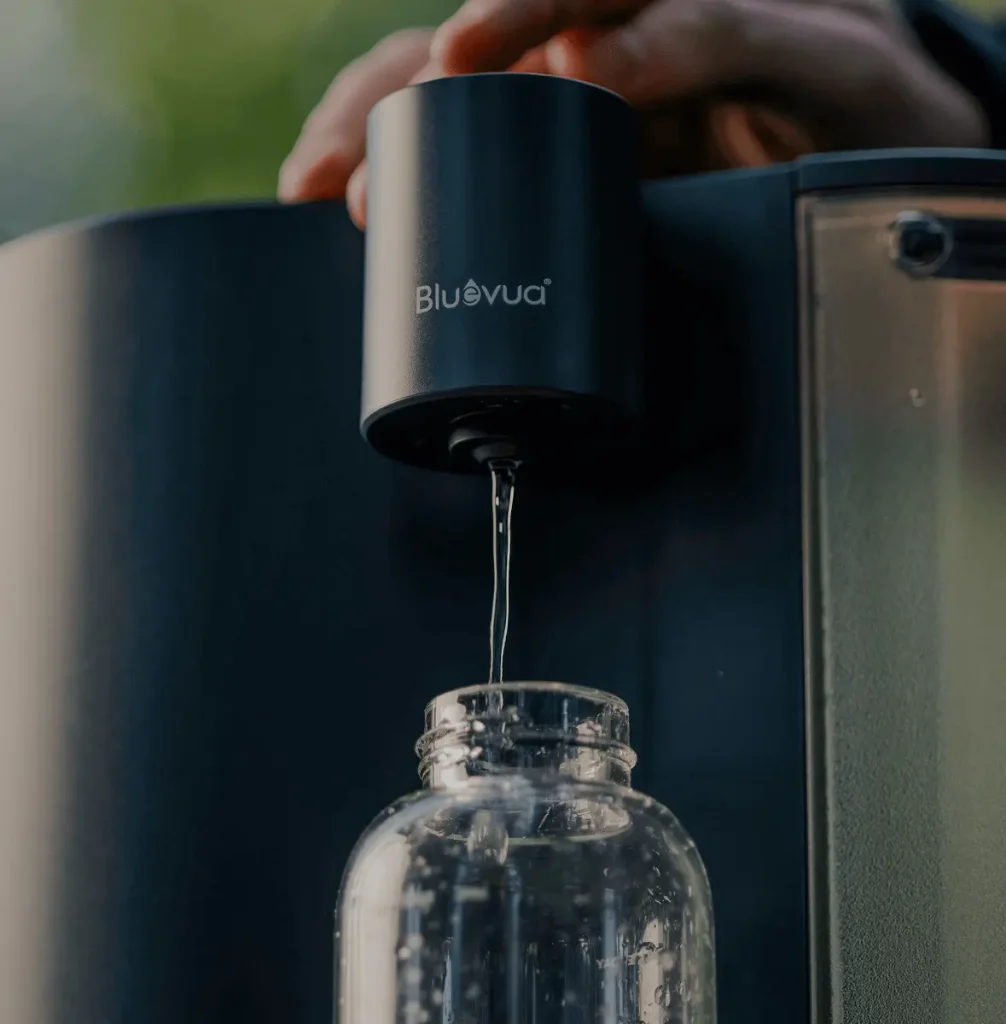
Today’s countertop purifiers have transformed how families access clean water. Models like the Bluevua ROPOT-Lite represent a new category of compact RO systems that require no installation whatsoever—no plumber, no drilling, no connection to your water line. You simply fill the tank, press a button, and the system handles multi-stage filtration including reverse osmosis purification. For small families in apartments, dorm rooms, or rental homes, this approach eliminates every barrier to entry. Setup takes minutes rather than hours, the unit fits comfortably on a kitchen counter, and it can be relocated instantly when your living situation changes. This no-installation-required design means clean water is accessible from day one without landlord approval or technical expertise.
Key Features to Look For: Sediment Removal and Beyond
When evaluating any purifier, sediment removal should top your checklist. Sediment—rust particles, sand, and silt—not only makes water look unappealing but also damages appliances and can harbor bacteria. Effective sediment removal through pre-filtration stages extends the life of RO membranes and ensures consistently clear output. Beyond sediment, families should assess whether a system addresses their specific contaminants: does it reduce TDS for hard water areas, does it include activated carbon for chlorine and taste improvement, and does it offer remineralization to restore beneficial minerals? A system combining sediment removal with comprehensive RO filtration covers the widest range of water quality issues most families encounter.
Step-by-Step Guide to Choosing and Implementing a Solution
Start by testing your water—affordable home kits reveal TDS levels and bacterial presence within minutes. If TDS exceeds 300 ppm or chemical contaminants are detected, prioritize RO technology. If only microbial threats exist, UV may suffice. Next, measure your available counter or under-sink space and determine whether permanent installation is feasible. For families wanting immediate, hassle-free deployment, select a no-installation-required countertop model like the Bluevua ROPOT-Lite that combines sediment removal with RO purification. Finally, establish a simple maintenance calendar for filter replacements to ensure ongoing performance.
Making the Final Decision: Factors for Your Family’s Best Fit
Your ideal purifier depends on four interconnected factors. First, your water’s contamination profile—high TDS and chemical presence demand RO, while biologically compromised but chemically clean water suits UV. Second, consider your household size and daily consumption to ensure adequate flow rates. Third, evaluate maintenance willingness: RO requires more frequent attention but delivers broader protection, while UV offers simpler upkeep for targeted disinfection. Finally, weigh cost-effectiveness over the system’s lifespan, not just the purchase price. For many families, a compact RO system with built-in sediment removal offers the most versatile protection, especially when no-installation models eliminate setup barriers entirely.
Choosing the Right Purifier for Your Family’s Water and Lifestyle
The RO vs UV decision ultimately comes down to what’s in your water and what fits your life. Reverse osmosis delivers the most thorough purification available for home use, stripping away dissolved chemicals, heavy metals, and sediment while producing water of exceptional clarity and taste. Ultraviolet purification excels at neutralizing biological threats—bacteria, viruses, and parasites—without altering your water’s natural mineral balance or generating any waste. For families facing multiple contaminant types, RO provides the broader shield; for those with chemically clean but microbiologically risky supplies, UV offers elegant simplicity.
What’s changed the game for modern families is the emergence of no-installation-required systems that bring professional-grade RO purification to any countertop without plumbing modifications or technical hassle. These compact solutions, combining sediment removal with multi-stage reverse osmosis, mean that safe drinking water no longer requires homeownership, renovation budgets, or mechanical expertise. Whether you’re in a rental apartment, a small home, or simply value convenience, accessible purification technology now meets you where you are. Prioritize your family’s health today—the right system is simpler to implement than you might think, and every glass of truly clean water is an investment in the well-being of the people you love most.