
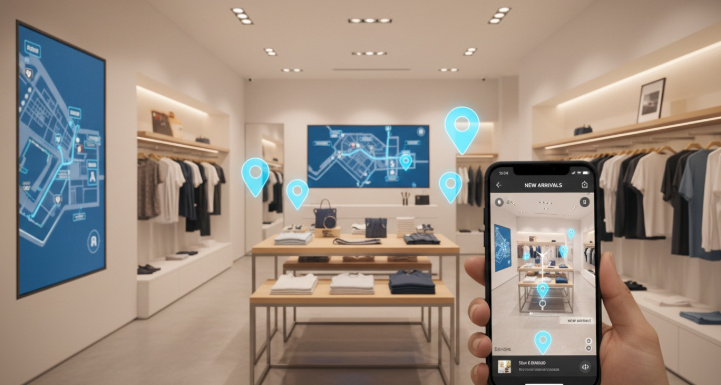
When most people think of indoor mapping, they picture sprawling airports, massive shopping malls, or extensive hospital complexes. This perception has created one of the most persistent myths in the wayfinding industry: that indoor navigation technology is exclusively designed for large-scale venues. The reality couldn’t be further from the truth. Indoor mapping has evolved into a versatile, accessible solution that delivers tremendous value to venues of all sizes, from boutique retail stores to small medical clinics. It’s time to challenge these assumptions and explore why businesses and organizations of every scale should consider implementing this transformative technology.
The “Size Matters” Myth: Why Small and Medium Venues Need Indoor Mapping Too
The assumption that only massive venues require indoor navigation stems from visibility bias – we notice the technology in large spaces because that’s where it first gained prominence. However, navigation challenges aren’t determined solely by square footage. A visitor can feel just as disoriented in a multi-level medical building with confusing room numbering as they would in a sprawling airport terminal.
Consider a small university library with multiple floors, study rooms, and specialized collections. Students waste valuable time searching for specific sections or meeting rooms. A boutique hotel with uniquely designed floors and amenities can leave guests wandering hallways unnecessarily. These frustrations directly impact user satisfaction and operational efficiency, regardless of the venue’s overall size.
The indoor mapping preconceived ideas that persist in the industry often overlook the fundamental purpose of wayfinding technology: improving the user experience. When a first-time visitor struggles to find the correct office suite in a professional building, or a patient arrives late to an appointment because they couldn’t locate the right examination room, the venue’s size becomes irrelevant. What matters is solving a real problem that affects real people.
Accessibility represents another crucial dimension that transcends venue size. Indoor mapping technology provides essential support for visitors with disabilities, offering features like wheelchair-accessible route planning, audio directions for visually impaired users, and clear visual guidance for those with cognitive challenges. These capabilities aren’t luxury features reserved for large institutions – they’re increasingly becoming compliance requirements and basic expectations for any public-facing venue.
Cost Concerns: Breaking Down the “Too Expensive” Barrier
Perhaps no misconception has proven more damaging than the belief that indoor mapping solutions carry prohibitive price tags accessible only to major corporations or institutions. This outdated perception reflects the technology’s early days when custom implementations required significant capital investment and ongoing technical support.
Today’s indoor mapping landscape has transformed dramatically. Cloud-based platforms have revolutionized pricing models, introducing subscription-based services that eliminate massive upfront costs. Smaller venues can now access enterprise-grade mapping capabilities for monthly fees comparable to other standard business software subscriptions. The democratization of this technology means a local art gallery or co-working space can implement sophisticated wayfinding solutions without breaking their budget.
The real calculation extends beyond initial implementation costs to return on investment. For a medical clinic, reducing missed appointments through better navigation can quickly offset mapping expenses. A retail store that uses indoor positioning to guide customers to specific products sees direct revenue impact. Office buildings that streamline visitor management reduce reception staff workload and improve security. These tangible benefits often justify the investment within months rather than years.
Progressive implementation strategies further reduce financial barriers. Venues can start with basic features on a single floor or building section, gathering user feedback and demonstrating value before expanding. Many providers offer tiered service levels, allowing organizations to begin with fundamental navigation capabilities and add advanced features as needs grow and budgets allow.
Technical Complexity: It’s Easier Than You Think
The assumption that indoor mapping requires dedicated IT teams and complex technical infrastructure has deterred countless venues from exploring these solutions. Modern platforms have shattered this barrier by prioritizing user-friendly design and simplified deployment processes.
No-code and low-code solutions now dominate the market, featuring intuitive interfaces that allow non-technical staff to create and maintain indoor maps. Many vendors provide turnkey services, handling everything from initial mapping to integration with existing systems. The heavy lifting happens behind the scenes, while venue managers interact with straightforward dashboards and management tools.
Mobile-first approaches have further simplified implementation. Rather than requiring extensive hardware installations throughout a building, many contemporary systems leverage existing infrastructure like WiFi networks or Bluetooth beacons. Some advanced solutions even work without additional hardware, using smartphone sensors and visual positioning technology. This flexibility means smaller venues can deploy effective navigation without significant physical modifications to their spaces.
Maintenance concerns, once a legitimate worry, have diminished with cloud-based systems that update remotely and automatically. Map modifications can typically be made through web interfaces without technical expertise. Vendors provide ongoing support, documentation, and training resources that empower venue staff to manage systems independently.
Real-World Applications for Small to Medium Venues
The versatility of indoor mapping becomes apparent when examining diverse applications across various venue types. Retail stores and boutiques use product location features to help customers find specific items quickly, transforming the shopping experience and reducing staff burden. Integration with inventory systems can guide shoppers to exactly what they’re seeking while enabling promotional opportunities through targeted notifications based on location.
Healthcare facilities of all sizes benefit tremendously from patient wayfinding capabilities. A multi-specialty clinic with various departments spread across several floors presents genuine navigation challenges. Clear digital guidance reduces patient stress, decreases missed appointments, and frees reception staff from providing constant directions. The efficiency gains extend to medical professionals who can navigate more effectively to different departments or meeting rooms.
Corporate offices increasingly recognize indoor mapping as an employee experience enhancement. As hybrid work models and hot-desking arrangements become standard, employees need ways to locate available workspaces, find colleagues, and navigate facilities they may only visit occasionally. Integration with room booking systems and employee directories creates a seamless workplace experience that supports productivity and collaboration.
Educational institutions leverage indoor mapping for student orientation, helping new students confidently navigate campus buildings and libraries. During events, conferences, or open houses, digital wayfinding manages crowds and directs visitors efficiently. The technology supports accessibility initiatives while providing valuable data about space utilization.
Museums, galleries, and cultural spaces use indoor mapping to create self-guided tour experiences, direct visitors to specific exhibits, and provide contextual information based on location. This interactive approach enhances engagement while accommodating varying visitor interests and pacing preferences.
The Competitive Advantage for Smaller Venues
In an increasingly digital world, customer expectations continue rising. Visitors accustomed to sophisticated navigation in their daily lives through mapping apps naturally expect similar capabilities indoors. Smaller venues that implement indoor mapping differentiate themselves from competitors who rely solely on static signage or verbal directions.
This technological adoption signals a forward-thinking, customer-centric approach that enhances brand perception. A boutique hotel offering seamless digital wayfinding creates a memorable first impression. A specialty medical practice with intuitive navigation demonstrates respect for patient time and comfort. These differentiators contribute to customer satisfaction, positive reviews, and repeat business.
Beyond immediate user experience improvements, indoor mapping provides valuable data and analytics regardless of venue size. Understanding visitor flow patterns, identifying bottlenecks, and tracking which areas receive the most traffic enables informed decisions about space utilization, staffing, and layout optimization. Small businesses gain access to insights previously available only to major corporations with dedicated analytics teams.
Common Barriers and How to Overcome Them
Many venue managers dismiss indoor mapping with the objection that their buildings aren’t complex enough to warrant such technology. This perspective misses the broader value proposition. Complexity isn’t the only consideration – convenience, accessibility, first-time visitor experience, and competitive positioning all factor into the equation.
Future-proofing represents another important consideration. As visitor expectations evolve and accessibility requirements potentially expand, venues with established indoor mapping infrastructure can adapt quickly. Early adoption positions organizations ahead of the curve rather than scrambling to catch up when digital wayfinding becomes an industry standard.
The assumption that “our visitors don’t need it” often stems from the fact that frustrated visitors rarely voice their struggles directly. They simply feel annoyed, arrive late, or choose not to return. Research consistently shows that users prefer digital wayfinding options when available, particularly first-time visitors who account for a significant portion of many venues’ traffic.
Integration concerns about working with existing infrastructure have become largely obsolete. Modern indoor mapping solutions are designed to complement rather than replace current wayfinding approaches. Digital and physical signage work together, with technology enhancing rather than eliminating traditional methods. Phased implementation allows venues to test integration gradually, addressing issues as they arise.
When Indoor Mapping Makes Sense (And When It Might Not)
Not every venue requires indoor mapping, and honest evaluation helps determine whether implementation aligns with specific organizational needs. Key questions include: How frequently do visitors ask for directions? How much time do staff spend providing wayfinding assistance? Are accessibility features adequate? Do navigation challenges impact operational efficiency?
Visitor volume matters, though not always in obvious ways. A venue with modest but steady traffic of first-time visitors may benefit more than a larger space serving primarily regular users already familiar with the layout. Specialized facilities like conference centers that host rotating events and attendees unfamiliar with the space present compelling use cases regardless of size.
Starting small provides valuable learning opportunities. Pilot programs focused on specific building sections or particular user groups allow organizations to test functionality, gather feedback, and build internal expertise before full deployment. This approach reduces risk while demonstrating value to stakeholders who may be skeptical about the investment.
Future Trends: Indoor Mapping for All
Technology democratization continues accelerating, with artificial intelligence and automation reducing implementation barriers further. Tools that automatically generate maps from building plans, systems that learn and optimize routes based on actual usage patterns, and platforms that require minimal configuration are making indoor mapping increasingly accessible.
Mobile technology advancement drives capability improvements. As smartphones become more sophisticated with better sensors and processing power, indoor positioning accuracy increases while hardware requirements decrease. This trend particularly benefits smaller venues that may lack resources for extensive infrastructure investments.
Changing expectations in the post-pandemic environment have heightened awareness of touchless navigation and social distancing capabilities. Generational shifts toward digital-first experiences mean younger visitors increasingly expect technological solutions. The “expectation economy” dictates that what was once considered premium service quickly becomes a baseline requirement.
The trajectory is clear: indoor mapping is transitioning from specialized luxury to standard amenity. Venues of all sizes that recognize this shift and act accordingly position themselves for success in an increasingly competitive landscape where user experience differentiates winners from those left behind.
The evidence overwhelmingly demonstrates that indoor mapping delivers value far beyond massive venues. Whether you manage a small clinic, boutique hotel, corporate office, or cultural space, the question isn’t whether your venue is large enough for indoor mapping – it’s whether you’re ready to invest in your visitors’ experience and operational efficiency. The technology, pricing, and implementation pathways exist today to make indoor navigation accessible and beneficial for venues of every size.
