
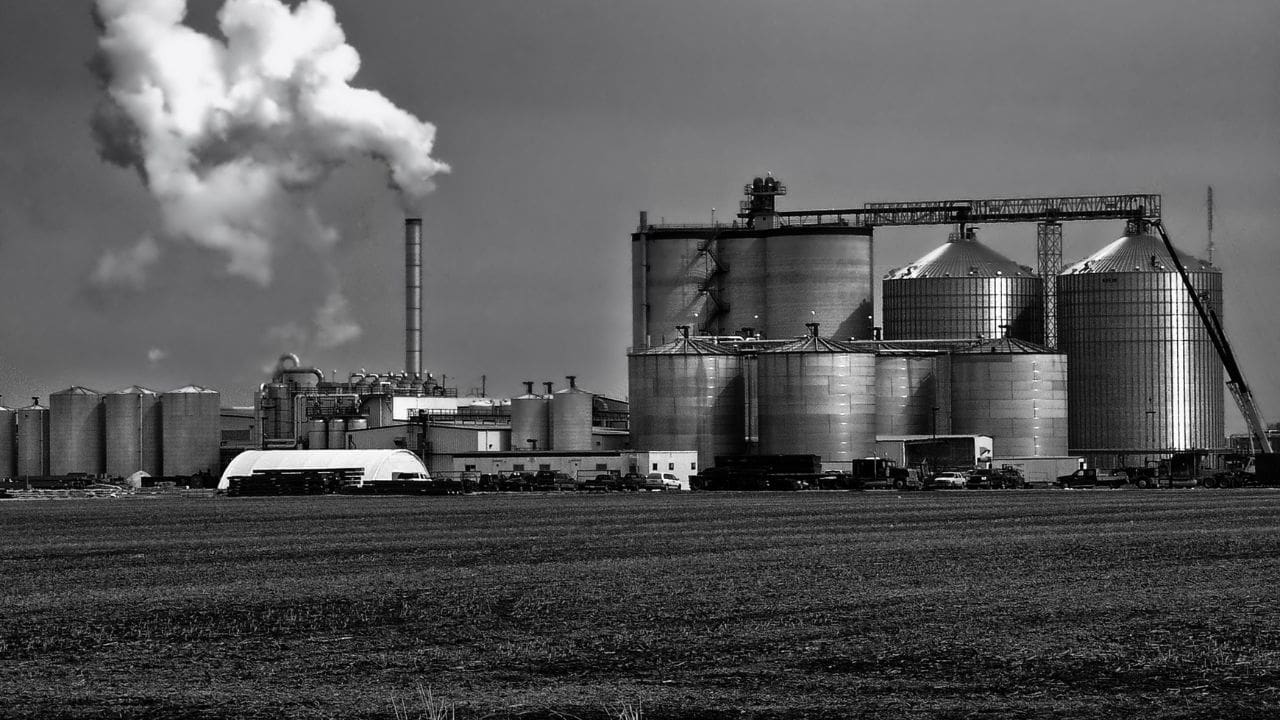
Ethanol producers face relentless pressure to reduce costs while maintaining output quality and meeting increasingly stringent environmental standards. Energy expenses dominate the cost structure of ethanol facilities, with thermal processes consuming the bulk of natural gas budgets. For plant managers seeking competitive advantages, improving thermal efficiency in dryers, boilers, and thermal oxidizers offers one of the most direct paths to lower operating costs and improved profitability.
The challenge extends beyond simple fuel reduction. Ethanol facilities must balance production throughput, coproduct quality, equipment reliability, and environmental compliance. Thermal inefficiency affects all of these factors simultaneously. Hot spots accelerate refractory degradation, requiring more frequent maintenance. Uneven heat distribution reduces dryer performance and coproduct consistency. Excess fuel consumption drives up both operating costs and carbon intensity scores, directly impacting market value in carbon-conscious fuel programs.
Where Energy Gets Consumed in Ethanol Production
Three thermal systems account for most energy consumption in ethanol facilities: rotary drum dryers that produce dried distillers grains with solubles (DDGS), boilers that generate process steam, and thermal oxidizers that manage volatile organic compound (VOC) emissions. Each system operates at elevated temperatures and requires continuous fuel input to maintain process conditions.
Rotary drum dryers typically consume the most natural gas in an ethanol plant because they must evaporate large volumes of water from wet distillers grains. The drying process relies on direct contact between hot combustion gases and the wet material. Efficiency depends on how effectively heat transfers from the gas to the moisture in the material. When heat escapes through dryer walls or concentrates in hot spots, more fuel is needed to achieve target moisture levels.
Boilers generate steam for process heating, distillation, and plant utilities. Steam production efficiency depends on heat transfer from combustion gases to water tubes. Refractory degradation allows heat to escape through boiler walls rather than transferring to the water, forcing burners to fire at higher rates. Similarly, surface conditions on tube walls affect how efficiently radiant energy moves from the flame zone into the water system.
Thermal oxidizers destroy VOCs released during fermentation and distillation. These units must maintain temperatures high enough to achieve complete combustion of organic compounds, typically 1500-1800°F. The destruction efficiency directly affects environmental compliance and operating permits. Higher temperatures improve destruction rates but increase fuel consumption. Optimizing this balance requires effective thermal management.
Optimizing Dryer Performance for Energy Savings
Dryer efficiency improvements deliver multiple benefits simultaneously. Reduced fuel consumption per ton of dried coproduct lowers operating costs. Better temperature uniformity improves product quality and consistency. Extended equipment life through reduced hot spots decreases maintenance frequency and cost.
The ceramic fiber insulation lining dryer interiors plays a critical role in thermal performance. This material must withstand temperatures exceeding 1800°F while maintaining insulating properties. Over time, ceramic fiber experiences shrinkage, dusting, and mechanical degradation from high-velocity gases. As the fiber deteriorates, more heat escapes through dryer walls, and temperature distribution becomes less uniform.
Hot spots represent localized areas where excessive heat concentrates, often near burners or in transition zones. These areas experience accelerated refractory wear and can create inconsistent drying conditions. Identifying and addressing hot spots improves both fuel efficiency and equipment longevity.
Documented performance data from Midwest ethanol facilities shows the potential for dryer optimization. One plant recorded a 4% reduction in fuel consumption after addressing thermal efficiency issues in two rotary drum dryers. Another facility achieved a 3.8% increase in dried coproduct production while simultaneously reducing natural gas usage by 3.3% per ton of product. A third operation measured 7.36% lower fuel consumption in MMBtu per hour alongside improved moisture removal efficiency.
These improvements stem from better heat retention and more uniform temperature distribution within the dryer system. When thermal energy stays where it belongs, in contact with the material being dried, less fuel achieves the same or better results. The economic impact compounds because improved dryer efficiency often enables higher throughput without proportional increases in energy consumption.
Boiler and Thermal Oxidizer Efficiency Strategies
Boiler optimization focuses on maximizing heat transfer to water tubes while minimizing stack losses and shell radiation. The refractory lining and tube surface conditions significantly influence thermal performance. When surfaces effectively absorb and transfer radiant energy, boilers generate more steam per unit of fuel consumed.
Package boilers in ethanol facilities often operate continuously, making even small efficiency improvements valuable. A facility that applied thermal management strategies to boiler water walls and refractory surfaces reported a 10% increase in production capacity alongside a 10% decrease in fuel consumption. The improved heat transfer also reduced buildup on refractory and tubes, extending maintenance intervals.
Thermal oxidizers present unique efficiency challenges because they must balance destruction efficiency with fuel consumption. Higher operating temperatures improve VOC destruction but require more natural gas. Lower temperatures save fuel but may fail to meet environmental compliance requirements. Optimizing this trade-off requires effective thermal management.
Performance data from ethanol facilities demonstrates measurable improvements in thermal oxidizer operation. One Midwest plant documented 1,209 BTU per gallon improvement in combined dryer and thermal oxidizer efficiency. The same facility increased the temperature differential between the combustion chamber and stack by 46°F, indicating better heat retention. Excess air requirements decreased by 5.2%, and NOx emissions dropped by 20% due to improved combustion efficiency.
These results reflect better radiant heat distribution within the oxidizer chamber. When refractory walls and ceramic fiber absorb and re-radiate energy more effectively, the entire chamber maintains more uniform temperatures. This uniformity supports complete combustion with less excess air and fuel input.
High-Emissivity Coatings and Heat Transfer Physics
Surface emissivity fundamentally affects how thermal energy moves through industrial equipment. Emissivity measures how effectively a surface emits thermal radiation compared to an ideal black body. Standard refractory materials typically exhibit emissivity values between 0.3 and 0.5, meaning they radiate 30-50% as effectively as theoretical maximum.
High-emissivity coatings increase surface emissivity to 0.85-0.95, approaching black body behavior. This transformation changes how heat distributes within furnaces, dryers, boilers, and oxidizers. Higher emissivity surfaces absorb more radiant energy from flames and hot gases, then re-radiate that energy throughout the chamber. The result is more uniform temperature distribution and more efficient heat transfer to process materials or tube surfaces.
The technology originated in NASA’s thermal protection systems for spacecraft and has been adapted for industrial applications. Ethanol and biofuel facilities have implemented these coatings on ceramic fiber, refractory surfaces, and burner tiles to improve thermal performance.
Application involves surface preparation followed by spray coating, typically 2-5 mils thick. The coatings bond to substrates with adhesion strength exceeding 5,000 PSI and maintain performance through repeated thermal cycling. Unlike conventional rigidizers or sealants, high-emissivity coatings are specifically engineered to enhance radiative heat transfer rather than simply protecting the substrate.
Chase Nedrow, as the exclusive North American distributor & installer of Emisshield coatings for the ethanol industry, has documented results across multiple facilities. The coating technology demonstrates particular effectiveness in addressing ceramic fiber shrinkage, which typically ranges from 5-7% in uncoated applications but reduces to under 1% with coating protection. This extended fiber life translates to longer run times between refractory replacements.
Carbon Intensity Reduction and Market Value
Fuel efficiency improvements in ethanol production deliver value beyond direct cost savings. Every reduction in natural gas consumption proportionally decreases carbon dioxide emissions, lowering the facility’s carbon intensity score. This metric has become increasingly important as low-carbon fuel programs create financial incentives for producers who can document lower emissions.
The California Low Carbon Fuel Standard (LCFS) and similar programs assign carbon intensity values to fuels based on lifecycle greenhouse gas emissions. Ethanol with lower CI scores generates more valuable credits, directly impacting revenue. A reduction of even 0.5-1.0 gCO2e/MJ can translate to hundreds of thousands of dollars in additional annual revenue for a typical ethanol plant.
Third-party analysis of facilities that implemented thermal efficiency improvements documented CI reductions ranging from 0.5 to 1.13 gCO2e/MJ. These reductions result from decreased natural gas consumption across dryers, boilers, and thermal oxidizers. The analysis used standard carbon calculators to verify the impact, ensuring consistency with regulatory requirements.
The economic calculation becomes compelling when combining direct fuel savings with carbon credit value. A facility spending $2-3 million annually on natural gas might achieve $200,000-400,000 in direct fuel savings from 5-10% consumption reduction. The same improvements could generate an additional $400,000-600,000 in enhanced carbon credit value, depending on market conditions. This dual benefit often produces ROI periods under one year.
Environmental compliance extends beyond carbon intensity. Improved thermal oxidizer efficiency enhances VOC destruction, supporting air quality permits. Better combustion efficiency reduces NOx formation. These factors help facilities maintain regulatory compliance while improving economics.
Documentation and Performance Verification
Claims about efficiency improvements require verification through careful measurement and analysis. Ethanol producers evaluating thermal management technologies should examine documented case studies with actual operational data rather than theoretical projections.
Comprehensive performance documentation includes pre-installation and post-installation measurements of fuel consumption, production rates, temperature profiles, and emissions. The measurement period should span sufficient time to account for seasonal variations and operational changes. Third-party analysis adds credibility by providing independent verification of results.
Facilities considering thermal efficiency projects can reference detailed case studies and technical data, the Engineered Solutions for Thermal Processing Units Guide compiled by Chase Nedrow documents specific results from ethanol plants, including measured fuel savings percentages, production increases, carbon intensity reductions, and maintenance improvements. This technical documentation provides the foundation for informed decision-making about efficiency investments.
Key performance indicators to evaluate include natural gas yield (BTU per gallon of ethanol produced), electricity consumption per gallon, ethanol yield per bushel of corn, DDGS production rates, and maintenance intervals. Improvements across multiple metrics simultaneously indicate genuine efficiency gains rather than shifting costs between different areas of operation.
Implementing Efficiency Improvements
Successful efficiency projects in ethanol facilities require careful planning and execution. The process typically begins with baseline data collection to establish current performance. Operators should gather at least 2-3 months of operational data including fuel consumption, production rates, and equipment temperatures before making changes. This baseline provides the comparison point for measuring improvements.
Equipment evaluation identifies where efficiency losses occur. Thermal imaging surveys reveal hot spots and areas of heat loss. Visual inspection of refractory and ceramic fiber shows physical degradation. Operational data indicates whether specific equipment operates outside expected parameters.
Project timing usually coordinates with scheduled maintenance outages to minimize production impact. Many thermal efficiency improvements can be implemented during annual turnarounds that facilities already schedule for routine maintenance. Surface preparation and coating application typically require 2-3 days per unit, depending on size and complexity.
Post-installation monitoring tracks performance improvements and verifies expected results. Operators should collect the same data gathered during the baseline period, allowing direct comparison. Temperature measurements at multiple locations confirm more uniform heat distribution. Fuel consumption records document energy savings. Production data shows throughput changes.
The monitoring period should extend at least 3-6 months to capture representative operating conditions. Short-term measurements may not reflect true performance because of seasonal variations, feedstock changes, or operational adjustments. Longer data sets provide more reliable indication of sustained improvements.
Strategic Considerations for Plant Managers
Thermal efficiency improvements represent strategic investments rather than simple maintenance expenses. The benefits extend across multiple areas: reduced operating costs, improved environmental performance, enhanced equipment reliability, and increased competitive positioning in carbon-conscious markets.
Plant managers should evaluate efficiency projects in the context of overall facility performance goals. Projects that deliver 8-12% fuel savings while simultaneously improving production capacity and reducing carbon intensity offer compelling value propositions. The combination of cost reduction and revenue enhancement through improved carbon credits typically produces rapid payback periods.
Integration with existing systems requires minimal disruption when properly planned. Most thermal efficiency technologies work with current equipment rather than requiring wholesale replacement. This compatibility allows facilities to capture improvements without major capital expenditure or extended downtime.
Long-term maintenance planning should account for the extended equipment life that typically results from better thermal management. Reduced hot spots and more uniform heating decrease stress on refractory materials and metal components. Many facilities report maintenance intervals extending from 12 months to 30 months or more after implementing thermal efficiency improvements.
The ethanol industry’s competitive landscape rewards operators who find incremental advantages across multiple performance dimensions. Thermal efficiency improvements address cost, production, quality, environmental compliance, and market positioning simultaneously. For facilities operating on tight margins, these multi-dimensional benefits can determine long-term viability.
Successful ethanol producers treat efficiency as an ongoing management process rather than a one-time project. Regular assessment, proactive maintenance, and systematic improvement create compounding benefits over time. The facilities that maintain competitive advantages are typically those that view operational excellence as continuous rather than episodic.
