

Key Takeaways
- Thorough pre-installation planning leads to an easier and more effective installation process.
- The size and type of AC unit chosen directly impact efficiency, comfort, and energy usage.
- Professional installation helps avoid many common errors that can cost you time and money down the line.
- Routine maintenance is required for optimal performance and to extend your AC’s lifespan.
Installing a new air conditioning system is an essential endeavor to improve your home’s comfort and reduce overall energy consumption. When planned and completed properly, a new air conditioner can provide years of reliable service, keeping you cool even on the hottest days. To begin the process, it is wise to be aware of key steps and avoidable pitfalls that affect both short-term and long-term system performance. If you reside locally, explore your options for AC installation & replacement in Florence, KY to ensure your job is handled by qualified professionals from the start.
Whether you are upgrading an outdated unit, installing in a new home, or improving your current comfort level, understanding installation best practices ensures efficiency and peace of mind. A careful approach reduces disruptions, improves system longevity, and helps maximize the value of your investment.
Pre-Installation Planning
Careful and comprehensive planning is the foundation for any successful air conditioner installation. Start by honestly assessing your home’s needs, which involves measuring the square footage, evaluating insulation levels, and considering your climate zone. Note any unique factors, such as high ceilings, sun exposure, or room layouts, that may require additional cooling capacity. Consulting with an HVAC expert can help you make the most informed choices from the outset.
Choosing the Right AC System
Picking the right air conditioning system is about more than just selecting a popular brand. You must choose a unit that matches your home’s unique size and needs. An oversized system may turn on and off frequently, never fully dehumidify your air, or run inefficiently. Conversely, an undersized unit will struggle to cool your home and consume excess energy. A professional load calculation, sometimes known as a Manual J calculation, considers square footage, insulation, window type, and more, ensuring your finished installation is perfectly tailored to your space. For more on understanding AC sizing, refer to the U.S. Department of Energy’s guide to central air conditioning.
Hiring Qualified Professionals
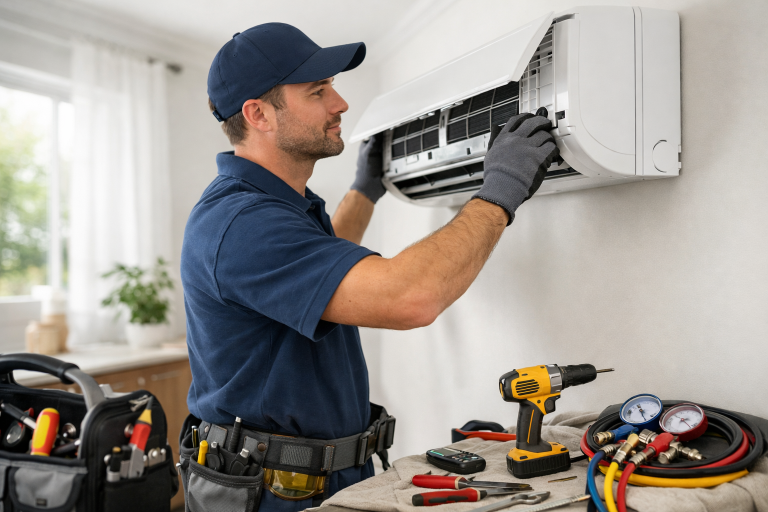
Engaging well-trained, certified HVAC technicians is vital to safeguarding your investment. Licensed experts bring the experience to handle the specific technical requirements of air conditioner installation. They ensure correct sizing, accurate placement, secure electrical work, and proper refrigerant handling. Mistakes during installation can result in inefficiency, equipment damage, and even safety hazards. Ask any potential contractor about their certifications, warranties, and installation approach before proceeding with the job.
Preparing the Installation Area
Before installation day, clear the area where both the indoor and outdoor units will go. Make sure the work area is free of debris, furniture, or other items that could hinder the installation crew. In some cases, minor construction or adjustments, such as adding a concrete pad for the condenser or expanding access to attic areas, can make work easier and improve your system’s placement and performance. Providing installers with the necessary space helps avoid delays and keeps your project on track.
Understanding the Installation Process
To manage your expectations and ensure transparency, familiarize yourself with the essential steps of a standard AC installation. This process usually includes removing the old equipment, preparing the site, fitting and securing the new unit, connecting all necessary lines and controls, and testing the updated system. Your contractor should also calibrate the thermostat and check that all connections are leak-free. For additional peace of mind, review the checklist at Consumer Reports’ Central Air Conditioning Buying Guide.
Post-Installation Maintenance
Once your system is up and running, regular maintenance is crucial for keeping your AC unit energy-efficient and problem-free. Simple actions, such as changing filters monthly during peak use and having a professional inspect your system seasonally, can prevent breakdowns and maintain air quality. Routine attention also allows technicians to catch issues early, reducing the likelihood of unexpected repairs and extending your system’s operating life.
Common Installation Mistakes to Avoid
Being aware of avoidable errors can save you from headaches and added costs. Mistakes such as using incorrect ductwork sizing, neglecting to level the outdoor condenser, skipping vacuuming of refrigerant lines, or rushing through electrical connections are surprisingly common. Double-check that your installer follows the manufacturer’s specifications precisely and performs necessary safety checks throughout the installation. Overlooking these details can reduce system performance, drive up bills, and even lead to avoidable equipment failure.
Conclusion
Adhering to proven best practices during air conditioner installation can prevent costly mistakes while maximizing comfort and efficiency for years to come. Prioritizing planning, precision, professional guidance, and proactive maintenance forms the backbone of a reliable home cooling foundation. Focus on each phase carefully, work with trusted local experts, and keep up with simple maintenance to enjoy a refreshingly cool, worry-free home environment now and into the future.