

When a wrench fails mid-job, the first question is rarely about the mechanic. It is about the hand tool manufacturer behind the product. Poor steel, weak heat treatment, or a rushed forging process can turn what looks like a solid set of wrenches into a liability. For anyone sourcing professional-grade hand tools — whether for a retail brand, a distributor, or a trade supply business — the manufacturer you choose defines everything downstream.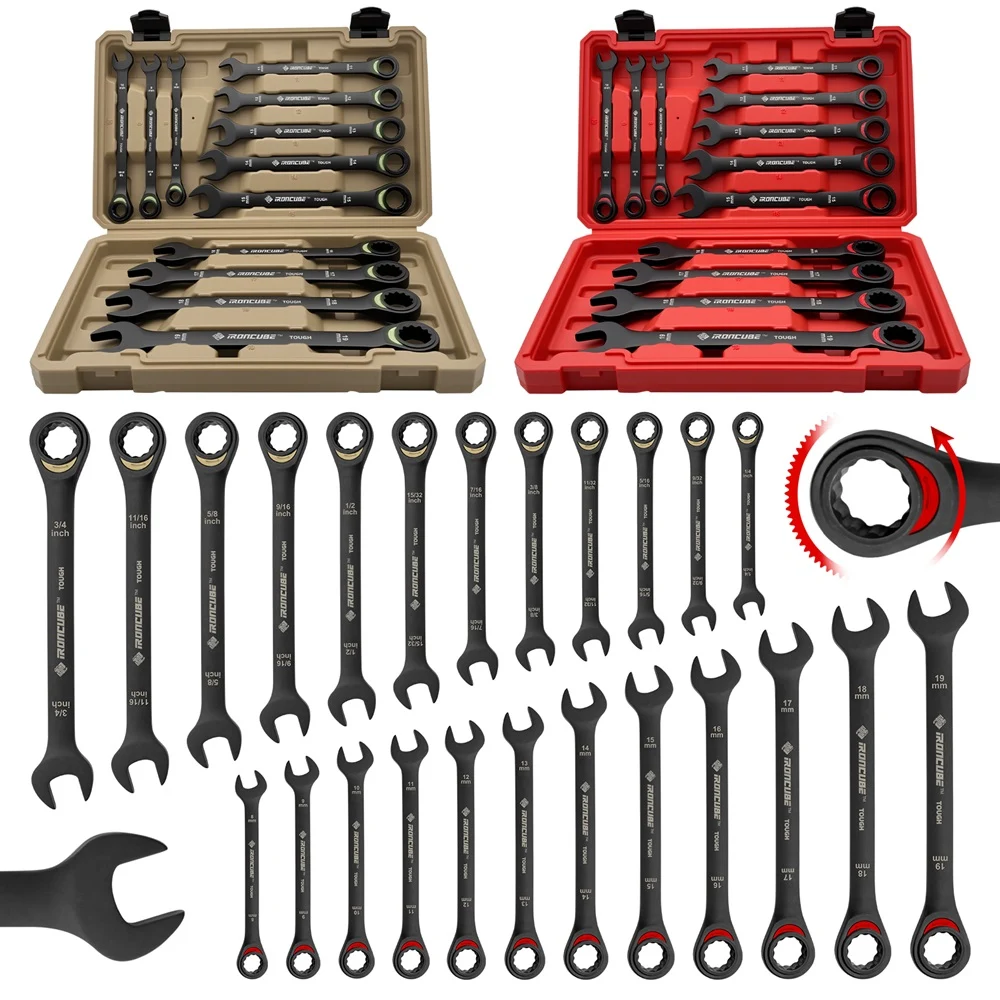
The global hand tool market was valued at over USD 28 billion in 2023, with forecasts projecting continued growth through 2030, driven by demand from automotive, construction, and home improvement sectors. With that much money moving through the supply chain, the difference between a reliable and unreliable source is not minor. It is the difference between a product line that builds your brand and one that costs you customers.
This guide walks you through exactly what to look for in a professional hand tool manufacturer, how to evaluate production quality, what OEM partnerships involve, and why companies across North America and Europe increasingly source from China-based manufacturers like IRONCUBE Works — a specialist in professional-grade wrenches and screwdrivers.
What Is a Professional Hand Tool Manufacturer?
Not every company that puts tools in boxes is a manufacturer. The distinction matters far more than most buyers realize. A true hand tool manufacturer owns the full production process — from raw steel to finished product. That is very different from an assembler or reseller who buys components from third parties, repackages them, and adds a logo.
In-House Production vs. Outsourced Assembly
Manufacturers with in-house production control every variable: the steel alloy selected, the forging press used, the heat treatment cycle, the chrome plating line. They can trace a defect back to the source and fix it. Outsourced assemblers cannot. If you are sourcing for a professional market — automotive workshops, HVAC contractors, electrical crews — in-house production is non-negotiable.
Ask any prospective supplier where their forgings come from. If the answer is “we buy them in,” that tells you the quality ceiling is set by someone else’s decisions, not theirs.
Quality Control and Certification Standards
A professional-grade facility runs quality control at multiple stages: incoming raw material inspection, in-process checks at the forging and machining stages, post-treatment inspection, and final torque and dimensional testing. Many leading facilities are certified to ISO 9001, which sets minimum standards for quality management systems. Some products also conform to ASME B107 standards, which define dimensional and performance requirements for wrenches sold in the North American market.
According to the ISO standard framework, wrench performance is judged on torque capacity, jaw tolerance, and material hardness — all of which only a vertically integrated manufacturer can fully control.
Scale and MOQ Considerations
Minimum order quantities vary significantly across manufacturers. Small-batch workshops may accept orders of 100–200 pieces per SKU. Large factory operations often set MOQs at 500–1,000 pieces. For buyers sourcing private-label wrenches or branded tool kits, understanding the scale you need — and matching it to a manufacturer’s realistic capacity — prevents both over-commitment and supply shortfalls.
Key Factors to Evaluate a Hand Tool Manufacturer
Choosing a hand tool manufacturer is less like buying off a shelf and more like hiring a long-term production partner. These are the criteria that separate a professional source from a problematic one.
Material Sourcing — Steel Grade and Alloy
The most common steel alloys used in professional wrench production are chrome vanadium (Cr-V) and chrome molybdenum (Cr-Mo). Chrome vanadium — typically 40CrV or 50BV30 — offers excellent strength-to-weight balance and is widely used in open-end, box-end, and ratcheting wrenches. Chrome molybdenum is preferred for impact-rated tools because of its superior toughness under shock loads.
For the ratcheting wrench sets in your lineup, chrome vanadium steel forged from a certified steel mill is the right baseline. Ask your manufacturer for the steel mill certification (often called a Mill Test Certificate or MTC) before committing to a bulk order.
Manufacturing Process — Forging vs. Casting
The single most important decision in wrench manufacturing is whether the heads are forged or cast. Forging — compressing heated steel in a die — aligns the grain structure of the steel, making the finished part significantly stronger than cast alternatives. Casting pours molten metal into a mold, which disrupts grain flow and produces a more brittle result under repeated torque stress.
The table below compares the two methods clearly:
| Factor | Forging | Casting |
| Strength | High — grain flow follows shape | Medium — grain disrupted by cooling |
| Durability | Longer service life under torque | More brittle under repeated stress |
| Weight | Slightly heavier but denser | Lighter but less dense |
| Cost | Higher tooling cost | Lower per-unit cost |
| Best for | Professional-grade wrenches | Budget consumer tools |
| Surface finish | Smooth, precise edges | Requires more post-processing |
Every wrench sold by IRONCUBE Works uses drop-forged chrome vanadium steel. That is why the tools hold tolerance and finish after years of professional use.
Surface Treatment and Finish Quality
Surface finish is not just cosmetic. A proper finish protects against rust, makes size markings readable over a long product life, and signals the quality level to the end user. Professional wrench manufacturers typically apply either mirror polishing (bright chrome plating for retail tools) or black phosphate / black oxide treatments for corrosion resistance with a matte professional appearance.
The IRONCUBE 16-piece black thin wrench set, for example, uses a black oxide finish that improves corrosion resistance in demanding environments — particularly where oil, coolant, and road salt are regular hazards.
Certifications — ISO, ASME, DIN
Professional procurement requires verifiable standards compliance. The three most commonly referenced standards for hand tools sold globally are:
ISO 9001 — quality management systems. This confirms the manufacturer has documented processes and systematic QC.
ASME B107 — covers wrenches, pliers, and screwdrivers sold in the US and Canadian markets. Specifies torque ratings, jaw tolerances, and finish requirements.
DIN standards (e.g., DIN 3110 for open-end wrenches) — applicable for European market sales. DIN-compliant wrenches must meet tight dimensional tolerances on jaw openings.
Before finalizing any supplier, request copies of current certificates. Valid ISO certificates carry an accreditation body name and expiry date. Expired certificates are a red flag.
Factory Audit and Inspection Process
For orders above a certain volume, a third-party factory audit is worth the cost. Organizations like Bureau Veritas or SGS offer social compliance and quality system audits for Chinese manufacturing facilities. At a minimum, ask the manufacturer for a factory overview with photos, a process flow chart, and references from current international buyers.
IRONCUBE invites buyers to review their factory tour documentation and production capabilities directly, which is the level of transparency a serious professional hand tool manufacturer should offer.
Understanding Ratchet Tooth Count: Why 72-Tooth and Fine-Tooth Ratcheting Wrenches Matter
One technical specification buyers frequently overlook when sourcing ratcheting wrenches is tooth count. This determines the swing arc needed to engage the next tooth — which directly affects how useful the wrench is in confined spaces.
A 72-tooth ratchet requires only a 5-degree swing arc to advance. That may not sound significant until you are working on an alternator bolt with two inches of clearance. At that point, a 5-degree fine-tooth ratcheting wrench becomes the tool that gets the job done, while a 36-tooth wrench (10 degrees) leaves the mechanic stuck.
| Tooth Count | Swing Arc | Best Use | Price Point |
| 24 teeth | 15° | Basic DIY use | Lower |
| 36 teeth | 10° | General home/auto repair | Medium |
| 45 teeth | 8° | Professional mechanics | Medium-High |
| 72 teeth | 5° | Tight-space pro work | High |
| 90+ teeth | 4° or less | Industrial / aerospace | Very High |
For professional buyers sourcing wrenches for trade use, specifying 72-tooth or higher in the ratcheting mechanism is a genuine quality differentiator. IRONCUBE’s ratcheting wrench sets are built to this standard. You can review the full specification details on the best ratcheting wrench set guide published on the IRONCUBE site.
If you want to understand how ratcheting wrench tooth count affects reversible vs fixed-head performance, the metric ratcheting wrench comparison article covers the trade-offs clearly.
OEM and Custom Hand Tool Production
For many buyers, the goal is not just to source good tools — it is to source tools that carry their brand. That is where OEM (Original Equipment Manufacturer) partnerships become relevant.
What OEM Means in Hand Tools
In the hand tool context, OEM means the manufacturer produces tools to your specifications and ships them under your brand name. The physical product — the steel grade, the heat treatment, the finish — is the same professional-grade item the manufacturer produces for its own brand. The branding, packaging, and product identity are yours.
This model is extremely common in the B2B hand tool market. Most private-label tool brands sold through regional distributors, e-commerce platforms, and trade supply chains are sourced from OEM manufacturers in China, Taiwan, or Eastern Europe.
Custom Branding and Packaging Options
A capable hand tool manufacturer can accommodate laser-engraved logos on wrench shanks, custom color handles on screwdrivers, branded blow-mold cases, and retail-ready blister pack packaging. The more vertically integrated the manufacturer, the more of this can happen under one roof without additional lead time from subcontractors.
IRONCUBE offers custom hand tool production for buyers who need branded sets. This includes custom wrench cases, handle color matching, and product line naming.
Lead Times and Sample Ordering
Standard lead times for OEM hand tool orders range from 45 to 90 days for production runs, depending on order volume and customization complexity. Sample orders — which most buyers should request before committing to a bulk run — typically take 10 to 20 business days and cost slightly more per unit due to setup overhead.
Always test samples under real conditions before signing off on bulk production. For wrenches, that means checking jaw tolerance with a calibrated gauge, torquing to the rated specification, and inspecting finish adhesion.
MOQ for Wrench and Screwdriver Sets
For wrench sets, typical MOQs from professional manufacturers run between 300 and 1,000 sets per SKU. For screwdriver sets, MOQs can be lower — sometimes starting at 200 sets — because the tooling investment is smaller. Mixed sets (wrenches and screwdriver bits combined) like the 56-piece ratcheting screwdriver and socket set generally carry MOQs of 300–500 units.
Why Source From a China-Based Hand Tool Manufacturer?
China accounts for the majority of global hand tool exports. That dominance is not a coincidence. It reflects decades of industrial development, supply chain depth, and export specialization that most other manufacturing regions simply cannot match at the same price-to-quality ratio.
Cost Advantage Without Sacrificing Quality
A professional-grade chrome vanadium ratcheting wrench set produced in China can be sourced at a fraction of what the same specification costs from a European or US manufacturer. The reasons are lower labour costs, mature local supply chains for raw materials, and highly automated production lines developed over 20+ years of export manufacturing.
The cost advantage does not mean a quality compromise — provided you select the right manufacturer. The critical variable is not where the tool is made. It is whether the manufacturer controls its process, certifies its materials, and has a track record of supplying professional markets. IRONCUBE has supplied professional tool buyers across multiple continents, including verified trade buyers in North America and Europe.
Production Capacity and Scale
Chinese hand tool manufacturers operate at scale that most regional suppliers cannot approach. A facility capable of producing 50,000 wrench sets per month can absorb seasonal demand spikes, run parallel SKU production, and offer genuine price breaks at volume — all of which matter to distributors and retail buyers managing real supply chains.
Export Experience and Logistics Support
Established manufacturers understand export compliance: HS code classification, country-of-origin documentation, CE marking requirements for EU markets, and California Prop 65 compliance for US retail. Working with an experienced exporter reduces the administrative overhead and compliance risk that can trip up buyers sourcing from less experienced suppliers.
Watch the IRONCUBE channel on YouTube for product demonstrations and factory production content that shows their manufacturing process in action.
Questions to Ask Before Placing a Bulk Order
Before committing to a bulk production run with any hand tool manufacturer, there are several questions every serious buyer should ask. These are not optional due diligence checkboxes. They are the conversations that reveal whether a supplier is a genuine professional partner or a transaction-focused reseller.
Sample and Prototype Process
Ask: “Can you supply pre-production samples to the same specification as bulk production?” The answer should be yes, with a clear timeline and a written specification sheet confirming steel grade, finish, dimensional tolerances, and torque rating. If a manufacturer cannot supply a spec sheet alongside a sample, that is a signal the process is not documented.
Also ask whether samples are taken from the production line or made specially for approval. Production-line samples give you a more accurate picture of what bulk delivery will look like.
Defect Rate and Warranty Policy
Professional manufacturers accept a defined and documented defect rate — typically below 0.5% for precision hand tools. Ask for their Acceptable Quality Limit (AQL) documentation and what process they follow when defective goods reach the buyer. A manufacturer with confidence in their quality will offer a clear replacement or credit policy. One that hedges or deflects on this question probably has something to hide.
IRONCUBE publishes a clear warranty and exchange policy for its products, which is the kind of documented commitment serious buyers need to see before placing large orders.
Payment Terms and Shipping Options
Standard payment terms for first-time buyers are typically 30% deposit, 70% before shipment. Established buyers may negotiate net-30 or net-60 terms over time. For shipping, most professional manufacturers support FOB (Free on Board) pricing, where the buyer arranges freight from the port, and CIF (Cost, Insurance, Freight) where the manufacturer handles delivery to the destination port.
For buyers unfamiliar with international tool sourcing, working with a freight forwarder experienced in manufactured goods from China can significantly reduce logistics complexity.
Ratcheting vs Non-Ratcheting: A Note on Sourcing the Right Product Mix
Not every wrench in a professional set needs to ratchet. For many applications, a standard open-end or box-end wrench offers more torque confidence because the mechanic can feel the load directly. Understanding when to specify ratcheting vs standard wrenches in your product range helps you source a more complete and commercially compelling offering.
The non-ratcheting wrench guide on IRONCUBE explains exactly where each type excels — useful context if you are building a private-label product line that needs to cover both applications.
For size reference when specifying your tool range, the metric to SAE conversion chart and the wrench size chart on the IRONCUBE blog are practical resources for setting up a comprehensive set spec.
Sourcing Screwdrivers Alongside Wrenches: What to Know
Many buyers who come to IRONCUBE for wrenches quickly add screwdriver sets to their sourcing scope. The production processes are different — screwdrivers involve handle injection moulding, tip hardening, and blade grinding — but the quality evaluation framework is the same: steel grade, process control, certification, and finish quality.
IRONCUBE’s screwdriver range covers angle ratchet sets and multi-bit kits. For an overview of what professional buyers should look for in a screwdriver set, the buying guide is worth reviewing alongside the screwdriver types and uses article that covers the technical differences between tip styles and drive mechanisms.
Also worth reading: the comprehensive screwdriver set guide which covers the full range of what professional tool buyers and mechanics should keep in stock.
Frequently Asked Questions
What is a typical MOQ for a professional hand tool set?
For a professional hand tool manufacturer supplying branded or OEM wrench sets, the typical minimum order quantity (MOQ) ranges from 300 to 1,000 sets per SKU. Smaller runs are possible but often carry a premium on per-unit pricing. For screwdriver sets, MOQs can be slightly lower — sometimes starting at 200 units — because tooling investment is less intensive. If you are starting out, requesting a sample order of 5–10 sets before committing to a production run is standard practice and any legitimate manufacturer will accommodate it.
How long does OEM hand tool production take from order to delivery?
Once a specification is confirmed and a deposit paid, most professional hand tool manufacturer partners work to a 45 to 75-day production window for standard items. Complex custom configurations — non-standard sizes, unusual finishes, or branded packaging that requires new tooling — can extend this to 90 days. Air freight from China typically adds 5–7 business days to delivery; sea freight adds 25–35 days depending on the destination port. Factor in lead time carefully if your product launch or restocking schedule has a hard deadline.
How do I verify the quality of a hand tool manufacturer before ordering?
There are four practical steps. First, request a pre-production sample and test it yourself — torque it, measure the jaw tolerance, and check the finish quality. Second, ask for the steel Mill Test Certificate (MTC) for the batch used in your sample. Third, request a copy of the manufacturer’s current ISO 9001 certificate. Fourth, ask for references from current buyers in your target market. A credible hand tool manufacturer will provide all four without hesitation. IRONCUBE welcomes technical questions from serious buyers through their contact page.
What is the difference between a 72-tooth ratchet and a standard ratchet wrench?
A 72-tooth ratchet advances with a 5-degree swing arc — the minimum movement needed to catch the next tooth. A standard 36-tooth ratchet needs 10 degrees. In tight spaces — engine bays, panel work, confined plumbing access — that difference is enormous. The fine tooth ratcheting wrench design is why professional mechanics prefer high tooth-count wrenches for detailed work. When sourcing from a hand tool manufacturer for professional markets, always specify tooth count as part of the product requirement. Most buyers do not, and end up with tools that frustrate their customers.
Is it worth paying more for forged wrenches over cast wrenches?
For professional and commercial use, yes — without question. Forged wrenches are stronger, last longer, and hold tolerance better under repeated load. A drop-forged chrome vanadium wrench from a quality hand tool manufacturer can outlast a cast equivalent by a factor of five or more under daily professional use. The price premium at the manufacturing stage is typically 15–25%, but the reduction in warranty claims, returns, and brand damage easily justifies the difference. If your product is targeting professionals, cast wrenches are a false economy.
Summary: Choosing the Right Hand Tool Manufacturer
The decision to source from a professional hand tool manufacturer is not primarily a cost decision. It is a quality, reliability, and brand-integrity decision. The manufacturer you work with determines the steel in your wrenches, the tightness of the ratchet mechanism, the longevity of the finish, and the experience your end customer has with the product every time they reach for a tool.
The key criteria — drop forging, chrome vanadium steel, ISO certification, 72-tooth ratchet mechanisms, and transparent QC documentation — are not luxury specifications. They are the baseline for anything sold into a professional market. Every serious buyer should be asking about all of them before a purchase order changes hands.
IRONCUBE Works has built its reputation as a leading hand tool manufacturer by combining high-spec production with direct B2B relationships. Whether you need a 12-piece ratcheting wrench set, a 16-piece combination set, or a custom OEM product line with your branding, the IRONCUBE team is structured to support buyers at every scale.
To discuss your sourcing requirements, review custom production options, or request a sample order, reach the IRONCUBE team directly through the contact page. You can also explore the full product range at ironcubeworks.com.