
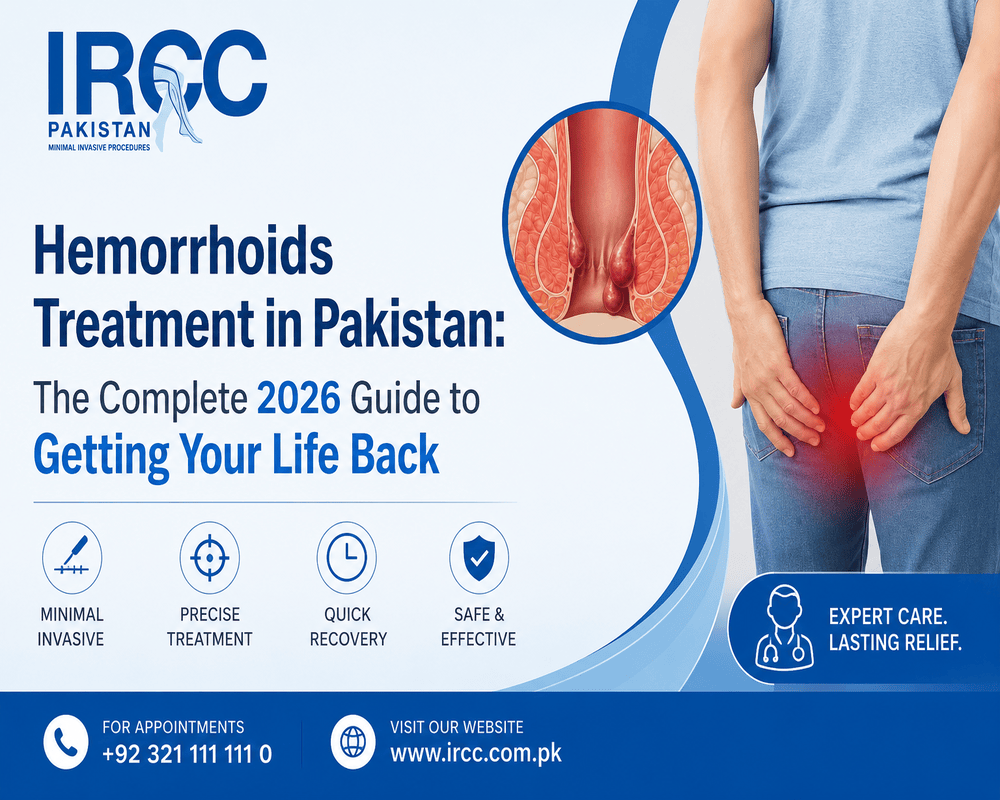
“Millions of Pakistanis silently suffer from hemorrhoids every year — not because treatment doesn’t exist, but because they don’t know where to look.”
If you’ve been quietly dealing with rectal bleeding, persistent itching, or that uncomfortable pressure that never quite goes away you are not alone.
Hemorrhoids (locally known as bawaseer or piles) affect an estimated 75% of people at some point in their lives. In Pakistan, the condition is alarmingly underdiagnosed because patients feel too embarrassed to seek help or assume painful surgery is their only option.
It isn’t. Modern hemorrhoids treatment in Pakistan has advanced dramatically, offering effective, minimally invasive solutions that require no hospital admission, no general anesthesia, and minimal recovery time.
This guide covers everything you need to know symptoms, treatment options, costs, specialists, and where to find the best care in Karachi, Lahore, and Islamabad.
What Are Hemorrhoids? Understanding the Basics
Hemorrhoids are swollen veins in the lower rectum and anus, similar in structure to varicose veins. They can develop internally (inside the rectum) or externally (under the skin around the anus).
Think of them as cushions of vascular tissue that every person has. The problem begins when these cushions become enlarged, inflamed, or prolapsed due to increased pressure.
What Causes Hemorrhoids?
Common triggers include:
- Chronic constipation or straining during bowel movements
- Prolonged sitting — particularly problematic for desk workers and drivers
- Low-fiber diet common in Pakistani households (refined foods, low vegetable intake)
- Pregnancy — increased abdominal pressure compresses rectal veins
- Obesity — excess weight increases pelvic pressure
- Aging — supporting tissues weaken naturally after age 45
- Heavy lifting — including physical labour and gym training
Recognizing the Symptoms of Hemorrhoids
Many patients at IRCC Pakistan come to us after months — sometimes years — of dismissing their symptoms. Early recognition is critical for effective, non-surgical treatment.
Key Warning Signs
Rectal Bleeding: Bright red blood on toilet paper or in the toilet bowl after a bowel movement. This is the most common presenting symptom and should never be ignored or self-diagnosed — it requires professional evaluation to rule out other conditions.
Pain and Discomfort: Burning or aching around the anus, especially after sitting for extended periods. External hemorrhoids can cause sharp pain if a blood clot forms (thrombosed hemorrhoid).
Itching and Irritation: Persistent anal itching is often caused by mucus secretions from internal hemorrhoids, leading to skin irritation and inflammation.
Prolapse: A feeling of tissue protruding from the anus, especially after bowel movements. In early stages, this reduces on its own; in advanced stages, it requires manual replacement or medical intervention.
Incomplete Evacuation: A sensation that the bowel has not fully emptied, causing patients to strain repeatedly — which worsens the condition.
Important: Rectal bleeding is never “normal.” While hemorrhoids are a common cause, bleeding can also indicate polyps, fissures, or colorectal cancer. Always consult a qualified hemorrhoids specialist in Pakistan for proper diagnosis.
Grades of Hemorrhoids: How Severe Is Yours?
Hemorrhoids are classified into four grades based on severity. Your grade determines which treatment is most appropriate.
| Grade | Description | Typical Treatment |
|---|---|---|
| Grade I | Small internal hemorrhoids, no prolapse | Dietary changes, medication, banding |
| Grade II | Prolapse during straining, returns spontaneously | Rubber band ligation, laser treatment |
| Grade III | Prolapse requires manual reduction | Laser treatment, HAL-RAR, embolization |
| Grade IV | Permanently prolapsed, cannot be reduced | Advanced minimally invasive or surgical treatment |
The encouraging news: Grades I through III respond exceptionally well to non-surgical treatments which account for the vast majority of patients seen at specialist centers.
Modern Non-Surgical Hemorrhoids Treatment in Pakistan
The field of proctology has been transformed over the past decade. Patients no longer need to fear knife-based surgery with its associated pain, hospital stay, and recovery time.
Here are the leading non-surgical hemorrhoids treatment options available in Pakistan today:
Rubber Band Ligation (RBL)
One of the most common and effective office procedures for Grades I–III internal hemorrhoids.
How it works: A small rubber band is placed at the base of the hemorrhoid, cutting off its blood supply. The hemorrhoid shrinks and falls off within 7–10 days.
- Pain level: Minimal to none
- Recovery: Same day return to light activities
- Success rate: 87–93% for appropriate candidates
- Sessions needed: Often 1–3 sessions
Sclerotherapy (Injection Therapy)
A chemical solution is injected directly into the hemorrhoidal tissue, causing it to shrink.
- Best for small, internal Grade I–II hemorrhoids
- Quick office procedure (under 15 minutes)
- Minimal discomfort
- May require repeat sessions
Infrared Coagulation (IRC)
Infrared light causes the hemorrhoid tissue to coagulate and reduce in size. Particularly effective for bleeding internal hemorrhoids.
HAL-RAR (Hemorrhoid Artery Ligation – Recto Anal Repair)
A Doppler-guided technique that identifies and ties off the arteries feeding the hemorrhoids, then repairs any prolapsed tissue.
- No cuts, no wounds
- Day-case procedure
- Very low recurrence rate
- Highly suitable for Grade II–III hemorrhoids
Laser Treatment for Piles in Pakistan
Laser treatment for piles in Pakistan has emerged as one of the most sought-after modern options — and with good reason.
How Laser Hemorrhoid Treatment Works
A laser fiber is introduced into the hemorrhoidal tissue, delivering precise energy that causes the tissue to shrink through photocoagulation. The surrounding healthy tissue is left completely unaffected.
Why Patients Choose Laser Treatment
- ✅ Completely bloodless procedure
- ✅ No cuts or sutures required
- ✅ Outpatient — go home the same day
- ✅ Minimal post-procedure pain
- ✅ Return to work within 24–48 hours
- ✅ Very low risk of infection
- ✅ Highly precise — no damage to sphincter muscles
Is Laser Treatment Effective for Piles?
Yes. Clinical studies consistently show laser hemorrhoidoplasty delivers success rates of 85–95% for Grade II and Grade III hemorrhoids, with significantly less post-operative pain compared to conventional surgery.
“Laser treatment has transformed the patient experience. What used to require a week in hospital and weeks of recovery can now be done in under 30 minutes with patients walking out the same day.” — Colorectal Specialist, IRCC Pakistan
Hemorrhoids Embolization: The Most Advanced Option
For patients seeking the absolute most advanced, minimally invasive option, hemorrhoid artery embolization (HAE) represents the frontier of modern treatment.
What Is Hemorrhoids Embolization?
Developed and refined over the past decade in interventional radiology, HAE involves threading a micro-catheter through the femoral or radial artery to the superior rectal arteries that supply blood to hemorrhoidal tissue.
Tiny microspheres or coils are then deployed to reduce blood flow to the hemorrhoids, causing them to shrink naturally over subsequent weeks.
Who Is a Candidate for Hemorrhoids Embolization in Pakistan?
- Patients with symptomatic internal hemorrhoids (Grade II–III)
- Individuals who are not ideal surgical candidates (due to age, anticoagulation, or comorbidities)
- Patients who have had prior failed surgical treatment
- Those seeking the absolute minimum invasive option
Key Advantages
- No general anesthesia required — performed under local anesthesia and light sedation
- No incisions — access through a tiny puncture site in the wrist or groin
- No disruption to the anal sphincter — critical for continence preservation
- Day procedure — most patients go home within hours
- Very low complication rate in experienced hands
IRCC Pakistan is among a small number of centers in the country offering hemorrhoids embolization — a testament to the level of interventional expertise available.
→ Learn more about IRCC Pakistan’s interventional procedures
7. When Is Surgery Necessary?
With so many effective non-surgical options, conventional hemorrhoidectomy (surgical removal) is now reserved for a minority of cases.
Surgery may be recommended for:
- Grade IV hemorrhoids that cannot be reduced and have failed conservative management
- Large, combined internal-external hemorrhoids with significant prolapse
- Recurrence after multiple non-surgical treatment attempts
- Strangulated hemorrhoids (a hemorrhoid with its blood supply completely cut off)
- Thrombosed external hemorrhoids causing severe acute pain
Even in these cases, modern surgical techniques — including stapled hemorrhoidopexy (PPH) offer significantly less pain and faster recovery than traditional open hemorrhoidectomy.
8. Hemorrhoids Treatment Cost in Pakistan
One of the most common questions patients ask is: how much does hemorrhoids treatment cost in Pakistan?
Cost varies depending on the treatment type, facility, and geographic location. Here is a general overview:
| Treatment Type | Approximate Cost Range (PKR) |
|---|---|
| Consultation (Specialist) | Rs. 2,000 – Rs. 5,000 |
| Rubber Band Ligation (per session) | Rs. 15,000 – Rs. 35,000 |
| Sclerotherapy | Rs. 10,000 – Rs. 25,000 |
| Laser Hemorrhoidoplasty | Rs. 80,000 – Rs. 200,000 |
| HAL-RAR Procedure | Rs. 100,000 – Rs. 180,000 |
| Hemorrhoids Embolization | Rs. 150,000 – Rs. 350,000 |
| Surgical Hemorrhoidectomy | Rs. 80,000 – Rs. 250,000 |
Note: These are approximate ranges and vary by facility, grade of hemorrhoids, and individual clinical factors. A specialist consultation will determine the most appropriate and cost-effective treatment for your specific case.
Is It Worth Spending on Proper Treatment?
Consider the alternative: years of chronic pain, repeated infections, worsening prolapse, impact on work productivity, and the psychological toll of suffering in silence. Effective hemorrhoids treatment in Pakistan is a sound investment in your quality of life.
→ Contact IRCC Pakistan for a transparent consultation and cost estimate
Finding the Best Hemorrhoids Specialist in Pakistan
Choosing the right specialist is as important as choosing the right treatment. Here is what to look for:
Qualifications to Verify
- Fellowship training in colorectal surgery or interventional radiology
- FCPS, FRCS, or equivalent post-graduate qualification
- Experience with minimally invasive proctological procedures
- Affiliation with an accredited hospital or specialist center
Questions to Ask Your Specialist
- What grade are my hemorrhoids, and how was that determined?
- What treatment do you recommend, and why is it the best option for me?
- How many of these procedures have you performed?
- What is the success rate and recurrence rate in your practice?
- What does recovery look like, and when can I return to work?
- Are there any risks specific to my health situation?
Red Flags to Avoid
- Clinics that push surgery without discussing non-surgical alternatives
- Practitioners who cannot clearly explain the procedure and its evidence base
- Facilities lacking proper sterilization and endoscopic equipment
- Promises of “permanent cure” without thorough diagnosis
10. Treatment by City: Karachi, Lahore & Islamabad
Hemorrhoids Treatment in Karachi
Karachi, as Pakistan’s largest city, has the highest concentration of specialist centers. However, quality varies enormously. Patients in Karachi should seek out dedicated colorectal or interventional radiology centers rather than general surgical clinics.
IRCC Pakistan is based in Karachi and offers the full spectrum of modern, non-surgical hemorrhoids treatments including laser therapy and embolization, performed by fellowship-trained specialists.
→ Visit IRCC Pakistan — Karachi’s Advanced Hemorrhoid Treatment Center
Hemorrhoids Treatment in Lahore
Lahore has a growing number of gastroenterology and colorectal centers. Patients should confirm that their provider offers non-surgical modalities (banding, laser, HAL-RAR) rather than defaulting to conventional surgery.
Hemorrhoids Treatment in Islamabad
The capital has several private hospital networks with colorectal units. For advanced interventions like hemorrhoids embolization, patients in Islamabad may need to travel to Karachi where specialist interventional radiology expertise is available.
Real-World Patient Scenario
Case: Ahmed, 47, Karachi — Grade III Hemorrhoids
Ahmed had been suffering from rectal bleeding and prolapse for three years before visiting IRCC Pakistan. He had been avoiding treatment out of fear of surgery. After a thorough evaluation, he was found to have Grade III internal hemorrhoids that were ideal candidates for laser hemorrhoidoplasty.
The procedure took 25 minutes under local anesthesia. Ahmed returned home the same afternoon and was back at his desk within 48 hours. At his six-week follow-up, he was completely symptom-free.
“I wish I had come sooner. Three years of suffering, and it was resolved in less than half an hour.”
Actionable Steps to Take Right Now
- Stop suffering in silence. Hemorrhoids are a medical condition, not a source of shame.
- Track your symptoms. Note when bleeding occurs, the degree of pain, and any prolapse.
- Improve your diet immediately. Increase fiber (vegetables, fruits, whole grains, pulses), drink 8–10 glasses of water daily.
- Avoid straining. Use a footstool to elevate your feet during bowel movements — this reduces straining significantly.
- Sitz baths. Warm water soaks 2–3 times daily provide immediate symptom relief.
- Book a specialist consultation. The earlier the grade, the simpler and less costly the treatment.
→ Book Your Consultation at IRCC Pakistan Today
Frequently Asked Questions
What is the best treatment for hemorrhoids in Pakistan?
The best treatment depends on the grade and severity of your hemorrhoids. For Grade I–II, rubber band ligation or laser treatment are highly effective. For Grade II–III, laser hemorrhoidoplasty or HAL-RAR are excellent options. For the most advanced minimally invasive approach, hemorrhoids embolization is now available at specialist centers like IRCC Pakistan. A qualified specialist will recommend the optimal approach after a thorough clinical assessment.
Can hemorrhoids be treated without surgery?
Yes — in the vast majority of cases, hemorrhoids can be successfully treated without surgery. Modern non-surgical treatments including rubber band ligation, laser therapy, sclerotherapy, HAL-RAR, and hemorrhoid artery embolization effectively treat Grade I through Grade III hemorrhoids. Surgery is generally reserved for Grade IV or failed conservative treatment.
How much does hemorrhoids treatment cost in Pakistan?
Costs range from approximately Rs. 15,000 for simple banding procedures to Rs. 80,000–200,000 for laser treatment and Rs. 150,000–350,000 for embolization. The cost reflects the technology, expertise, and the elimination of hospital admission costs associated with conventional surgery.
Who is the best hemorrhoids specialist in Pakistan?
The best specialist is one who is fellowship-trained in colorectal surgery or interventional radiology, can offer the full range of non-surgical treatment options, and works in a properly equipped facility. IRCC Pakistan has a team of experienced specialists offering comprehensive, evidence-based hemorrhoid care.
Is laser treatment effective for piles?
Yes. Laser hemorrhoidoplasty has consistently demonstrated success rates of 85–95% for appropriate candidates (Grade II–III), with significantly less pain and faster recovery than conventional surgery. The procedure is bloodless, requires no hospital admission, and patients can return to work within 1–2 days.
What are the symptoms of hemorrhoids?
The primary symptoms include bright red rectal bleeding (on toilet paper or in the bowl), anal itching or irritation, pain or discomfort around the anus, a feeling of incomplete bowel evacuation, and in advanced cases, prolapse of tissue from the anus. Any rectal bleeding should be evaluated by a specialist.
How long does hemorrhoids treatment take?
Most non-surgical procedures are completed in 15–45 minutes. Patients typically return home the same day. Recovery time is minimal — most people return to normal activities within 24–48 hours of laser treatment or banding. Full resolution of symptoms generally occurs within 2–6 weeks depending on the treatment.
Are hemorrhoids permanent if untreated?
Untreated hemorrhoids tend to worsen over time. Grade I can progress to Grade IV if dietary and lifestyle factors are not addressed. Early intervention — when treatment options are simplest and least expensive — is always the best approach.
Conclusion: You Don’t Have to Keep Suffering
Hemorrhoids are one of the most common — and most treatable — conditions in medicine. The notion that treatment means painful surgery and weeks of recovery is simply outdated.
Modern hemorrhoids treatment in Pakistan, available right here in Karachi, Lahore, and Islamabad, gives you:
- ✅ Accurate diagnosis by expert specialists
- ✅ A range of non-surgical treatment options
- ✅ Procedures done in under an hour
- ✅ Same-day discharge
- ✅ Return to normal life within days
- ✅ Long-term relief and prevention guidance
Whether you’re experiencing early symptoms or have been living with this condition for years — the right time to seek help is now.
Take the First Step: Book Your Consultation at IRCC Pakistan
IRCC Pakistan is a leading center for minimally invasive hemorrhoids treatment in Pakistan, offering the latest laser procedures, hemorrhoid artery embolization, and comprehensive colorectal care performed by fellowship-trained specialists.
Why IRCC Pakistan?
- Advanced diagnostic evaluation
- Full range of non-surgical and minimally invasive treatments
- Experienced, fellowship-trained specialists
- State-of-the-art facility in Karachi
- Transparent consultation and treatment planning
Book Your Consultation Today
🌐 Website: www.irccpakistan.com
Don’t let hemorrhoids control your life for another day. Expert, compassionate care is available — and it’s closer than you think.