
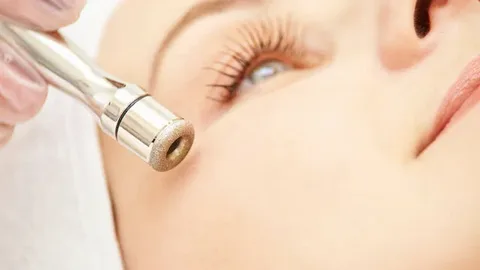
When it comes to treating stubborn facial discoloration, the path to a clear, even complexion can feel like a minefield. Two of the most popular clinical treatments a dermatologist utilizes for uneven skin tone are chemical peels and microdermabrasion. Both are highly effective at accelerating cell turnover, but they achieve this through fundamentally different mechanisms: one relies on controlled chemical exfoliation, while the other uses physical, mechanical friction.
For individuals dealing with complex pigmentary disorders like melasma (hormone-triggered patches) or Post-Inflammatory Hyperpigmentation (PIH) (dark spots left behind by acne or injury), choosing the wrong method can do more than delay results it can actively worsen the discoloration. This guide provides a direct comparison of chemical peels and microdermabrasion, analyzing safety, efficacy, and how your Fitzpatrick skin type should dictate your choice.
The Core Mechanisms: Chemical vs. Mechanical
To understand which treatment is superior for hyperpigmentation, we must look at how they interact with skin tissue.
Chemical Peels
Chemical peels, frequently utilized by a board-certified plastic surgeon to complement surgical facial rejuvenation, utilize carefully formulated, buffered acids (such as Alpha Hydroxy Acids like glycolic or lactic acid, or Beta Hydroxy Acids like salicylic acid) to break the ionic bonds between dead skin cells. This allows the dull, pigmented top layers of skin to shed uniformly. Beyond surface exfoliation, certain chemical peels contain tyrosinase inhibitor compounds that actively suppress the enzyme responsible for melanin (pigment) production, treating the hyperpigmentation at its cellular source.
Microdermabrasion
Microdermabrasion is a non-invasive mechanical procedure. A specialized handpiece uses either a diamond-tipped wand or a stream of fine abrasive crystals (like aluminum oxide) combined with a vacuum suction to physically sand away the dead cells of the stratum corneum (the outermost skin layer). While excellent for smoothing out rough physical texture, its primary action is strictly mechanical resurfacing.
Efficacy: Lifting Melasma vs. Post-Inflammatory Hyperpigmentation
Hyperpigmentation is rarely just a surface issue; its depth and trigger dictate how it responds to clinical treatments.
The Verdict on Melasma
Melasma is a deeply complex, vascular, and hormone-driven condition. Melanin-producing cells (melanocytes) in melasma-prone skin are hyper-reactive.
Why Microdermabrasion Fails Melasma: The physical friction, heat, and vacuum suction generated during microdermabrasion cause localized inflammation and heat production in the skin. For hyper-reactive melanocytes, this friction acts as a trigger, often causing melasma to rebound darker and more widespread post-treatment.
Why Chemical Peels Win: Chemical peels are overwhelmingly superior for melasma. Gentle, superficial peels using large-molecule acids like mandelic acid or targeted cocktails like Jessner’s solution can lift hyperpigmentation smoothly without generating the mechanical heat that triggers a pigment flare-up.
The Verdict on Post-Inflammatory Hyperpigmentation (PIH)
PIH occurs when an inflammatory event, such as a severe acne breakout, damages the skin and causes pigment to leak into the tissue.
The Microdermabrasion Risk: If PIH is accompanied by active or lingering acne, microdermabrasion can spread bacteria across the face and cause further micro-tears, creating new cycles of PIH.
The Chemical Peel Advantage: Chemical peels, particularly those utilizing lipophilic (oil-soluble) salicylic acid, are highly effective here. Salicylic acid dives deep into the pores to clear active acne while simultaneously lifting the dark spots left behind by old breakouts, solving both the trigger and the symptom.
The Safety Matrix: Fitzpatrick Skin Types
Your Fitzpatrick skin type, a scientific classification scale ranging from Type I (pale skin, always burns) to Type VI (deeply pigmented skin, rarely burns) is the single most critical factor in determining treatment safety.
| Fitzpatrick Skin Type | Skin Characteristics | Microdermabrasion Safety | Chemical Peel Safety |
| Types I – III | Fair to olive skin; low natural melanin density. | High Safety: Low risk of pigment complications from mechanical friction. | High Safety: Can tolerate superficial to medium-depth peels well. |
| Types IV – VI | Medium brown to deeply pigmented skin; high natural melanin density. | High Risk: Friction and suction frequently trigger severe rebound PIH. | Conditional Safety: Safe only with specific, slow-penetrating superficial acids. |
For Fair to Medium Skin (Fitzpatrick I-III)
Individuals in this category have a lower risk of pigmentary complications. Both microdermabrasion and chemical peels are highly safe options. For this group, the choice comes down to intent: if the goal is purely smoothing rough skin texture, microdermabrasion works beautifully. If the goal is aggressively fading dark spots, chemical peels deliver faster results.
For Richly Pigmented Skin (Fitzpatrick IV-VI)
In deeper skin tones, melanocytes are incredibly sensitive to trauma. Microdermabrasion poses a high risk for Fitzpatrick types IV-VI. The aggressive scratching of the diamond tip can be perceived by deeper skin tones as an injury, causing the skin to produce a flood of defensive melanin, resulting in severe hyperpigmentation.
Conversely, chemical peels can be safely customized for deep skin tones, provided aggressive acids like high-concentration glycolic acid are avoided. Slow-penetrating options like mandelic acid, lactic acid, or targeted superficial peels gently lift pigment without triggering the skin’s alarm system.
Choosing Your Path to Radiance
While microdermabrasion remains an excellent clinical tool for smoothing out rough skin texture, minimizing large pores, and revamping a dull complexion, it falls short in the treatment of pigmentary disorders.
Because hyperpigmentation is deeply tied to cellular inflammation, the chemical pathway of a customized peel provides a safer, more targeted, and significantly more effective solution. By suppressing melanin production at the source rather than simply scrubbing the surface, chemical peels remain the gold standard for lifting stubborn melasma and PIH safely across all skin tones.