

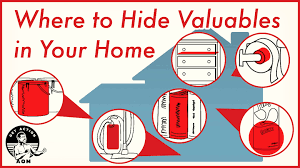
Most advice about protecting valuables focuses on buying stronger locks, installing cameras, or investing in safes. Those are all important, but they assume something simple. They assume a burglar is trying to break in and force access. In reality, many thefts happen quickly, with limited time and limited patience. That changes the strategy completely.
If someone only has a few minutes inside a home, they are not searching everywhere. They are looking in places that usually work. Drawers, closets, under mattresses, and obvious boxes are checked first. That means the real advantage comes from understanding behavior, not just hardware. Even when people use home security systems, the goal is often to reduce time and opportunity, not eliminate risk entirely.
So the smartest way to protect valuables is not always to make them harder to access. It is to make them harder to notice in the first place.
Think like someone in a hurry
The most effective hiding spots are built around one idea. A burglar does not have time to be thorough. They move quickly, scanning for familiar storage patterns. This means anything that looks like a storage space becomes a target.
Jewelry boxes, safes in obvious locations, desk drawers, and closet shelves all signal value. Even if they are locked, they draw attention. A person in a hurry may not open every container, but they will focus on the ones that look important.
The Bureau of Justice Statistics has reported that many residential burglaries are completed in minutes, reinforcing how speed shapes behavior during a break in. Their overview of household burglary patterns highlights how limited time influences what intruders choose to search.
This is why effective hiding is less about security through strength and more about security through invisibility.
Ordinary objects make the best cover
One of the simplest ways to hide valuables is to place them inside objects that appear completely ordinary. The key is to avoid anything that looks like it was designed to hold something important.
Items like old containers, unused packaging, or everyday household objects can work well because they blend into the environment. A small envelope tucked into a stack of papers often attracts less attention than a locked box sitting on a shelf.
The effectiveness comes from expectation. People tend to overlook items that seem unimportant. When something looks too ordinary to matter, it is often ignored.
This approach also has an advantage. It does not require special equipment. It relies on how people perceive their surroundings.
Height and depth are often overlooked
Most people hide valuables at eye level or in places that are easy to reach. This makes sense for convenience, but it also makes those spots more likely to be checked.
Areas that require extra effort tend to be safer. High shelves that are not easily visible, deep storage spaces that are not immediately accessible, or locations that require moving other items can reduce the chance of discovery.
This does not mean hiding things in places that are difficult for you to access. It means choosing spots that are slightly outside the normal flow of movement. A small shift in placement can make a big difference in visibility.
The idea is to stay just beyond what someone would check in a quick search.
Avoid patterns that reveal intent
Another common mistake is creating a pattern that signals something is hidden. For example, a single unusual container in an otherwise normal space can stand out. Even if the container itself looks ordinary, its placement may attract attention.
Consistency matters. If you use a method to hide valuables, it should blend with the rest of the environment. Items should not look out of place or arranged differently from everything around them.
This is where subtlety becomes important. The goal is not to create a clever hiding spot that feels like a trick. It is to create a natural environment where nothing seems worth investigating.
Split items instead of storing them together
Keeping all valuables in one place may feel organized, but it increases risk. If that location is discovered, everything is exposed at once.
A more effective approach is to separate items into different locations. This reduces the impact of any single discovery. Even if one hiding spot is found, others remain protected.
This strategy also aligns with risk management principles. The Federal Emergency Management Agency emphasizes the importance of distributing critical items and resources to reduce vulnerability. Their guidance on protecting important documents and valuables suggests spreading items rather than relying on a single location.
By dividing valuables, you create multiple layers of protection.
Accessibility should still matter
While hiding valuables is important, they still need to be accessible to you. A hiding spot that is too difficult to reach or remember can create its own problems.
The best solutions balance security with usability. You should be able to retrieve items without frustration, but not so easily that they are obvious to someone else.
This balance often comes from familiarity. A spot that feels natural to you may not be noticeable to others. Over time, it becomes part of your routine without standing out.
Combine hiding with other layers of protection
Hiding valuables is most effective when it is part of a broader approach. Physical security measures, awareness, and routine habits all contribute to overall protection.
Locks, alarms, and surveillance can deter entry or reduce time inside a home. Organization can prevent valuables from being left in obvious places. Awareness can help identify risks before they become problems.
Each layer adds another obstacle. None of them need to be perfect on their own. Together, they create a system that is harder to overcome.
The goal is to reduce attention, not create a challenge
One of the most important ideas to remember is that hiding valuables is not about creating a puzzle. It is about avoiding attention.
A clever hiding spot that draws curiosity can be less effective than a simple one that blends in completely. The more natural something looks, the less likely it is to be examined.
This is why everyday camouflage works so well. It does not rely on complexity. It relies on normality.
Small decisions can make a big difference
Protecting valuables at home does not always require major changes. Small adjustments in where and how items are stored can significantly reduce risk.
Moving items out of predictable locations, using ordinary objects as cover, and avoiding patterns that signal value are all simple steps. Over time, these choices create a safer environment without making daily life more complicated.
In the end, the best hiding strategies are the ones that go unnoticed. When nothing stands out, there is nothing to find.