
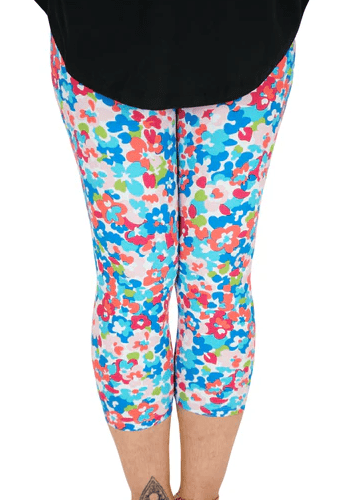
Leggings get dismissed a lot. People write them off as gym wear, or something thrown on when nothing else is clean. That reputation does a disservice to what a well-made pair actually does. Soft leggings have quietly worked their way from the bottom of the wardrobe to the top — and for reasons that go deeper than comfort.
Comfort That Changes Posture
There is a term clothing researchers use called “constriction fatigue.” The experience is familiar to anyone who has peeled off jeans at the end of a long day and felt immediate relief. Tight waistbands and rigid panels force surrounding muscles to brace against the fabric for hours. By late afternoon, that shows up as lower-back soreness that gets blamed on a desk chair or a bad mattress. Soft leggings remove the source of the tension rather than just tolerating it.
Why the Fit Actually Flatters
Compression is not the whole story when it comes to a flattering fit. The fabric’s recovery rate matters just as much — that is how fast the material returns to its original shape after being stretched. Cheaper knits have slow recovery, which is why they bag at the knee and go sheer across the seat quickly. A well-built pair uses a denser, more responsive knit that bounces back and holds an even surface. Soft leggings made this way distribute tension rather than bunching it at weak spots, which is what actually keeps the silhouette clean.
The Fabric Science
The difference between a legging that turns uncomfortable mid-morning and one that stays fresh all day comes down to fibre structure. A moisture-wicking finish pulls perspiration away from the skin and spreads it for faster evaporation. Cotton does the opposite. In Australian humidity, especially along the coast, that distinction becomes obvious fast. Soft leggings with wicking properties handle warm weather in ways natural-fibre alternatives cannot.
Outfit Logic Most People Miss
Most styling advice around leggings focuses on covering them up — long tops, oversized knits, anything to downplay them. That approach misses the point. A quality pair in a deep matte tone works as a visual anchor, letting the top half carry the personality. Bold earrings, a statement sleeve, or a structured collar all read more clearly when the bottom half stays calm. Stylists who build capsule wardrobes know this well.
What Durability Actually Looks Like
Pilling happens when short fibres break free from the yarn and roll into tiny balls on the surface. It is the fastest visible sign of a weak knit, and heat washing makes it worse. Fabrics from longer fibres resist this because there is less loose material to escape. A pair that comes out of the wash smooth, even, and unchanged has been made with materials sourced more carefully. That is what real durability looks like, not just a reinforced seam.
Sensitive Skin Reacts to Dye
Skin reactions get blamed on fabric more often than they deserve. The more common culprit is reactive dye used in dark and vivid colours. These dyes bond with fibre but can leave residual compounds that irritate skin over time. Pale shades and undyed fabrics carry far fewer of these. Anyone who has given up on fitted clothing due to recurring irritation might find the shade, not the style, was the real problem.
The Washing Mistake That Ruins Them
Elastane gives leggings their stretch, and it is extremely sensitive to heat. Warm or hot water breaks down the bonds that give elastane its memory — not just cleans it. Once that happens, the shape goes gradually, then all at once. Cold water washing and hanging to dry is the only method that actually preserves stretch across repeated washes.
Conclusion
Soft leggings have built a permanent place in the wardrobe because they quietly fix problems that most other clothing creates. Tension, poor fit after washing, skin irritation — a well-made pair handles all of it without the wearer having to think twice. Knowing why one pair outperforms another makes choosing much easier — and means getting genuinely good wear out of something already reached for on most days.
