
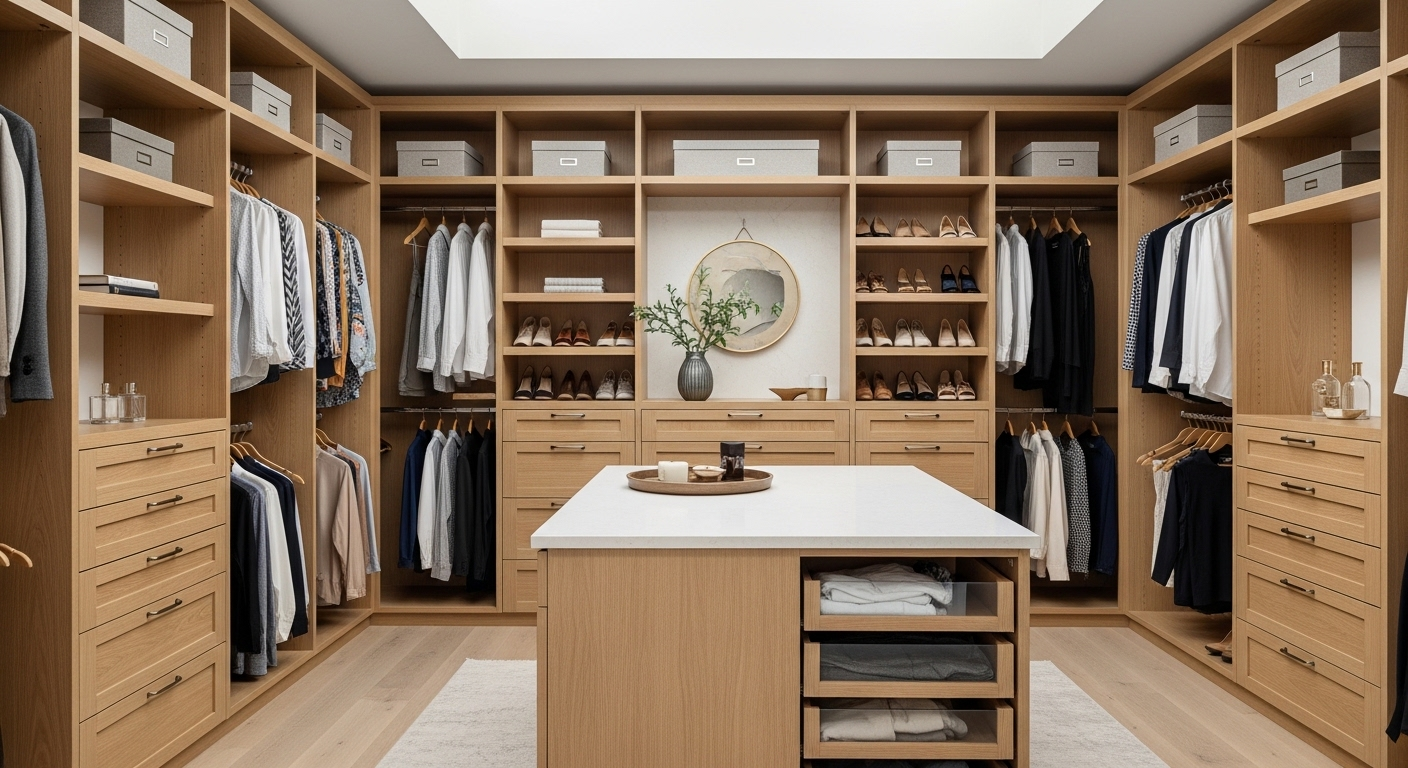
In luxury homes, the closet is no longer treated as a hidden space that needs to hold more. Across Greater Phoenix, it is increasingly considered part of the home’s visual and functional identity. That shift reflects a broader change in how homeowners think about design quality. A premium interior is no longer judged only by finishes, furniture, and square footage. It is also judged by how seamlessly the home supports daily routines. When a closet feels crowded, visually noisy, or difficult to navigate, it interrupts that experience. When it feels clear, intentional, and easy to use, it starts to function as a design feature in its own right.
Why the Closet Is Gaining More Design Importance
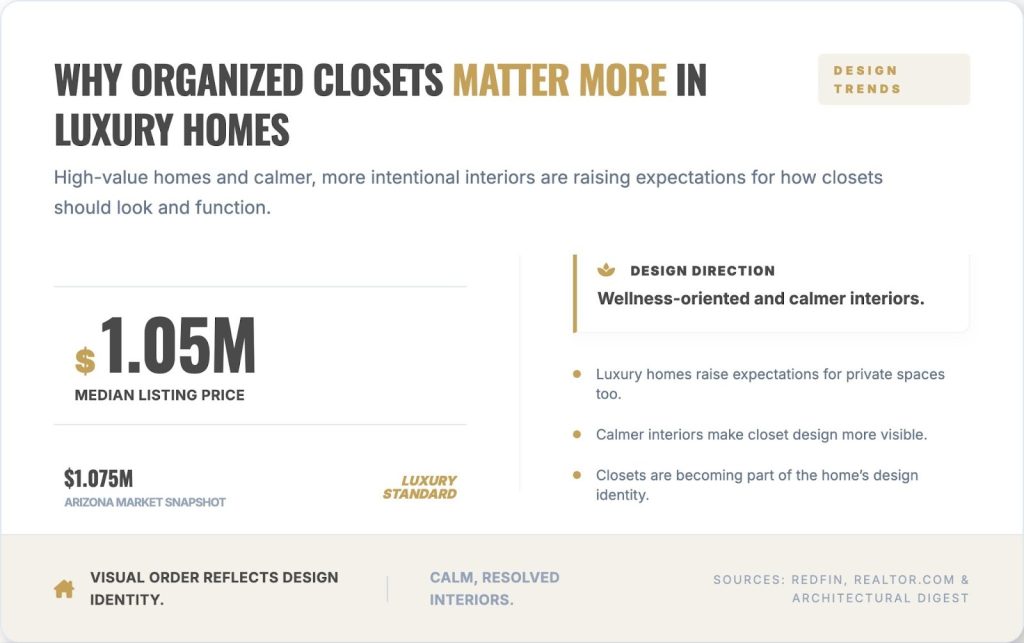
One reason organized closets are gaining more attention is that high-end homeowners are now placing greater value on spaces that reduce visual stress and improve everyday flow. Luxury design has moved steadily toward calm interiors, integrated storage, and rooms that feel edited rather than overworked. In that context, the closet becomes more than a support space. It becomes part of the home’s internal rhythm. A beautifully designed bedroom suite does not feel fully resolved if the adjoining closet remains overfilled, hard to scan, or disconnected from how the household actually functions.
That is especially true in Greater Phoenix, where luxury homes often balance polished aesthetics with highly active lifestyles. Homeowners may be managing professional wardrobes, resort wear, event dressing, travel preparation, seasonal adjustments, and entertaining calendars all within the same home. In a setting like that, the closet is not just a place to keep things. It is where the day gets organized. Once that role becomes more visible, the closet’s design value becomes harder to dismiss.
Luxury Organization Is Moving Beyond Basic Storage
There is also a growing recognition that storage alone does not create a luxury experience. A large closet can still feel inefficient if it lacks visibility, logical grouping, or a system that reflects how the owner actually uses it. This is where organized closets begin to separate themselves from generic storage solutions. The point is not simply to add more containers, shelving, or hanging space. The point is to create a layout that feels intuitive, calm, and aligned with the routines it supports.
In practical terms, that means organized closets are increasingly being shaped around category clarity, accessibility, and visual editing. Homeowners want to find pieces quickly, see what they own, and keep the space feeling composed rather than overburdened. A closet that achieves those goals starts to function more like a dressing environment than a storage compartment. That shift is one reason the organized closet is becoming part of the design conversation instead of remaining purely an organizational project.
Greater Phoenix Homeowners Are Linking Function With Presentation
A recent Greater Phoenix-focused article, “Why Luxury Home Organization Is Becoming a Bigger Priority Across Greater Phoenix,” framed this change as part of a broader lifestyle expectation in the local luxury market. Its central point was that affluent homeowners are increasingly treating storage as part of how the home lives and presents itself, rather than just a practical necessity behind closed doors. That local framing is useful because it shows how closet organization is becoming tied to a broader expectation of ease, curation, and visual cohesion across the home.
That perspective makes particular sense in high-end Phoenix-area homes, where design choices often emphasize flow, openness, and a sense of quiet control. In these environments, the closet is not isolated from the rest of the interior. It is part of the same standard. When well organized, it reinforces the overall sense of order and refinement. When it is chaotic, it undermines it. That is why more homeowners are beginning to see closet organization as a design issue rather than just a storage issue.
Why Visual Calm Matters in High-End Interiors
Visual calm has become one of the more important signals of luxury. This is not only about minimalism. Many affluent homeowners have substantial wardrobes, accessories, and seasonal pieces. The goal is not necessarily to own less. It is to create an environment in which what is owned feels intentional, legible, and controlled. An organized closet contributes to that by reducing visual friction. It allows categories to breathe, preserves cleaner sight lines, and makes the space feel more composed.
That sense of calm has practical value as well. A closet that is easier to read is easier to maintain. It supports faster dressing decisions, smoother travel preparation, and better long-term habits around editing and rotation. In this way, visual order becomes functional order. That overlap is part of what gives organized closets their design importance. They do not simply look better. They help the home operate better.
Built-In Thinking Is Influencing Closet Expectations
Another reason organized closets are becoming design features is that homeowners increasingly expect storage to feel integrated rather than improvised. In a luxury setting, the most successful spaces tend to look as though they were planned with the same level of intention as the rest of the home. That does not always require major construction. It often requires a stronger organizational strategy, clearer zoning, and better alignment between the homeowner’s habits and the space itself.
When that alignment is missing, even a large closet can feel oddly inefficient. When it is present, the space begins to feel more architectural. It reads as part of the home’s design logic rather than a leftover utility zone. That is one reason organized closets now attract more attention in lifestyle and interiors coverage. They sit at the intersection of design, routine, and presentation in a way that feels increasingly central to modern luxury living.
What Homeowners Want From an Organized Luxury Closet
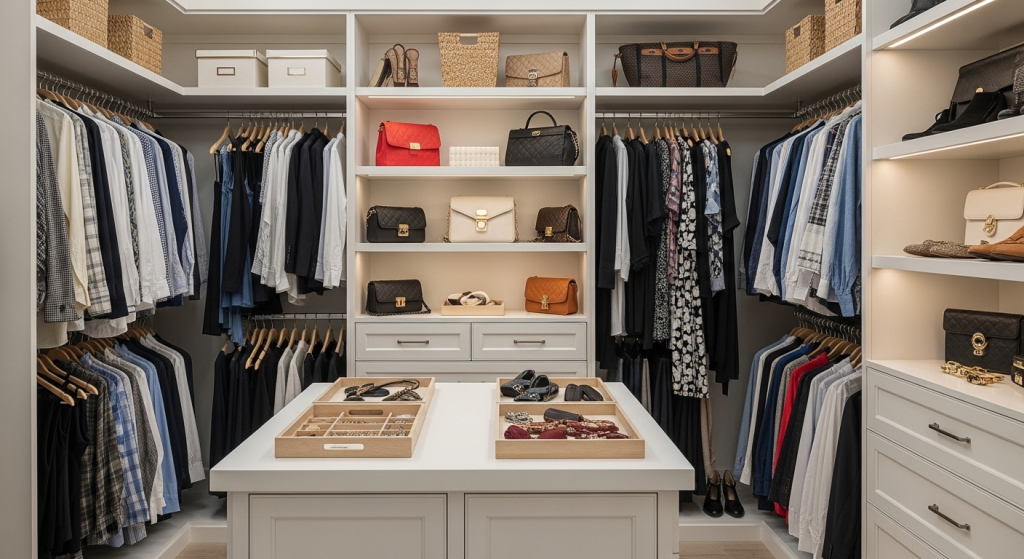
In Greater Phoenix, homeowners who invest in closet organization are often looking for three things at once. They want better visibility, better daily flow, and a more polished visual result. Visibility helps reduce duplication and makes wardrobes easier to manage. Flow improves how the space functions during real routines. The polished result reinforces the home’s overall design quality. Together, those goals elevate the organization beyond simple tidiness.
A local example of that higher-end approach can be seen in this Scottsdale closet organization service overview, which reflects the curated, function-forward closet planning that many luxury homeowners now expect. What stands out in this approach is not just order for its own sake, but organization that supports accessibility, presentation, and a more controlled daily experience.
Why This Trend Is Likely to Keep Expanding
Organized closets are likely to keep gaining importance in Greater Phoenix luxury homes because the priorities behind them are not temporary. High-end homeowners continue to value personalization, design coherence, and interiors that support a smoother lifestyle. At the same time, more people are recognizing that storage quality affects how a home feels just as much as many more visible design elements do. The closet is simply becoming harder to ignore as part of the home’s overall experience.
Conclusion
Across Greater Phoenix, organized closets are becoming a design feature because luxury homeowners increasingly expect private spaces to perform with the same clarity and refinement as public ones. The closet is no longer judged only by capacity. It is judged by visibility, usability, and how well it contributes to the home’s overall sense of order. In that sense, closet organization is not peripheral to luxury design. It is becoming one of the quieter but more meaningful ways high-end homes express ease, intention, and control.
