
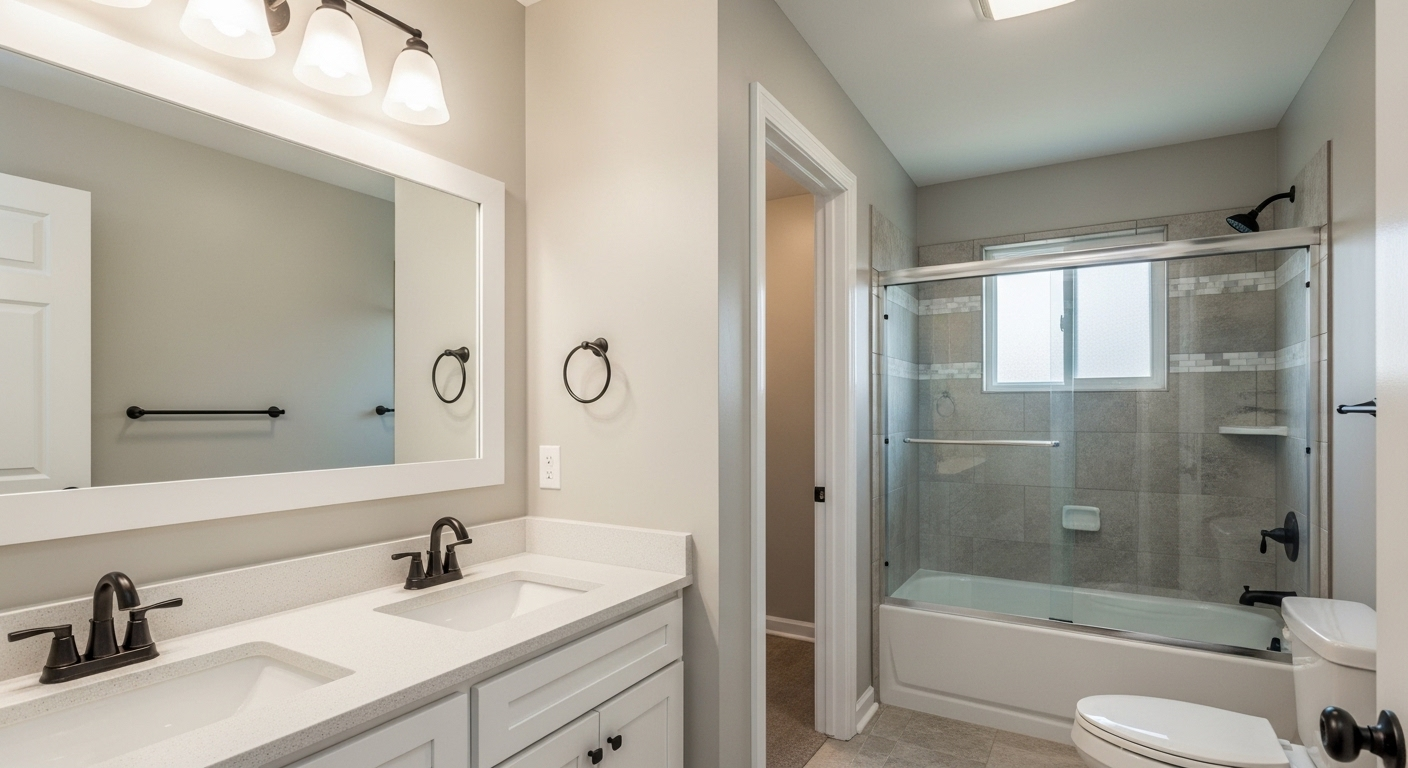
Indiana’s renovation economy is increasingly being shaped by one simple fact. The homes are getting older. That matters because age changes what homeowners prioritize. A newer house may invite optional upgrades driven by taste. An older house often creates project demand driven by function, maintenance, and habit. Bathrooms sit at the center of that shift.
They are small rooms with heavy daily use, multiple mechanical systems, and little tolerance for outdated layouts. When an older bathroom stops working well, the problem becomes visible fast. That is one reason bathrooms are emerging as one of the most important renovation zones in Indiana right now.
Aging Housing Stock Is Changing Renovation Priorities
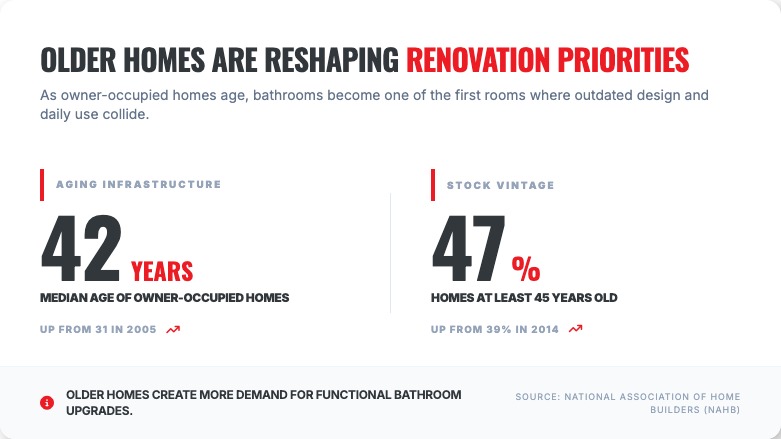
The national data provides a useful starting point. The National Association of Home Builders’ analysis of aging housing stock shows that the median age of owner-occupied homes in the United States has continued to rise. That trend carries major implications for remodeling demand. Older homes can remain valuable and durable, but they often contain bathrooms designed for earlier expectations around lighting, storage, movement, and accessibility.
Many still function at a basic level, yet basic function is no longer enough for households that need more efficient routines and more adaptable spaces. In practical terms, age turns the bathroom into one of the first rooms where changing standards become impossible to ignore.
Bathrooms Are Well-Suited to the Current Remodeling Cycle
The renovation side of the market confirms that those pressures are translating into actual projects. The latest Harvard remodeling outlook indicated a return to growth in homeowner improvement spending, signaling that households remain willing to invest when the case is compelling enough. Bathrooms often satisfy that threshold because they combine everyday use with concentrated impact.
A homeowner may live for years with an outdated spare room or worn flooring in a low-traffic area, but poor bathroom lighting, poor storage, an uncomfortable shower setup, or aging surfaces can disrupt the rhythm of everyday life. That makes the remodel easier to justify even in a cautious spending environment.
The Frankfort Example Shows How the Trend Looks Locally
A recent local report, “Why Bathroom Remodeling Demand Is Rising in Frankfort, Indiana,” illustrated how this statewide pattern is evident in a smaller market. The Frankfort example is useful not because it is unusually dramatic, but because it is representative. It shows how older housing, moderate home values, and stay-put homeowner behavior combine to create steady demand for bathroom upgrades.
Rather than chasing highly stylized renovations, many homeowners are focusing on practical improvements such as better vanities, more efficient layouts, updated tile, stronger lighting, improved storage, and more durable finishes. That local pattern aligns closely with what industry data would lead observers to expect across Indiana.
Older Indiana Communities Create Steady Bathroom Demand
Indiana is particularly well-positioned to reflect this trend because many communities feature mature housing stock and a strong owner-occupied base. In such markets, the decision to renovate usually emerges slowly. A family endures a dim vanity area. A small shower becomes harder to use. Outdated tile begins to feel more like a maintenance liability than a design character. Storage becomes a recurring source of frustration.
Over time, these issues stop feeling temporary. The bathroom becomes the room that most clearly signals the gap between the house as built and the house as currently lived in. That is when demand starts moving from passive interest to active project planning.
Why Bathrooms Are Becoming a Strategic Upgrade
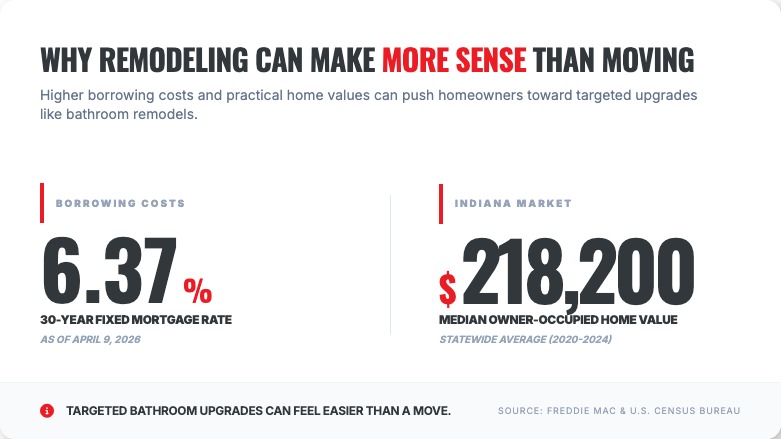
The state’s housing context adds another reason bathrooms are gaining prominence. Moving remains expensive enough to make strategic remodeling attractive. Homeowners who already have a favorable mortgage or who do not want the disruption of relocating are more likely to invest in projects that yield a clear functional return. Bathrooms are especially effective in that role. They are smaller than kitchens, more bounded than major additions, and highly noticeable in both present use and future resale context. In other words, they allow homeowners to make meaningful changes without reopening every variable associated with a larger move.
That does not mean all bathroom projects are the same. In many Indiana communities, the strongest demand appears to be concentrated in work that improves livability rather than extravagance. Homeowners want clear sightlines, high-quality materials, easier cleaning, better storage, and layouts that feel more natural. They are also paying greater attention to long-term usability. A shower entry that feels inconvenient today may feel like a much bigger problem later. Lighting that is merely annoying at first becomes a more serious issue over the years of use. Bathroom remodeling falls between these concerns because the room has both immediate and future importance.
Why the Shift Looks Durable Across Indiana
The Frankfort example is significant because it demonstrates how a local operator can observe the same forces that national data already suggests. Homeowners are not simply responding to inspirational photos or trend cycles. They are acting on accumulated discomfort, practical maintenance needs, and the desire to make older houses perform better.
That is why demand for bathrooms often rises even when broader consumer sentiment is mixed. A homeowner may postpone other discretionary spending, yet still move forward on the bathroom because the problem is constant and the payoff is tangible.
Indiana bathrooms are becoming the next big renovation zone because they sit at the intersection of several market conditions. Housing stock is older. Borrowing conditions continue to make moving less attractive for many households. Remodeling activity has stabilized enough to support targeted projects. And the bathroom itself remains one of the most visible and frequently used rooms in the home.
That combination creates a durable source of demand rather than a temporary spike. It suggests that bathroom remodeling will continue to function as a bellwether for how Indiana homeowners adapt mature housing to modern expectations.
Conclusion
For observers of the housing and renovation market, this matters because bathrooms reveal how households think when budgets are real and priorities are practical. They are not the largest rooms, but they often capture the clearest blend of maintenance necessity, quality-of-life improvement, and market awareness. In Indiana, where many homes have already served families for decades, that blend is becoming more important with each passing year.
Bathrooms are moving to the front of the remodeling conversation because they are where the home’s age meets the needs of the present most directly.
