
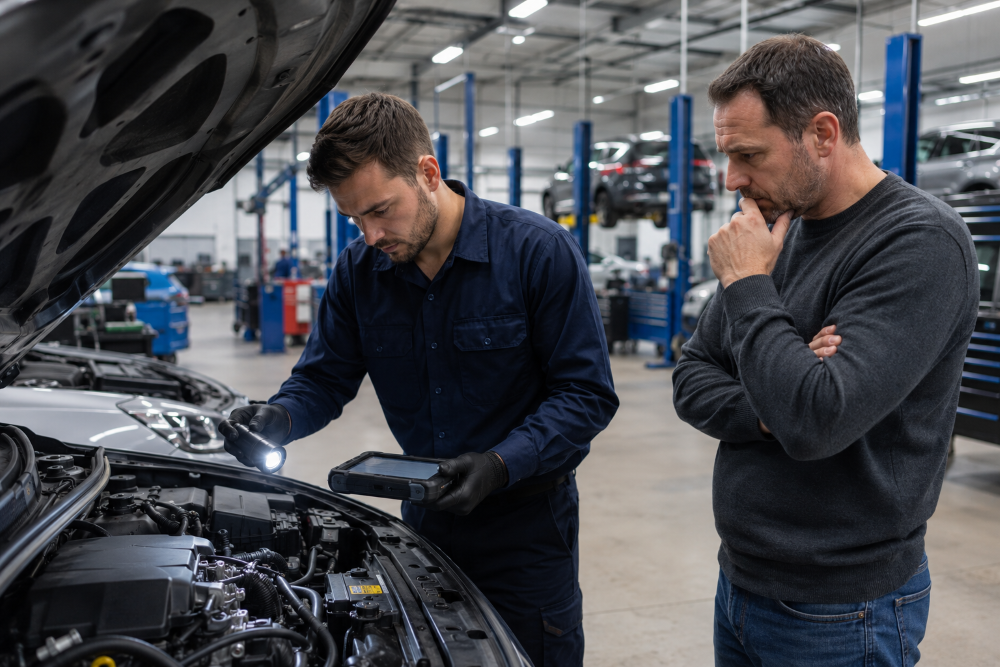
That unexpected rattle, squeal, or thud coming from your car is never easy to ignore and you shouldn’t. Strange car noises are often your vehicle’s way of telling you something is wrong. Catching the problem early can mean the difference between a minor fix and a costly repair. Whether you’ve noticed a grinding sound when braking, a knocking under the bonnet, or a hissing you can’t quite place, understanding what those sounds mean puts you in control. In this guide, we break down the most common causes of car noises and explain when it’s time to book professional car servicing and repair.
Squealing or Screeching: Time to Check Your Brakes
A high-pitched squeal especially when you apply the brakes is one of the most common and recognisable car noises. It usually points to worn brake pads. Most modern pads include a metal wear indicator that deliberately creates this sound to alert you before the pads wear down completely. If you ignore this warning and the screeching turns into a harsh grinding noise, your brake rotors may now be damaged a much more expensive problem. Don’t wait. Have your brakes inspected by a trusted mechanic in Rydalmere as soon as the squealing starts.
Other Brake-Related Noises to Watch For
Grinding when braking worn pads metal-on-metal contact
Clicking or rattling loose brake hardware or caliper issue
Pulsing or vibration warped rotors needing resurfacing or replacement
Knocking Sound from the Engine: Don’t Ignore This One
A deep knocking or thumping noise from the engine bay is a red flag. It often signals that engine bearings the components that support your crankshaft are worn and are now allowing metal-to-metal contact. This is sometimes referred to as “rod knock.” Engine knock can also be caused by using the wrong fuel octane rating or carbon build-up inside the combustion chamber. Whatever the cause, this is not a sound you should put off. Left unchecked, it can lead to serious engine damage requiring a full rebuild. If you’re hearing this in the Western Sydney area, bring your vehicle to a qualified car workshop in Rydalmere for a proper engine diagnostic before the problem escalates.
Hissing or Whistling: Possible Vacuum or Coolant Leak
A hissing sound particularly after you switch off the engine often points to a coolant leak hitting a hot engine surface. You might also notice your temperature gauge climbing higher than usual. This is a cooling system issue that needs prompt attention. Whistling while driving, on the other hand, can indicate a vacuum leak a crack or loose connection in one of the rubber hoses in your intake system. Your engine may also idle roughly or feel sluggish if this is the case.
Quick Checks If You Hear Hissing
Check your coolant reservoir is the level low?
Look for any white smoke or steam coming from under the bonnet
Check if your engine warning light has come on
If unsure, take it straight to a local mechanic in Rydalmere
Clunking Over Bumps: Suspension and Steering Issues
Hearing a clunk or thud every time you hit a pothole or speed bump usually means there’s an issue with your suspension system. Worn sway bar links, ball joints, or shock absorbers are common culprits. These components are critical to keeping your vehicle stable and your tyres in contact with the road. Ignoring suspension problems doesn’t just lead to uncomfortable rides it can affect your steering control and tyre wear, making driving unsafe. This is especially important if you do a lot of driving around Sydney’s varied road conditions. A full suspension check from an experienced automotive repair specialist in Rydalmere will pinpoint the worn parts and get your ride feeling smooth and safe again.
Rattling Underneath: It Could Be Your Exhaust
A rattling sound coming from beneath the car especially when idling or accelerating is often caused by a loose exhaust component. The exhaust system is made up of several sections held in place by brackets and hangers. Over time, these can rust, crack, or loosen. A loose heat shield around the catalytic converter is also a common source of rattling. While it might sound minor, a failing exhaust can increase emissions, reduce fuel efficiency, and in some cases allow dangerous gases into the cabin. Your local car service centre in Rydalmere can inspect the full exhaust system and carry out any necessary vehicle repairs quickly and affordably.
Why Regular Car Servicing and Repair Prevents Strange Noises
Most strange car noises don’t appear overnight. They develop gradually as components wear and fluids degrade things that routine servicing is designed to catch early. A comprehensive car service covers brake inspection, fluid top-ups, belt checks, tyre rotation, and more. Staying on top of your vehicle’s service schedule means small issues get resolved before they become expensive problems and it keeps your car running quietly and efficiently. For residents across Rydalmere and the greater Western Sydney area, finding a reliable automotive workshop you can trust makes all the difference to your vehicle’s long-term health.
Conclusion
Strange car noises are your vehicle’s early warning system. From squealing brakes and engine knock to exhaust rattles and suspension clunks, each sound tells a story and the sooner you have it diagnosed, the better. Professional car servicing and repair doesn’t just fix problems it prevents them. By staying on top of your vehicle’s maintenance, you avoid costly breakdowns, keep your car safe, and enjoy a smoother, quieter drive every time. If your car has been making noises you can’t explain, don’t put it off. Bring it to a trusted car mechanic in Rydalmere and get peace of mind before a small issue turns into a big one.
Frequently Asked Questions
Q1: Is it safe to drive my car if it’s making a grinding noise?
Grinding noises especially from the brakes are a sign you should stop driving and get the car inspected immediately. Continuing to drive can worsen the damage and, more importantly, compromise your ability to stop safely.
Q2: How do I describe a car noise to my mechanic?
Note when the noise happens (braking, accelerating, turning, over bumps), where it seems to come from (front, rear, underneath, engine), and whether it’s constant or intermittent. The more detail you can give your mechanic, the faster they can diagnose the problem.
Q3: What causes a ticking or tapping noise from the engine?
A ticking sound from the engine often means low oil pressure or worn valve train components. Check your oil level first. If it’s fine and the ticking persists, have a car mechanic in Sydney inspect the valve clearances and oil system.
Q4: How often should I have my car serviced to avoid problems?
Most vehicles require a service every 10,000–15,000 km or every 6–12 months whichever comes first. Check your owner’s manual for your vehicle’s recommended schedule. Regular vehicle servicing in Rydalmere keeps your car in top condition and prevents unexpected noises and breakdowns.
Q5: Can a strange noise affect my car’s roadworthiness?
Yes. Many of the issues that cause unusual noises worn brakes, damaged suspension, exhaust leaks can directly affect your car’s roadworthiness. If you’re in New South Wales, a vehicle with these faults is unlikely to pass a safety inspection. Get them checked promptly by a qualified auto repair specialist in Rydalmere.
Q6: Why does my car only make a noise when it’s cold?
Cold-start noises are common and are often caused by oil not yet circulating fully, or rubber seals and components contracting in cool temperatures. A brief rattle on start-up that disappears quickly is usually harmless. But if it lingers or worsens, have it investigated by your local mechanic in Rydalmere.