
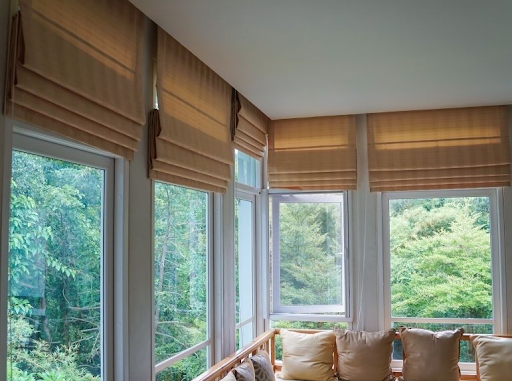
Most people pick window treatments last. The furniture is in, the walls are painted, the rugs are down — and then someone notices the windows look unfinished. That approach leads to choices that technically work but never sit right. Roman blinds in Sydney tend to attract a different kind of buyer. People who have made one wrong choice already and are now being more deliberate. What draws them to roman blinds is not just appearance. It is how well the style holds up once it is living in the room with them.
Sydney Light Is Not Forgiving
There is a particular quality to Sydney’s afternoon sun that people from cooler climates find genuinely startling. It does not just brighten a room — it floods it, and whatever is in its path takes the hit. Timber floors bleach out. Fabric on sofas thins and dulls. Paint colours that looked right in the shop look completely different by mid-afternoon on a summer’s day. Roman blinds, when lined well, interrupt that process. The key is in how they sit against the glass — flat, with no side gaps — rather than hanging forward of the window the way curtains do. That flush contact with the frame is what separates a blind that softens light from one that actually controls it.
Why Open-Plan Rooms Are Tricky
Open-plan layouts present a challenge that most window treatment advice ignores. When a kitchen, dining area, and living space all share the same sightline, every window covering in that run needs to read as one decision. Curtains on one window and a roller blind on the next create a visual inconsistency that pulls the whole space apart. Roman blinds in Sydney homes work here because the profile is consistent regardless of window width. They can be narrow or wide, fitted inside or outside the recess, and will still produce the same clean horizontal fold that holds a long room together.
The Fabric Decision Most People Get Wrong
The most common error is choosing roman blind fabric, and it happens for the same reason: people pick only based on colour. Colour matters, but weight and weave are more important in practice. When backlit by the afternoon sun, a lightweight cloth on a west-facing Sydney window will allow in more heat than expected, even if the hue appears impenetrable in the showroom. A medium-weight linen or woven cotton with a thermal lining behaves completely differently. Roman blinds of heavier materials also stack more compactly when raised, obscuring less of the window while open – a small feature until the blind is up and the room is much brighter as a result.
What Nobody Tells You About Kitchens
Roman blinds above a kitchen sink divide opinion, mostly among people who have never actually had one. The concern is always the same — steam and moisture will ruin the fabric. In practice, a blind made from a tightly woven synthetic blend or treated cotton handles a kitchen without issue, provided it is not hanging directly over a boiling hob. What roman blinds do in a kitchen that nothing else manages quite as well is finish the window without drawing attention to it. A roller blind looks functional. A curtain looks out of place. A roman blind in the right fabric just looks like the room was thought through.
They Do Not Go Out of Style
Roman blinds do not follow seasons the way printed roller blinds or macramé panels do. The structure stays neutral — what changes is the fabric, and fabric can be updated without replacing the mechanism. That modularity is useful in Sydney’s property market, where homes change hands and tastes shift with them.
Conclusion
Roman blinds in Sydney suit the city in ways that are easy to overlook until you have lived with them. The combination of how they handle strong light, how they read across open-plan spaces, and how little they intrude on a room makes them a quietly reliable choice. They are not the most dramatic window treatment available. But in a room where everything else is working, that restraint is usually exactly what is needed.
