
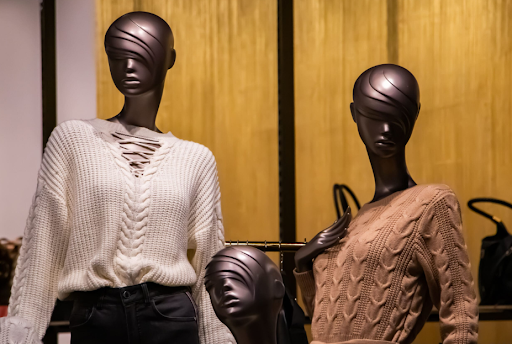
There is a reason certain shop windows stop people mid-stride. Not because the clothes hanging inside are exceptional on their own, but because something about the presentation feels worth a second look. That pull is rarely down to luck. It comes from deliberate choices made about how products are shown — and female mannequins sit at the centre of those choices, styled with real intention and positioned to do serious commercial work.
Clothes Need Context
A folded jumper on a shelf is just a jumper. Dress it onto a form, belt it at the waist, layer a collar underneath — suddenly it becomes a decision worth making. Shoppers are not always able to mentally reconstruct an outfit from separate hanging pieces. They need to see the finished thought laid out in front of them. Display forms quietly remove the guesswork. They replace uncertainty with clarity, and that clarity is precisely what nudges a casual browser toward actually buying something.
Posture Sells More Than People Think
Most retailers put thought into what a mannequin wears. Far fewer think carefully about how it stands. A rigid, symmetrical pose communicates very little. A slight weight shift, a turned shoulder, an extended arm — these small adjustments change how fabric falls and how a silhouette reads. Female mannequins styled with considered posture suggest movement and real life rather than just product. Shoppers respond to that emotionally, even if they cannot explain why. That emotional response is what separates a display people glance at from one that actually brings them through the door.
Windows Are Not for Everything
A typical error is to see the store window as an opportunity to display as much product as possible. Cluttered windows divide attention rather than retaining it. The most effective displays are simple – one powerful look, a chosen colour narrative, and a single obvious focus point. When mannequins are utilised wisely and styled with restraint, they go from props to communication. The appropriate shopper enters already half-convinced, since the window talked to them before they even touched the door handle. That’s not decoration. That is pre-selling.
Displays Answer Questions Shoppers Have Not Asked Yet
There is real commercial value in showing people how to wear something, not only what is available. A customer standing in front of a rail of blazers may not think to pair one with a particular trouser or layer it over a specific knit. A well-styled mannequin has already solved that puzzle for them. It answers the question they had not yet thought to ask. Retailers who approach their displays as a styling service rather than a storage solution tend to find customers picking up several pieces at once — not because they were pushed into it, but because the display made the combination feel obvious.
The Shop Floor Must Follow Through
A stunning window that leads into a disorganised, unstyled interior sends a confusing message. Shoppers read the whole environment whether they mean to or not. Their trust in a brand is shaped by whether the shop floor delivers on the promise the window made. Keeping a consistent approach throughout — in terms of colour, garment pairing, and the overall mood of each display — creates a space that feels considered. That sense of consideration is what makes people want to linger rather than leave.
Conclusion
Retail is a visual conversation, and most of it happens before a single word is spoken between staff and customer. Female mannequins, when used with genuine thought rather than habit, carry a large share of that conversation. They communicate fit, lifestyle, brand character, and styling confidence all at once. Retailers who treat displays as an afterthought often find themselves puzzled by poor conversion. Those who treat visual merchandising as something worth getting right — where posture, placement, editing, and consistency all play a part — tend to find the shop floor does most of the selling on its own. A well-dressed form is not a finishing touch. It is a commercial decision.
