
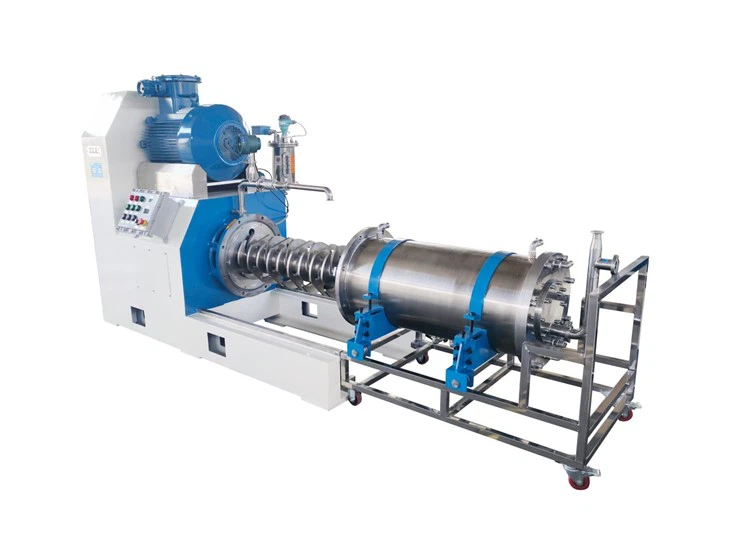
Wet bead milling is widely used for fine particle size reduction, particularly when uniform dispersion and ultra-fine grinding are required. This method is especially effective for materials that need to be processed in a liquid medium, ensuring better control over temperature and particle distribution. Understanding which materials are best suited for this process helps industries achieve optimal performance and consistent results.
A key advantage of wet milling lies in its versatility. Many industries rely on a Wet Bead Mill to process materials that are difficult to grind using dry methods. These materials often require precise particle size control and stable dispersion within a liquid phase.
Characteristics of Suitable Materials
Not all materials respond equally well to wet bead milling. The most suitable candidates typically share certain characteristics:
- Ability to be suspended in a liquid medium
- Need for fine or ultra-fine particle sizes
- Sensitivity to heat generated during dry grinding
- Requirement for uniform dispersion
Materials that meet these conditions tend to benefit the most from wet milling processes.
Ideal Material Categories
1. Pigments and Dyes
Pigments are among the most common materials processed in wet bead mills. They require extremely fine particle sizes to achieve consistent color and smooth application.
- Used in paints, inks, and coatings
- Require uniform dispersion to prevent clumping
- Benefit from high shear and impact forces
Wet bead milling ensures that pigments are evenly distributed, improving product quality and appearance.
2. Pharmaceutical Compounds
In the pharmaceutical industry, particle size directly affects drug performance. Wet bead milling is ideal for:
- Active pharmaceutical ingredients (APIs)
- Poorly soluble drugs
- Suspensions requiring enhanced bioavailability
Reducing particle size increases surface area, which improves dissolution rates and absorption in the body.
3. Food Ingredients
Food processing often requires fine and consistent textures. Wet bead mills are suitable for:
- Cocoa and chocolate mixtures
- Nut pastes and spreads
- Flavor emulsions
The liquid-based process helps maintain product quality while preventing overheating that could alter taste or nutritional value.
4. Cosmetic and Personal Care Materials
Cosmetic products demand smooth textures and stable formulations. Wet bead milling is commonly used for:
- Creams and lotions
- Sunscreen formulations
- Pigmented cosmetics
Fine particle dispersion ensures a uniform feel and consistent application.
5. Nanomaterials and Advanced Materials
Wet bead milling is also used in high-tech applications involving nanomaterials. These include:
- Nanoparticles for electronics
- Advanced ceramics
- Functional coatings
The process allows for precise control over particle size at the nanoscale, which is critical for performance in advanced applications.
Materials Less Suitable for Wet Bead Milling
While wet bead milling is highly versatile, some materials are not ideal for this process:
- Materials that cannot be suspended in liquids
- Highly reactive substances that degrade in liquid environments
- Extremely soft materials that may not break down effectively
- Substances sensitive to contamination from grinding media
In such cases, alternative grinding methods may be more appropriate.
Key Factors Influencing Material Suitability
Even suitable materials require proper process optimization. Several factors influence how well a material responds to wet bead milling:
- Viscosity of the slurry: Affects bead movement and grinding efficiency
- Bead size and type: Determines the level of particle reduction
- Milling speed: Impacts energy transfer and grinding intensity
- Material hardness: Harder materials may require longer processing times
Careful adjustment of these parameters ensures the best possible outcome.
Benefits of Choosing the Right Materials
Selecting the right materials for wet bead milling offers several advantages:
- Improved product consistency
- Enhanced performance and functionality
- Reduced processing time
- Better energy efficiency
These benefits are especially important in industries where precision and quality are critical.
Conclusion
Wet bead milling is a powerful and flexible technique for fine particle size reduction, but its effectiveness depends heavily on the type of material being processed. Materials that require fine dispersion, heat control, and uniform particle distribution are particularly well suited for this method.
From pigments and pharmaceuticals to food and advanced materials, wet bead milling continues to play a vital role in modern manufacturing. By understanding material compatibility and optimizing process conditions, industries can achieve superior results and maintain high standards of quality.