
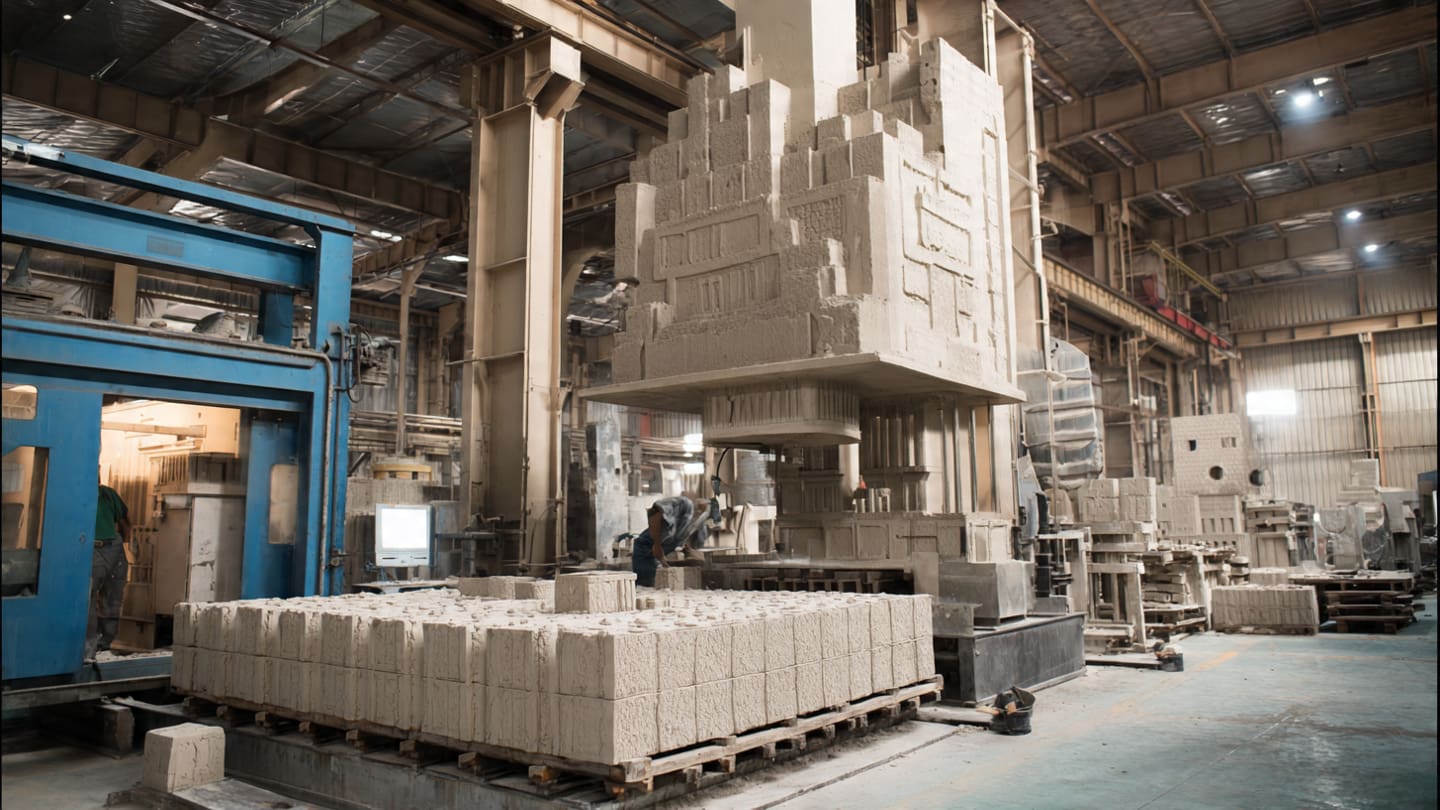
If you’ve ever wondered how metal parts like car engine components, industrial machines, or even sculptures are made, chances are they’ve been created using a method called sand casting. Sand molding machines are a vital part of this process. But what exactly are sand molding machines, and how do they work? Let me walk you through it in simple terms.
What Is Sand Molding?
Before diving into the machines themselves, let’s first understand what sand molding is. Sand molding is a method used in casting, where a mold is made by compacting sand around a pattern (an object you want to copy). When molten metal is poured into this sand mold, it cools and hardens into the shape of the pattern. The idea behind this technique is pretty simple: the sand holds its shape when compressed, and molten metal takes on the exact form of the mold.
Now, imagine doing this by hand. It’s possible, but it’s time-consuming, hard work, and the results may not always be as precise. That’s where sand molding machines come in. These machines automate the process, making it faster, more efficient, and more accurate.
What Is a Sand Molding Machine?
A sand molding machine is a piece of equipment used to automate the creation of molds in sand casting. They work by compressing sand around a pattern, forming a mold that can hold molten metal. The machines are designed to make this process more consistent, faster, and with less human effort.
There are several different types of sand molding machines, each serving a particular purpose depending on the size and complexity of the mold being created. These machines can range from smaller, more compact machines for producing small parts to large, industrial-sized machines capable of making huge molds for heavy machinery.
How Do Sand Molding Machines Work?
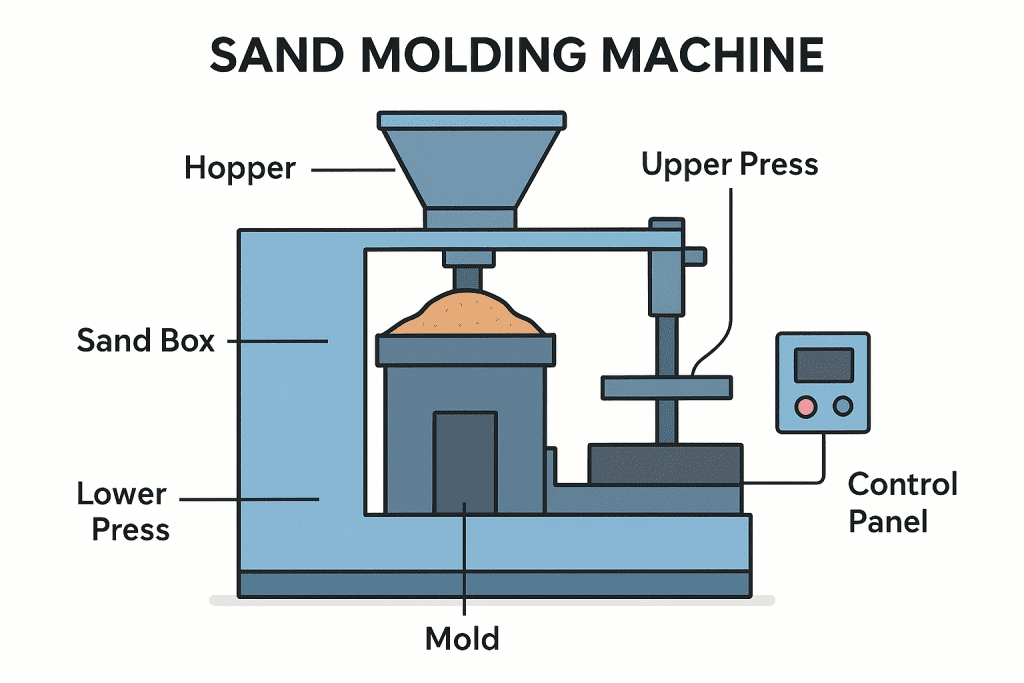
To understand how a sand molding machine works, let’s break it down into simpler steps.
1. Pattern Placement
The process begins with a pattern that’s an exact replica of the object you want to cast. This pattern can be made of metal, wood, or plastic. The pattern is placed inside the molding machine.
2. Sand Compaction
Once the pattern is in place, sand is poured into the machine’s mold box. The sand is usually mixed with a binder (a substance that helps the sand stick together). The machine then uses a compaction system to press the sand around the pattern. This step ensures the mold is firm and holds the shape of the pattern.
3. Mold Formation
After the sand is compacted, the pattern is removed, leaving behind a cavity in the shape of the object that will be cast. In some machines, a core is added if the casting requires hollow sections. This is particularly useful for making things like engine blocks or pipes.
4. Cooling and Hardening
Once the mold is formed, it’s left to cool and harden. In some cases, machines might be equipped with heating systems to speed up this process. The mold must be strong enough to handle the molten metal without collapsing under its weight and temperature.
5. Pouring the Molten Metal
At this point, the mold is ready to be filled with molten metal. The sand mold is placed in a pouring station, where molten metal (usually made from alloys like aluminum, steel, or iron) is poured into the mold cavity. The metal flows around the mold’s edges, filling in all the details.
6. Cooling and Removal
Once the molten metal has cooled and solidified, the sand mold is broken away, leaving the cast metal part. This is often done by shaking, crushing, or using air pressure to break up the sand.
7. Finishing Touches
After the mold is removed, the casting may require some additional finishing steps like grinding, sanding, or machining to smooth out rough edges or imperfections.
Different Types of Sand Molding Machines
Sand molding machines are not one-size-fits-all. There are different types, each suited for different needs. Let’s take a look at some of the most common ones:
- Jolt Squeeze Machines
These machines are relatively simple. The pattern is placed in a sand-filled mold box, and the machine gives the box a jolt to compact the sand. Once the sand is compacted, a squeeze action presses the sand further to make the mold solid. These machines are commonly used for smaller molds, especially in industries that need a quick turnaround time. - Shell Molding Machines
Shell molding machines are used for creating high-precision molds, usually with a thin layer of sand. The sand is mixed with a special binder and then applied to a metal pattern that has been heated. The binder hardens around the pattern, creating a solid shell. This type of machine is commonly used when high-precision parts, like aerospace components or medical devices, are required. - Flaskless Molding Machines
In flaskless molding, molds are made without the use of the traditional metal flask (the box that holds the sand). The sand is packed directly into a mold cavity, and the machine’s hydraulic pressure holds the shape. This is an efficient way to make larger molds and is often used for industrial-grade parts, such as automotive components. - Horizontal Molding Machines
As the name suggests, these machines create molds by horizontally compressing sand into the mold cavity. They are typically used for medium to large-scale productions, especially in industries like the automotive and heavy machinery sectors. The horizontal setup allows for more stability and less risk of uneven compaction. - Vertical Molding Machines
Vertical molding machines are similar to horizontal ones, but the mold cavities are aligned vertically. These machines are often used for casting smaller or more intricate parts. Because of their vertical design, they allow for more precise molding and are good for creating detailed components.
Benefits of Sand Molding Machines
Using sand molding machines offers several benefits over manual casting methods. Here are just a few:
- Consistency and Precision
Machine-operated sand molding ensures that each mold is nearly identical to the others. This leads to more consistent casting results, which is important when mass-producing parts. - Speed and Efficiency
Machines can create molds much faster than human workers. This increased efficiency means more parts can be made in less time, reducing production costs. - Reduced Labor
By automating the molding process, sand molding machines reduce the amount of manual labor required. Workers are no longer needed to compact the sand by hand or remove the pattern manually, which reduces human error and the risk of injury. - Cost-Effectiveness
While the initial investment in a sand molding machine can be high, over time, the machine pays for itself by producing molds faster, with less labor, and reducing material waste. This makes it a cost-effective solution for industries that need to make large quantities of castings. - Versatility
Sand molding machines can create molds for a wide variety of metals and alloys, making them suitable for different industries. Whether you’re casting small precision parts or large industrial components, there’s a machine that can handle the job.
Conclusion
Sand molding machines are a critical part of modern manufacturing, enabling industries to create metal parts quickly, precisely, and cost-effectively. By automating the sand casting process, these machines have revolutionized everything from car parts to industrial machinery. Whether you’re making a tiny screw or a massive engine block, sand molding machines make it possible to achieve high-quality results in a fraction of the time it would take using traditional methods.
So, next time you see a complex metal part or an intricate sculpture, know that it was likely made with the help of a sand molding machine, transforming raw materials into something much more useful!