
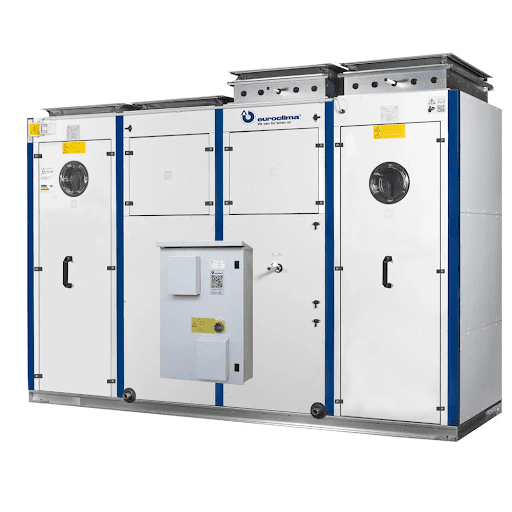
Building environments today are evolving faster than ever, driven by rising expectations for comfort, energy efficiency, sustainability, and safety. At the core of this transformation lies an often unseen but crucial technology: the air handling unit. From large commercial complexes to industrial facilities, hotels, hospitals, and educational institutions, these sophisticated systems are redefining what it means to maintain optimal indoor air quality, climate control, and operational efficiency. And leading the charge behind this evolution are innovative commercial air handling unit manufacturers who are consistently pushing boundaries to build smarter, more adaptable environments.
Elevating Indoor Air Quality Through Engineering Precision
Indoor air quality is no longer a luxury, it’s a necessity. This shift has placed tremendous responsibility on commercial air handling unit manufacturers, who are continuously advancing their designs to deliver healthier indoor environments.
Traditional systems were primarily focused on temperature regulation. Air handling unit solutions are engineered to actively filter, purify, and circulate air, minimizing contaminants, controlling humidity, and maintaining balanced airflow. The rise of high-efficiency particulate air filters, UV-C purification, and smart ventilation has made it possible to reduce airborne pathogens, allergens, and pollutants.
Manufacturers have also integrated variable air volume (VAV) and demand-controlled ventilation technologies, allowing units to adjust airflow dynamically based on occupancy and indoor conditions. These intelligent mechanisms help maintain consistent air quality levels without wasting energy, contributing to safer, healthier spaces for occupants.
Driving Energy Efficiency Through Advanced Design Concepts
Energy consumption remains a critical concern for facility managers and building owners. Heating, ventilation, and air conditioning (HVAC) systems account for a significant portion of energy use in commercial buildings. As a result, commercial air handling unit manufacturers have shifted their focus toward innovative design strategies that lower energy demands while maintaining superior performance.
Modern units incorporate features such as:
- Optimized fan systems with electronically commutated motors
- High-efficiency heat exchangers
- Advanced thermal insulation
- Smart controls and predictive maintenance algorithms
Each component is designed to enhance system efficiency, reduce thermal losses, and eliminate unnecessary strain on mechanical operations.
By adopting these advancements, building operators can achieve measurable reductions in energy consumption and operating costs without compromising indoor comfort. This focus on energy efficiency aligns seamlessly with global sustainability goals and green building certifications, making it an essential step toward smarter infrastructure development.
Supporting Sustainable Building Initiatives With Eco-Friendly Solutions
Sustainability is a central pillar in modern construction, and commercial air handling unit manufacturers have embraced this direction wholeheartedly. The need for environmentally responsible solutions has accelerated the development of eco-friendly air handling unit designs.
Manufacturers are utilizing recyclable materials, low-VOC components, and modular designs that enhance installation flexibility while reducing waste. The integration of energy recovery systems such as rotary heat exchangers and plate heat recovery units further helps reclaim energy that would otherwise be lost.
Additionally, smart sensors and AI-driven control panels allow these units to continuously monitor operational performance and environmental conditions. This digital intelligence ensures optimal energy use, lowers carbon emissions, and supports the long-term sustainability goals of modern buildings.
With global regulations encouraging greener building standards, manufacturers are stepping up as partners in sustainability, empowering businesses to achieve higher environmental performance while maintaining reliable HVAC operations.
Enhancing System Reliability and Performance Through Innovation
Commercial buildings require reliable HVAC systems that deliver uninterrupted performance across varying loads and operating conditions. To meet these expectations, commercial air handling unit manufacturers are integrating cutting-edge technologies that boost durability, operational accuracy, and system resilience.
- Corrosion-resistant materials
- Advanced structural engineering
- Vibration-control mechanisms
- Weatherproof construction
- Predictive diagnostics powered by digital sensors
These improvements ensure long-term reliability, reduce the frequency of system downtime, and extend the lifecycle of the equipment. Manufacturers also provide scalable modular units, allowing facility managers to expand or adapt their systems as building demands change without complete system overhauls.
This adaptability is vital for sectors such as healthcare, data centers, and hospitality, where uninterrupted climate control is essential for operational integrity.
Integrating Smart Controls for Intelligent Building Management
Smarter building environments require smarter control systems. This is where commercial air handling unit manufacturers have made significant digital leaps. By integrating IoT-enabled controls, cloud connectivity, and automated monitoring, modern air handling unit systems have become essential tools for intelligent building management.
These smart systems provide:
- Real-time performance analytics
- Remote monitoring capabilities
- Automated alerts for maintenance issues
- Integration with Building Management Systems (BMS)
- Energy consumption insights
Building managers can remotely adjust temperature, airflow, and humidity levels while receiving continuous updates on system performance. This level of transparency and automation ensures optimized efficiency, timely maintenance, and minimal downtime.
The shift toward connected, automated systems underscores the critical role that innovators play in crafting smart building ecosystems where technology enhances both human comfort and operational decisions.
Contributing to Health, Comfort, and Productivity in Workspaces
Comfort plays a direct role in workforce productivity and occupant satisfaction. As businesses prioritize employee well-being, commercial air handling unit manufacturers are developing sophisticated air handling solutions that redefine indoor comfort standards.
Modern systems focus on:
- Uniform air distribution
- Precise temperature zoning
- Reduced noise levels
- Consistent humidity control
These elements are essential for creating comfortable office environments, especially in open-plan workplaces where temperature differences can affect concentration and performance. Enhanced indoor comfort not only increases productivity but also helps reduce absenteeism, making it a critical factor for business operations.
Conclusion
As modern buildings evolve into smarter, more efficient, and healthier spaces, the influence of commercial air handling unit manufacturers becomes increasingly evident. Their relentless efforts in engineering advanced air handling unit solutions are shaping the future of commercial infrastructure bringing higher standards of air quality, energy efficiency, sustainability, and intelligent control to every environment.
Among the companies leading this progress is FJ Group, known for its commitment to innovation, reliability, and engineering excellence. The company’s forward-thinking approach to air handling solutions continues to support smarter building environments across diverse sectors, making them a trusted partner in advancing modern infrastructure.