
High-performance governance is built long before the competition begins
Leadership is often evaluated by outcomes.
Did the organisation achieve its targets? Did the project succeed? Did the team deliver results?
While outcomes matter, they rarely tell the full story. Behind every successful organisation, championship team, or high-performing institution lies a governance framework that enables excellence under pressure.
This reality becomes particularly evident when leading a national team at an international championship.
When athletes step onto the world stage, months or even years of preparation have already taken place. Governance structures have been tested, relationships have been built, decisions have been made under uncertainty, and leaders have worked to align diverse stakeholders behind a common purpose.
The same principles apply in corporate leadership.
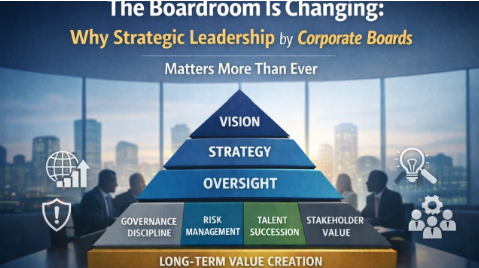
Boards often focus on strategy, financial performance, and compliance. Yet the organisations that consistently outperform their competitors understand that governance is not simply about oversight.
It is about creating the conditions that allow people to perform at their highest level.
The lessons learned from international sport provide valuable insights for executives navigating increasingly complex organisational environments.
Governance creates confidence
Elite athletes prepare for uncertainty by relying on systems they trust.
Travel arrangements, accreditation, logistics, communication protocols, medical support, competition schedules, and administrative requirements must all function seamlessly. If these systems fail, athletes are forced to divert energy away from performance and towards problem-solving.
- The same principle exists within organisations.
- Employees perform best when governance structures provide clarity, consistency, and confidence.
When reporting lines are unclear, policies change unpredictably, or decision-making becomes inconsistent, organisational energy shifts from innovation to internal navigation.
- High-performing organisations reduce unnecessary friction.
- Their governance frameworks create stability while allowing flexibility.
- Rather than constraining performance, effective governance enables it.
Boards that understand this distinction move beyond compliance and become architects of organisational success.
Leadership means making decisions before the crisis
Many people associate leadership with responding effectively during moments of crisis.
In reality, exceptional leadership is often invisible because it prevents crises from occurring.
International sporting events require contingency planning for travel disruptions, injuries, scheduling changes, equipment issues, stakeholder communication, and unforeseen logistical challenges.
- Preparation reduces uncertainty.
- Corporate governance operates according to the same principle.
- Boards should not exist merely to respond to organisational failures.
Their responsibility is to establish structures that reduce the likelihood of failure while improving the organisation’s ability to adapt when challenges emerge.
Risk management, succession planning, cybersecurity oversight, artificial intelligence governance, stakeholder engagement, and organisational resilience all reflect proactive leadership.
- The strongest boards anticipate disruption rather than react to it.
- Preparation remains one of the most underrated leadership competencies.
Alignment matters more than authority
Successful teams are rarely built through hierarchy alone.
Athletes, coaches, medical personnel, administrators, technical officials, sponsors, and governing bodies all possess different priorities and responsibilities.
- The role of leadership is not to control every stakeholder.
- It is to align them around a shared objective.
- Modern organisations face similar complexity.
Executives must coordinate multidisciplinary teams operating across departments, geographic locations, and professional specialisations.
Authority alone cannot achieve this alignment.
Influence, communication, trust, and shared purpose become significantly more important.
Leaders who rely exclusively on positional power often achieve compliance but not commitment.
By contrast, leaders who cultivate alignment create cultures where individuals voluntarily contribute beyond their formal responsibilities.
- The difference is reflected in organisational performance.
- Engaged teams consistently outperform managed teams.
High performance depends on psychological safety
Elite performance requires confidence.
Athletes who fear failure often become hesitant and overly cautious. Their focus shifts from executing strategy to avoiding mistakes.
The same dynamic exists within organisations.
Employees who fear criticism become reluctant to innovate, challenge assumptions, or share new ideas.
Over time, organisational learning declines.
Psychological safety has therefore become one of the defining characteristics of high-performing teams.
It does not imply reduced accountability.
Rather, it creates environments where individuals can identify risks, admit mistakes, and contribute diverse perspectives without fear of unnecessary punishment.
Boards should actively promote cultures where transparency is rewarded and continuous improvement becomes normal practice.
Innovation thrives where people feel safe to think differently.
Governance should strengthen that environment rather than undermine it.
Stakeholder management is a leadership discipline
International sporting events involve a remarkable diversity of stakeholders.
Athletes seek optimal performance conditions.
National federations focus on representation and accountability.
- Sponsors expect visibility.
- Officials require compliance.
- Families provide emotional support.
- Media outlets shape public perception.
- Government agencies oversee regulatory obligations.
Leadership involves balancing these competing expectations while maintaining strategic focus.
Corporate boards face equally complex stakeholder ecosystems.
- Shareholders demand financial returns.
- Employees seek meaningful work.
- Customers expect quality service.
- Regulators require compliance.
- Communities expect ethical conduct.
- Technology partners drive innovation.
- Each stakeholder influences organisational success.
Effective governance therefore requires systems thinking rather than isolated decision-making.
Leaders must recognise how decisions affect interconnected relationships across the organisation.
Short-term gains achieved at the expense of stakeholder trust rarely produce sustainable success.
Culture determines performance under pressure
Culture is often invisible until organisations encounter adversity.
When unexpected challenges arise, policies provide direction, but culture determines behaviour.
Teams characterised by trust, accountability, and mutual respect adapt more effectively than those dependent upon rigid control structures.
- Elite sporting environments demonstrate this principle repeatedly.
- Athletes who trust one another collaborate naturally under pressure.
- Support staff communicate openly.
- Leaders remain calm because relationships have already established credibility.
- Corporate organisations experience similar dynamics.
- Digital disruption, economic volatility, regulatory change, and technological innovation all create uncertainty.
- Organisations with healthy cultures respond collaboratively.
- Those with fragmented cultures experience blame, confusion, and defensive behaviour.
Boards should therefore treat organisational culture as a strategic governance issue rather than a human resources initiative.
Culture influences every strategic outcome.
Excellence requires disciplined execution
Vision inspires organisations.
Execution sustains them.
In international competition, marginal details often determine final outcomes.
Travel schedules, nutrition planning, communication protocols, accreditation deadlines, equipment management, and recovery strategies collectively influence performance.
Corporate leadership operates under the same reality.
Strategy without disciplined execution produces aspiration rather than achievement.
Successful boards establish clear accountability structures, measurable objectives, governance frameworks, and performance evaluation mechanisms.
Execution depends on consistency rather than intensity.
Small improvements implemented systematically produce substantial long-term advantage.
The organisations that sustain excellence rarely rely on extraordinary effort.
They build extraordinary systems.
Governance in an era of artificial intelligence
Artificial intelligence is transforming decision-making across sectors.
Boards increasingly face questions regarding ethical oversight, algorithmic transparency, cybersecurity, data governance, and organisational accountability.
Interestingly, the principles required to govern AI mirror those required to govern elite teams.
Both require clarity of roles.
Both depend upon reliable information.
Both require trust.
Both demand continuous monitoring and adaptation.
Technology does not eliminate leadership responsibility.
It increases it.
Boards must ensure that innovation strengthens organisational values rather than compromising them.
Responsible governance balances efficiency with ethics, speed with accountability, and innovation with public trust.
These principles remain constant whether leading a corporation or managing a team representing its nation on the world stage.
Leadership is service before authority
Perhaps the greatest lesson sport offers corporate governance is that leadership exists to enable others to perform.
The most effective team managers rarely seek public recognition.
Their contribution lies in creating conditions where athletes can focus entirely on competition.
Corporate leaders should adopt the same philosophy.
The purpose of governance is not to centralise authority.
It is to remove barriers to organisational performance.
Great leaders ask different questions.
How can we simplify complexity?
How can we strengthen collaboration?
How can we build trust?
How can we create systems that allow talented people to succeed?
Service-oriented leadership creates resilient organisations because it places organisational purpose above personal status.
It builds cultures where accountability and support reinforce one another rather than compete.
The future of board leadership
Boards today operate within environments characterised by technological disruption, geopolitical uncertainty, changing workforce expectations, and increasing stakeholder scrutiny.
Traditional governance models centred exclusively on compliance and financial oversight are no longer sufficient.
Future-ready boards will combine strategic foresight with adaptive leadership.
They will understand culture as a governance issue, innovation as a leadership responsibility, and stakeholder trust as a competitive advantage.
Perhaps unexpectedly, many of these lessons have long existed within elite sport.
International competition demonstrates that sustainable success depends upon preparation, governance, collaboration, accountability, and shared purpose.
Championships may be won on the competition stage.
But they are built through leadership long before the event begins.
The same is true for organisations.
Corporate excellence is not created in quarterly board meetings or annual strategy sessions.
It is built every day through governance systems that empower people, strengthen culture, and align diverse stakeholders around a common mission.
Ultimately, the role of leadership—whether in sport or business—is not simply to direct performance.
It is to create the environment where extraordinary performance becomes possible.
And that may be the most valuable lesson corporate boards can learn from the world stage.