
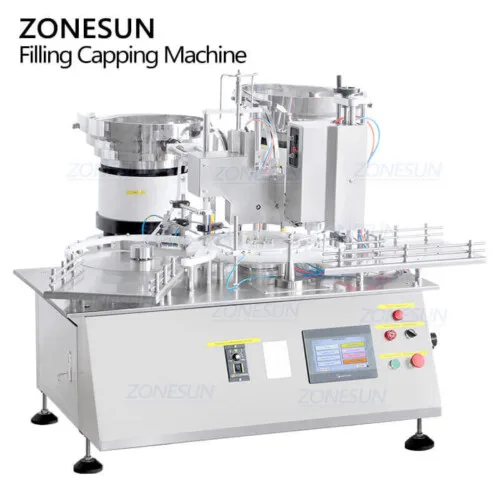
Maintaining a vial filling machine in consistently excellent operational condition is a critical ongoing responsibility that directly affects drug product quality, production efficiency, and regulatory compliance in pharmaceutical manufacturing. Unlike industrial equipment where the primary maintenance objective is preventing production downtime, vial filling machine maintenance must simultaneously address equipment reliability, product quality assurance, and the sterility maintenance requirements that pharmaceutical manufacturing imposes.
This guide addresses the specific maintenance challenges and best practices for vial filling machine operations in pharmaceutical and biotechnology manufacturing environments.
The Unique Maintenance Challenges of Pharmaceutical Vial Filling Equipment
Vial filling machines in pharmaceutical manufacturing face maintenance challenges that significantly exceed those encountered in general industrial equipment maintenance. Understanding these specific challenges is the starting point for developing maintenance programs that address all relevant requirements effectively.
Sterility maintenance is the most fundamental maintenance challenge unique to pharmaceutical vial filling machines. Every surface in the filling zone that contacts the product, the containers, or the closures must be maintained in a sterile condition during filling operations. Maintenance activities that require access to the filling zone must be followed by cleaning, sterilization, and environmental monitoring procedures that reestablish the required sterility assurance level before production resumes. The time and resource requirements of these procedures make minimizing the frequency and duration of filling zone maintenance access a significant operational priority.
Product contact surface integrity requires ongoing monitoring and maintenance attention to ensure that surfaces contacting the drug product remain free of defects, corrosion, or particulate generation potential that could contaminate the product. Stainless steel product contact surfaces should be periodically inspected for surface defects, corrosion spots, or finish degradation that could harbor contaminants or generate particles. Elastomeric components including pump tubing, seals, and gaskets should be replaced at intervals established through stability data or inspection criteria to prevent degradation-related product contamination.
Calibration maintenance for the critical measurement and control instruments on the vial filling machine must be performed at specified intervals to maintain the validated measurement accuracy that fill volume control and process parameter monitoring depend on. The calibration status of fill weight scales, temperature probes, pressure transducers, and other critical instruments must be current for the equipment to be in a validated state of operation.
Cleaning and Sterilization of Vial Filling Machines
Cleaning and sterilization of vial filling machines between production batches is as important as any mechanical maintenance activity for maintaining product quality and regulatory compliance. Inadequate cleaning allows product residues, bioburden, and other contaminants to accumulate in the filling system, creating contamination risks for subsequent batches.
Cleaning validation for vial filling machine systems establishes the cleaning procedures and acceptance criteria that demonstrate effective removal of product residues, cleaning agents, and bioburden between batches. Cleaning validation should be performed for each product and cleaning procedure combination used with the filling system, with particular attention to the worst-case cleaning challenges represented by the highest-volume or most difficult-to-clean products in the product mix.
Steam-in-place sterilization of the product contact fluid path of the vial filling machine is the standard sterilization approach for aqueous product applications. SIP procedures must deliver sufficient steam contact time at appropriate temperature throughout the entire fluid path to achieve the required sterility assurance level, verified through temperature mapping studies during validation and ongoing monitoring during routine sterilization cycles.
Operational Excellence Programs for Vial Filling Operations
Beyond basic maintenance, pharmaceutical manufacturers operating vial filling machines benefit from structured operational excellence programs that systematically improve performance across productivity, quality, and compliance dimensions.
Overall Equipment Effectiveness (OEE) measurement for vial filling machine operations provides a comprehensive performance metric that captures the combined impact of availability, performance rate, and quality rate losses on actual productive output. Regular OEE measurement and analysis identifies the specific loss categories that most limit productivity, directing improvement efforts toward the highest-impact opportunities.
Continuous improvement programs that systematically investigate and address recurring quality defects, stoppages, and performance deviations build operational knowledge and improve equipment performance progressively over time. Each investigation that successfully identifies and eliminates a root cause removes a recurring source of quality or efficiency loss from the operation permanently.
Conclusion
Maintaining a vial filling machine in excellent operational condition requires a maintenance program that addresses mechanical reliability, sterility maintenance, calibration management, cleaning and sterilization effectiveness, and continuous performance improvement simultaneously. Pharmaceutical manufacturers who invest in comprehensive, systematic vial filling machine maintenance programs protect their product quality, regulatory compliance status, and production efficiency simultaneously. Zonesun supports its vial filling machine customers with comprehensive maintenance documentation, responsive technical support, and reliable spare parts supply that help pharmaceutical manufacturers maintain their equipment in the excellent operational condition that consistent product quality and regulatory compliance require.
