

Cycling with a dog trailer is becoming increasingly popular across the United Kingdom, offering pet owners a practical way to stay active while keeping their dogs involved in daily routines. However, before setting off on shared rides, it is essential to understand the relevant legal considerations and adopt robust road safety practices. This guide outlines the key UK-specific legal context and safety advice to help dog owners cycle responsibly and confidently with a trailer.
Understanding UK Legal Considerations
In the UK, cycling with a trailer is legal, provided the setup is safe, roadworthy, and compliant with general cycling regulations. There is no specific prohibition on transporting animals in bicycle trailers, but cyclists must ensure they remain in full control of the bicycle at all times. Failing to maintain proper control could potentially be interpreted as careless cycling, particularly in busy urban areas.
Cyclists must also adhere to the same legal requirements that apply to any cycle on public roads. This includes ensuring that the bicycle and trailer are well maintained, fitted with functioning lights when riding after dark, and equipped with reflectors for visibility. Trailers should have a secure hitch mechanism and be stable enough to prevent swaying or tipping, especially when navigating corners or uneven road surfaces.
Another consideration is where you ride. While cycling on most roads and designated cycle paths is permitted, pavements are generally restricted unless clearly marked as shared-use paths. When towing a trailer, it is especially important to be mindful of pedestrians, as the added length and width require greater spatial awareness.
From a welfare perspective, UK animal welfare laws require that dogs are transported in a manner that does not cause them distress or harm. This means the trailer must provide adequate ventilation, protection from weather conditions, and enough space for the dog to sit or lie comfortably. Overloading the trailer or forcing a reluctant dog to ride could raise welfare concerns.
Road Safety Responsibilities
Safety is paramount when cycling with any form of trailer, and even more so when transporting a live animal. The combined weight of the dog and trailer will alter the bike’s handling, braking distance, and turning radius. Practising in a quiet area before venturing onto busier routes is strongly recommended.
Visibility is one of the most crucial safety factors. A trailer sits lower than a cyclist and can be less noticeable to motorists, particularly in traffic or at junctions. High-visibility flags, reflective panels, and bright rear lights significantly improve awareness. Cyclists should also consider wearing reflective clothing, particularly during early mornings, evenings, or winter months when daylight is limited.
Maintaining a predictable riding style is another important safety principle. Sudden swerves, sharp braking, or rapid acceleration can destabilise the trailer and cause discomfort or anxiety for the dog. Smooth, steady cycling not only protects your pet but also makes your movements more predictable to other road users.
Preparing Your Dog for Trailer Travel
Not all dogs will immediately feel comfortable inside a bicycle trailer, so gradual acclimatisation is key. Begin by allowing the dog to explore the trailer at home, associating it with positive experiences such as treats or toys. Short, slow rides in low-traffic environments can help build confidence and reduce stress.
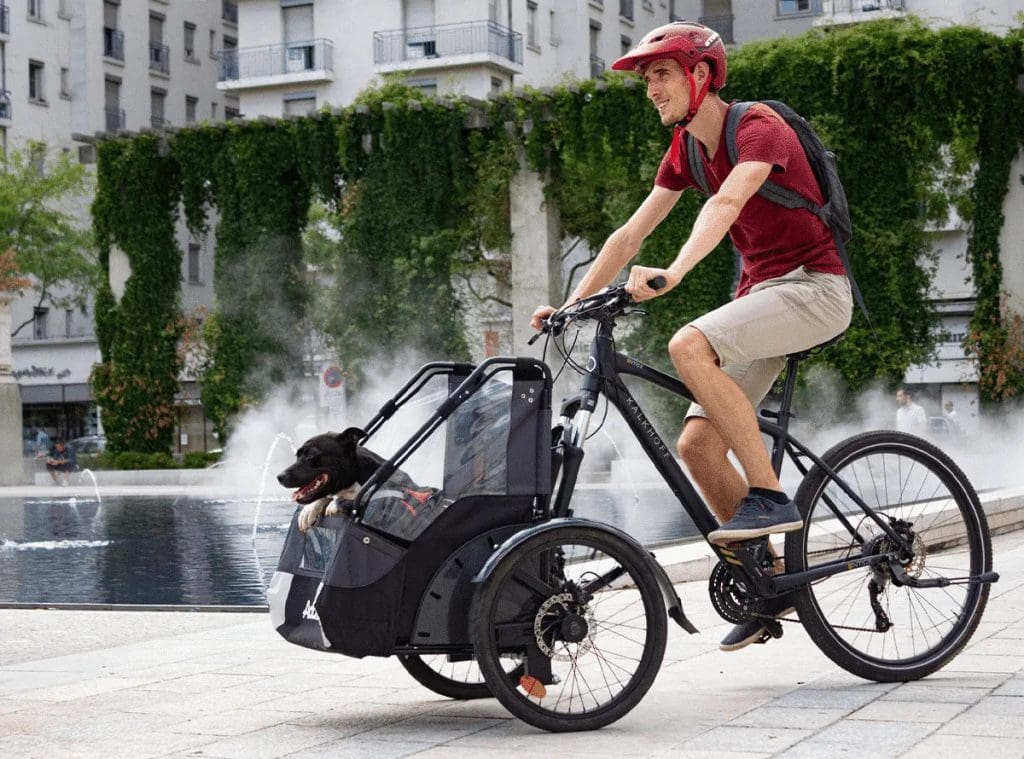
Securing the dog properly is also vital. Many trailers include an internal harness attachment that prevents the dog from jumping out while still allowing natural movement. This reduces the risk of sudden shifts in weight that could affect balance or control.
Weather conditions should always be assessed before setting out. On hot days, ensure the trailer is well ventilated and avoid riding during peak heat. In colder weather, consider using a padded liner or blanket to maintain comfort. The goal is to ensure that the ride is enjoyable rather than stressful for the dog.
Practical Route Planning
Careful route planning can significantly enhance both safety and enjoyment. Whenever possible, opt for quieter roads, traffic-calmed areas, or designated cycle paths. These environments reduce exposure to fast-moving vehicles and provide a more relaxed riding experience for both cyclist and dog.
Avoid routes with steep hills until you are confident handling the additional load. Uphill sections require greater effort, while downhill descents increase speed and braking demands. Maintaining a moderate pace and anticipating hazards well in advance will help ensure smoother journeys.
Regular stops are also beneficial. Dogs, like humans, need opportunities to stretch, hydrate, and relieve themselves. Planning rest breaks helps prevent fatigue and ensures the overall experience remains positive.
Choosing the Right Equipment
Selecting appropriate equipment is essential for safe and legal cycling with a dog trailer. Stability, ventilation, and durable construction should be prioritised over purely aesthetic features. Many UK cyclists look for models designed to handle varied terrain, reliable braking response, and secure internal restraints.
When researching options, consider how the design supports comfort and visibility, as these factors contribute directly to safety. Understanding the benefits of a dog bicycle trailer can help owners make informed decisions that suit both their cycling habits and their dog’s needs. A well-chosen trailer not only enhances convenience but also promotes safer, more controlled riding conditions.
Additionally, cyclists often compare specifications, size capacity, and suspension features when searching for the best dog bike trailer UK. Evaluating these practical elements ensures the trailer aligns with UK road conditions and typical urban or rural cycling environments.
Maintaining Ongoing Safety Awareness
Even with the right setup, ongoing awareness is essential every time you ride. Regularly inspect tyres, hitch connections, and harness attachments before each journey. Mechanical issues that might be minor on a solo ride can become serious hazards when towing a trailer with a dog inside.
Listening to your dog’s behaviour is equally important. Signs of restlessness, whining, or attempts to shift position could indicate discomfort or anxiety. Addressing these cues promptly helps maintain both welfare and safety.
By combining a clear understanding of UK legal expectations with careful road safety practices, dog owners can enjoy cycling adventures that are secure, compliant, and enriching for both rider and pet.