
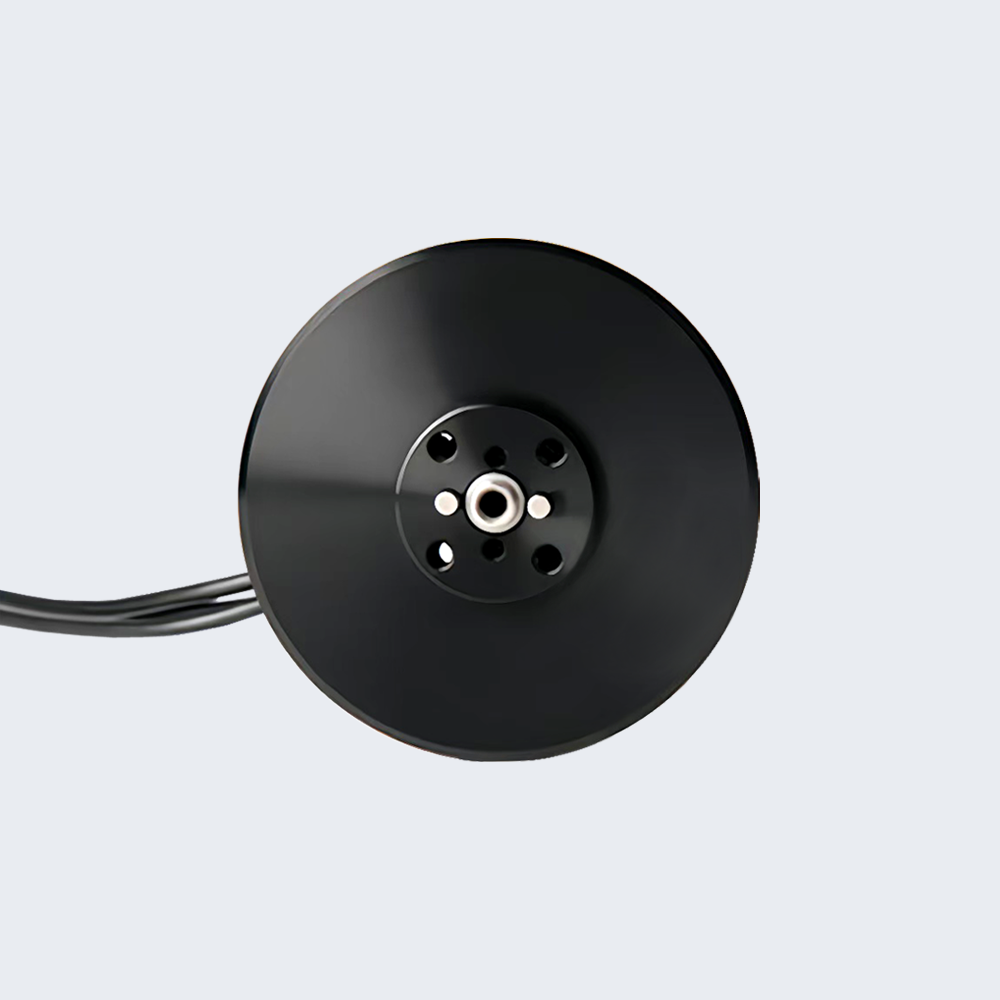
The performance of any unmanned aerial vehicle ultimately comes down to the quality and capability of its UAV motor power system. Everything else, the airframe design, the flight controller, the payload capacity, and the endurance, depends on having a power system that delivers the right combination of thrust, efficiency, reliability, and control response. Understanding what makes a great UAV motor power system is essential for anyone designing, building, or specifying drones for professional applications.
What Is a UAV Motor Power System?
A UAV motor power system is the complete assembly of components responsible for converting stored electrical energy into the mechanical force that keeps an unmanned aerial vehicle airborne. It typically includes electric motors, electronic speed controllers, propellers, and the battery or power supply that feeds the entire system.
Each of these components must work together with precision. A mismatch between motor characteristics, propeller dimensions, and ESC programming can result in poor efficiency, excessive heat generation, unstable flight behavior, or outright component failure. A well-matched and properly configured UAV motor power system is the difference between a drone that performs reliably across its full mission envelope and one that struggles to meet basic performance targets.
The design of the power system must account for several competing requirements simultaneously. Maximum thrust determines what payload the drone can carry and how quickly it can climb or maneuver. Efficiency determines how long it can fly on a single battery charge. Weight determines how much of the available thrust budget is consumed by the power system itself rather than being available for payload or performance. These trade-offs must be carefully balanced for each specific application.
Key Components of a UAV Motor Power System
The electric motors are the heart of any UAV motor power system. Brushless DC motors are the universal standard for professional UAV applications because of their high power density, excellent efficiency, long operational life, and precise speed control characteristics. The motor’s KV rating, which describes how many revolutions per minute the motor produces per volt of input, determines its operating range and its compatibility with different propeller sizes and battery voltages.
Electronic speed controllers receive throttle commands from the flight controller and regulate the power delivered to each motor with millisecond precision. Modern ESCs for professional UAV applications incorporate advanced motor control algorithms that maximize efficiency across the full throttle range and provide real-time telemetry data about motor current, temperature, and rotational speed to the flight controller.
Propellers translate the rotational speed of the motors into thrust. Propeller diameter and pitch are selected based on the motor characteristics and the desired balance between hover efficiency and dynamic performance. Larger diameter propellers at lower rotational speeds are generally more efficient for hover-intensive applications like aerial photography. Smaller diameter propellers at higher speeds suit applications requiring fast dynamic response.
Battery technology is a critical element of the UAV motor power system that directly limits flight endurance. Lithium polymer batteries are the standard choice for most UAV applications because of their high energy density, high discharge rate capability, and relatively light weight. Battery capacity, cell count, and internal resistance must be matched to the power demands of the motors and the endurance requirements of the mission.
Design Considerations for Professional UAV Power Systems
Designing a UAV motor power system for professional applications requires careful analysis of the mission requirements before any components are selected. The first question is always what the drone needs to do, because the answer determines every subsequent design decision.
An agricultural spraying drone needs high thrust to carry heavy liquid tanks and must maintain stable hover over crops for extended periods. This drives the design toward large diameter propellers, high-torque motors, and high-capacity batteries with strong discharge capability.
An inspection drone needs to fly quickly to cover large areas efficiently while carrying camera systems. This drives the design toward motors optimized for a combination of cruise efficiency and dynamic responsiveness, with propellers and batteries chosen to balance speed and endurance.
A delivery drone must carry packages of specified weight to specified distances and return. This drives very precise efficiency optimization across the entire UAV motor power system to maximize the ratio of payload carried to energy consumed during each mission cycle.
Thermal management is a consideration that is sometimes overlooked in UAV power system design but becomes critical in demanding applications. Motors and ESCs both generate heat during operation, and this heat must be dissipated effectively to prevent thermal throttling or component damage during long missions or in hot ambient conditions.
Reliability in UAV Motor Power Systems
Reliability is a non-negotiable requirement for any professional UAV motor power system. Unlike consumer drones where a failure typically results in a crash and property damage, professional UAVs often operate over people, critical infrastructure, or in conditions where a power system failure could have serious consequences.
Redundancy is the primary reliability strategy in professional UAV power system design. Multi-rotor architectures provide inherent redundancy because the failure of a single motor can often be compensated by the remaining motors, allowing the drone to land safely rather than experiencing a catastrophic crash. This redundancy only works if the remaining motors have sufficient thrust margin to maintain controlled flight with one motor disabled.
Component quality is the foundation of UAV motor power system reliability. Motors with high-quality bearings and winding insulation, ESCs with robust power stage components and proven firmware, and batteries with consistent cell quality and reliable BMS protection all contribute to systems that perform as expected in demanding operational conditions.
Conclusion
The UAV motor power system is the technological foundation upon which all drone performance is built. Getting the selection, matching, and configuration of motors, ESCs, propellers, and batteries right is the essential first step in creating a drone that performs reliably, efficiently, and safely across its intended mission profile. CLZN Motors provides professional-grade UAV motor power system components engineered for the demanding requirements of commercial drone applications, delivering the performance, efficiency, and reliability that professional operators depend on.
