

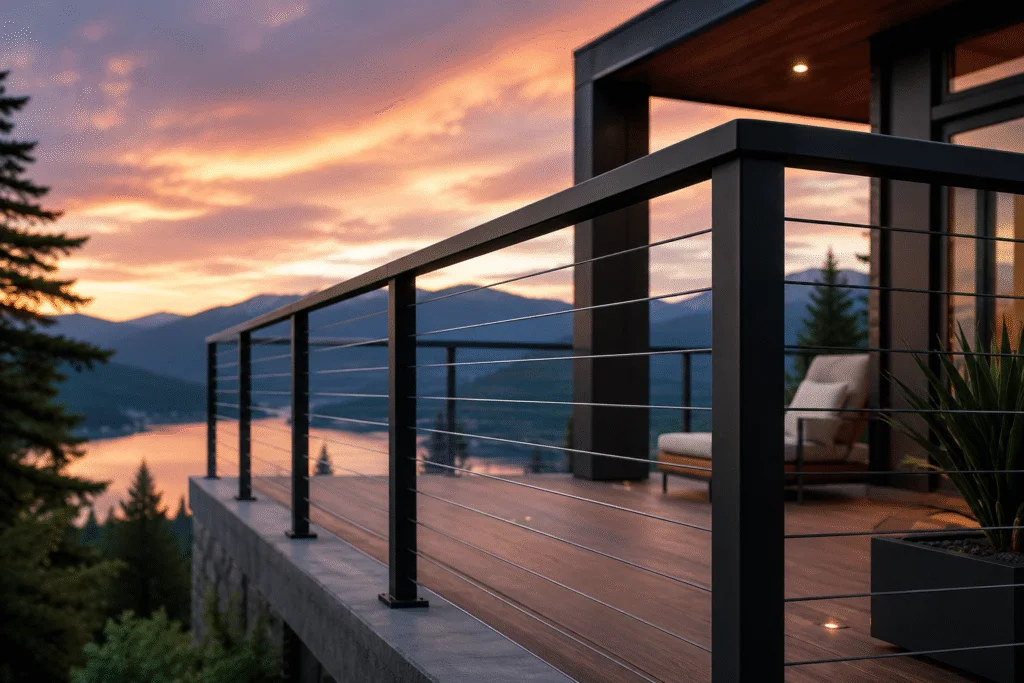
Modern architectural projects increasingly lean toward clean lines, open views, and minimalist detailing. Among the trends defining contemporary residential and commercial construction, the matte black cable railing system has emerged as a premier choice for high-end design.
Homeowners favor its sleek appearance, architects value its spatial versatility, and contractors appreciate its straightforward structural installation. Unlike traditional balustrades that create heavy visual blocks, cable infrastructure maintains maximum openness while ensuring top-tier safety. Introducing a matte black finish creates a bold profile that pairs beautifully with industrial, modern farmhouse, minimalist, and luxury designs. As an established glass railing systems supplier, URailing offers precision-engineered systems crafted for residential and commercial architectural installations. This guide details the essential design principles and installation methods for modern cable setups.
Why Matte Black Cable Railing Systems are Surpassing Alternatives
Dark architectural accents have become an industry standard over the last decade. Window frames, entry doors, and hardware frequently utilize matte black finishes to establish sharp visual contrast without over-complicating a layout.
A dark cable installation blends the open layout of marine-grade wiring with the sleek look of premium powder-coated framing. Unlike bulky wood balusters or thick iron bars, thin structural wires maintain flawless sightlines. Elevated decks facing oceans, lakes, or mountains benefit directly from this unobstructed visibility.
[Traditional Wood/Iron Picket]  --> Blocks Up to 40% of Scenic Views
[Matte Black Cable Infrastructure] --> Preserves Over 95% of Natural Sightlines
To see how these dark metallic design trends stack up against classic structural profiles, check out our comparative brief on aluminum vs stainless steel railing posts systems. For detailed product options, view the foundational overview of matte black cable railing systems.
Essential Components of a Cable System
A high-performance cable balustrade relies on several key components working together:
- Structural End & Intermediate Posts: These posts bear the tremendous lateral load exerted by tensioned wires.
- Tensioning Fittings & Terminals: Mechanical turnbuckles hidden inside or mounted outside the posts to adjust line tautness.
- Horizontal Cable Infill: High-tensile, multi-strand marine-grade stainless steel cables.
- Top Rail (Handrail): Ties the vertical frame together to protect against post deflection.
For custom layouts, developers often pair these assemblies with adjustable handrail brackets or strong baluster brackets to anchor the frame to walls or floor joists.
Indoor and Outdoor Structural Applications
Open Interior Stairwells
Inside a home, wood and iron stair components can make hallways feel tight and closed off. Upgrading to a dark wire balustrade opens up the floor plan, letting natural light pass freely between different levels. To create a clean accent look, designers frequently attach running rails using premium removable handrail brackets for glass railing systems or standard wall mounts. For classic stair design context, read more about the architectural evolution of the baluster.
Durable Exterior Decks and Patios
Outdoor spaces demand heavy-duty materials that can handle constant exposure to the elements. A dark cable setup provides excellent security for pool decks, high balconies, and outdoor walkways without making the space feel closed in. For interior layouts, reviewing the best types of baluster brackets for indoor residential stair railings will help you choose the best hardware setups.
Material Engineering: Selecting the Right Metal
Long-term performance depends heavily on the quality of your metals. Choosing the wrong grade can lead to structural sagging or premature surface rust.
- Marine-Grade 316 Stainless Steel Cables: The absolute gold standard for cable infill. Grade 316 stainless steel resists pitting and corrosion, making it essential for salt-air coastal environments.
- Powder-Coated Aluminum Posts: Excellent for residential properties. Aluminum provides reliable corrosion resistance, weighs much less than steel, and features a durable factory-finished dark coat.
- Stainless Steel Posts with Matte Black Finish: The preferred choice for luxury architectural spaces and heavy-use commercial areas. For a great example of this high-end look, check out our square stainless steel glass staircase railing collection.
Cable Systems vs. Frameless Glass Railings
Property owners looking for open views often compare cable infill with glass panels. Both look fantastic in modern spaces, but they function differently:
| Performance Metric | Matte Black Cable Railing | Glass Railing Systems |
| Sightline Preservation | Excellent (Minimal Wire Lines) | Maximum (Completely Transparent) |
| Natural Airflow | Unrestricted (Perfect for Decks) | Deflected (Acts as a Windbreak) |
| Upkeep & Cleaning | Low (Occasional Soap & Water) | Higher (Prone to Smudges/Water Spots) |
| Upfront Cost | Mid-Tier | Premium |
If you prefer a solid panel design over cables, you can use heavy-duty glass clamps & connectors to anchor panels. To learn how these secure glass panels without vertical posts, read our article explaining what are glass clamp systems. For exterior pool surrounds, using specialized glass railing spigots for pool fencing ensures excellent moisture protection.
Installation Principles and Code Compliance
Building code compliance is critical when setting up a cable railing system. Keep these four primary engineering rules in mind during installation:
- Rigid Post Anchoring: Posts must bolt directly into the solid wood structural framing or concrete base. Fastening posts to thin decorative fascia boards will lead to structural failure.
- The 4-Inch Sphere Rule: Horizontal cables must be spaced closely enough to ensure a 4-inch sphere cannot pass between them at any point. This usually requires a maximum of 3 inches of clear spacing between wires to allow for slight cable deflection.
- Preventing Cable Sag: Intermediate vertical posts or slim spacer bars must be placed every 3 to 4 feet to keep the cables from spreading apart.
- Correct Cable Tensioning: Wires must be tensioned using a systematic pattern—starting from the center rows and working outward—to prevent warping or bending the end posts. Wires should be checked and re-tightened a few months after installation as the materials settle.
Dark Component Innovations
Modern designs favor clean hardware integration and matte finishes over bright chrome accents.
- Dark Accent Pieces: Integrating details like a matte black stainless steel handrail stair pipe connector tube elbow or a matte black stainless steel glass handrail cap railing delivers a bold, premium aesthetic.
- Component Mounting: You can easily mount handrail tubes using strong stainless steel round tube handrail brackets to ensure a rock-solid connection to the building structure.
To review our automated production setups and quality testing procedures, visit our global UNIKIM Made-In-China portal or check out real-world installation breakdowns on the official UNIKIM YouTube channel.
For custom engineering advice, bulk order quotes, or help choosing components, please contact the URailing design desk.