
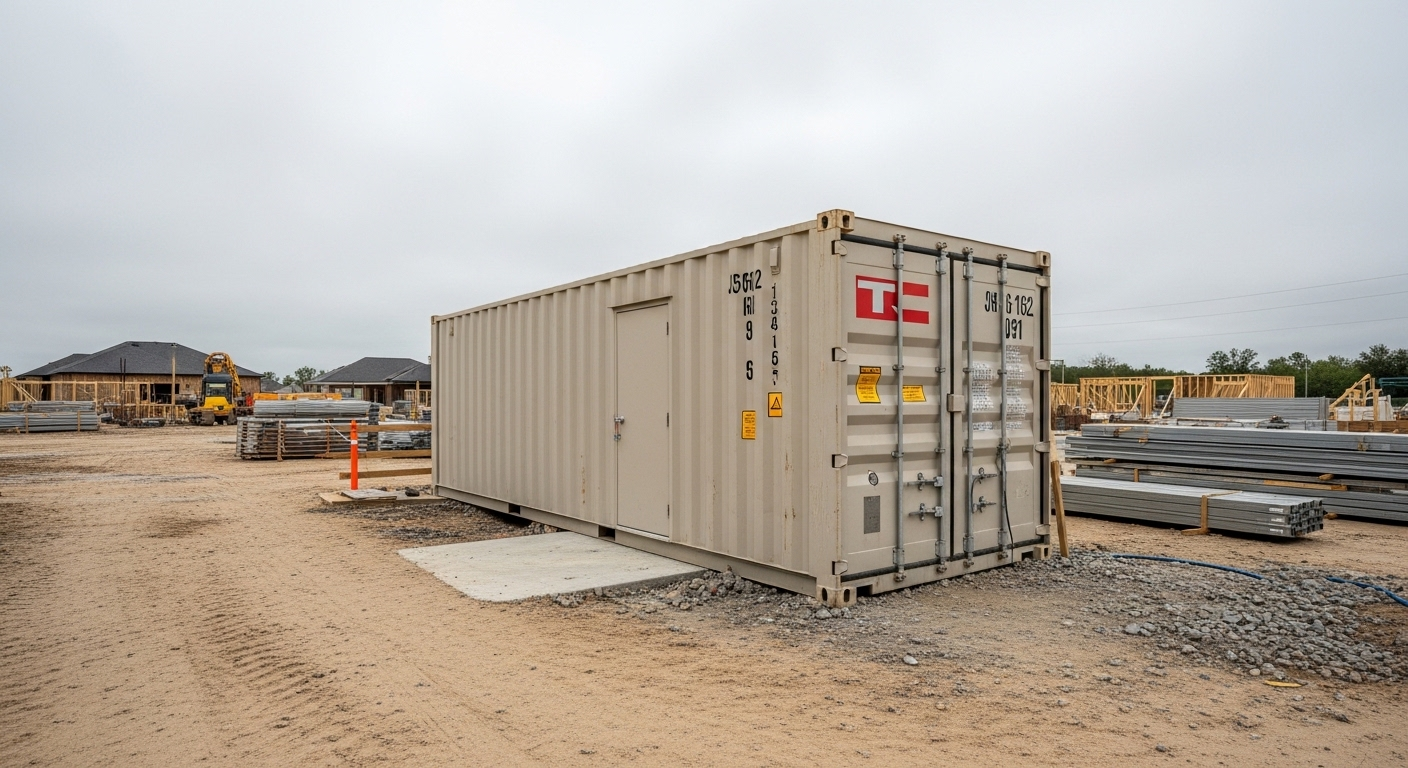
When contractors talk about jobsite storage problems, the complaint often begins with space. There is not enough room. The site is too tight. Materials arrived early. Trades are overlapping. Deliveries are stacked in places that were never meant to hold them. All of that may be true, but space is often only the surface issue. The deeper problem is exposure. On an active construction site, tools, materials, and equipment are exposed to more than just a lack of square footage. They are exposed to weather, theft, disorder, repeated handling, and the operational instability that follows when valuable items are left without a clear protective system. That is why the real storage risk is not usually how much room a site has. It is how much exposure the site is tolerating.
Why Space Problems Often Mask Bigger Operational Risks
It is easy to frame storage as a simple matter of physical capacity because space is visible. Crews can see crowded corners, blocked access points, and overworked staging areas. Exposure is less obvious at first. Materials may still be present. Tools may still be somewhere on-site. The job may appear to be functioning. But once items are left vulnerable to the weather, moved repeatedly to make room for other activities, or staged without a secure system, the site begins to absorb risk in ways that are harder to measure until something goes wrong.
That is one reason storage problems are often misdiagnosed. A contractor may think the site needs more room when what it really needs is better protection and control. The issue is not always how many materials are present. It is whether those materials can remain stable, secure, and accessible without being constantly exposed to avoidable disruption. A site with limited room can still operate well if storage is controlled. A larger site can still perform poorly if storage is loose and exposed.
Exposure Comes in More Forms Than Contractors Sometimes Acknowledge
Weather is the most obvious form of exposure, especially in South Louisiana, where outdoor conditions can change quickly, and jobsite materials are regularly affected by humidity, moisture, and shifting forecasts. But the weather is only one layer. Theft is another. Unsecured tools and materials can attract attention after hours or during downtime. Disorder is another. When a site does not have a defined storage method, exposure increases simply because people begin moving items informally, stacking them inconsistently, and losing track of where important assets actually are.
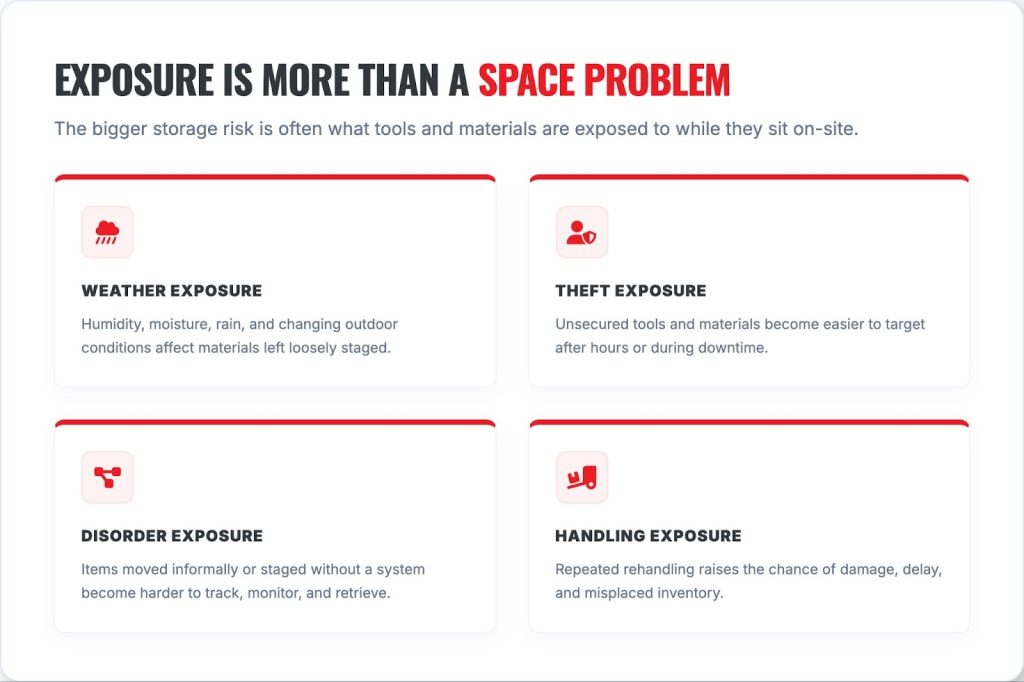
There is also exposure through repeated handling. Materials that are moved too many times due to poor staging are more likely to be damaged, misplaced, or delayed. Handling risk often goes unnoticed because it is spread across ordinary activity. Yet every extra move adds time and raises the chance of something going wrong. A site that treats storage casually may think it is solving a space problem, but it is actually multiplying exposure through unnecessary motion and weakened control.
Storage Risk Is Also a Safety Risk
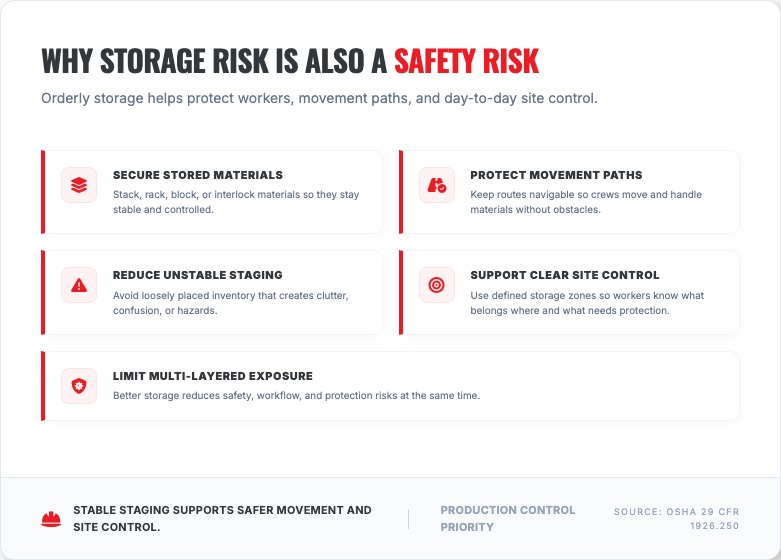
Exposure not only affects efficiency and asset protection. It also affects site safety. OSHA’s construction material storage standard requires that stored materials not pose hazards and that they be stacked, blocked, interlocked, and limited in height to remain stable and secure. That guidance matters because it reinforces the idea that storage quality affects how safely the site functions. A cluttered or unstable staging area is not just inconvenient. It can interfere with movement, handling, and overall site control. OSHA’s construction material storage standard makes clear that stored materials must be managed to protect both workers and workflow.
This is where exposure becomes more than a theft or weather issue. Once materials are left in ways that create instability or confusion, the site carries unnecessary risk on several fronts at once. What begins as poor storage can quickly become a broader operations problem. That is why contractors are paying closer attention to secure, controlled storage methods rather than assuming materials can be kept somewhere out of the way until needed.
The South Louisiana Example Shows Why Exposure Matters
A recent South Louisiana-focused article, “Why Jobsite Storage Is Becoming a Bigger Operational Priority Across South Louisiana,” argued that storage is increasingly being treated as part of site control rather than a secondary logistics issue. Its central point was that contractors are rethinking storage because open exposure creates too many opportunities for friction, loss, and disruption. That framing is useful because it shifts the conversation away from raw space and toward the operational reality of what happens when assets are left too exposed to site conditions.
South Louisiana is a strong example because contractors there often operate in environments where materials cannot be left loosely staged without consequence. Crews are managing outdoor worksites, changing conditions, and the ongoing flow of deliveries while still trying to maintain productivity. In that environment, exposure becomes expensive. Tools and materials that are not protected begin to affect the job’s rhythm long before they become a headline problem.
Why Containerized Storage Reduces Exposure More Effectively
One reason containerized storage is becoming more attractive is that it addresses several kinds of exposure at once. It provides a lockable, defined footprint for tools, materials, and supplies. It reduces the amount of inventory left in open staging areas. It also gives crews a more stable place to return essential items at the end of the day or between phases of work. That kind of control matters because it narrows the number of variables affecting site assets across shifts.
Instead of relying on scattered storage habits, the site gains a clearer protective system. A local example appears in this 20-foot shipping container rental overview, which reflects how contractors often use a compact container footprint to secure materials and tools while keeping them more accessible to active crews. In operational terms, the benefit is not just that the container holds things. It limits the extent of uncontrolled exposure the site must manage.
Theft and Disorder Often Follow the Same Weak Storage Pattern
Many contractors separate theft risk from organization risk, but the two often stem from the same problem. A site with weak storage discipline creates more opportunities for both. When items do not have a consistent place, they are harder to monitor. When high-value tools are dispersed informally, crews are more likely to lose track of what is present and what is missing. When materials are left exposed simply because there is no cleaner plan, the site becomes less secure without anyone formally deciding to make it that way.
That is why stronger storage systems tend to improve both accountability and protection. Once the job has a defined place for critical assets, it becomes easier to see what belongs where, what needs to stay secured, and whether the site is drifting into disorder. Better storage is often the simplest way to reduce opportunities for theft without turning the jobsite into a separate security operation.
Exposure Creates Lost Time Even When Nothing Is Stolen
One of the more important points contractors are starting to recognize is that exposure does not have to result in outright loss to be expensive. A material package left in the wrong place may need to be rehandled. A disorganized staging area may slow setup. Tools stored loosely may still be present, but they take longer to gather. Wet or compromised materials may require extra inspection before use. None of these issues is dramatic on its own, yet each one creates delays that quietly weaken jobsite performance.
This is where the exposure problem becomes clearly operational. The site begins paying in time, attention, and crew energy even before it pays in replacement cost. That is why jobsite storage works best when it is designed to reduce exposure rather than absorb overflow. The contractor is not only protecting materials. The contractor is protecting the site from unnecessary drag.
Why Contractors Are Reframing the Storage Question
More contractors are starting to ask a different question about storage. Instead of asking only how much room the site has, they are asking how much exposure the site can afford. That is a more useful framing because it reflects the real pressures of active construction. Space will almost always feel limited on a working site. Exposure, however, can often be reduced through better planning, better staging, and more deliberate use of secure storage systems.
That change in perspective is likely to matter more over time as contractors continue to work under schedule pressure and tighter expectations around site control. The strongest storage plan is not the one that merely finds room for materials. It is the one that limits how vulnerable those materials remain during the work.
Conclusion
The real jobsite storage risk is not space. It is exposure. Space problems are visible, but exposure is what turns ordinary site conditions into theft risk, weather damage, disorder, repeated handling, and preventable delay. Contractors who understand that difference are increasingly treating storage as a protective system rather than a leftover logistics detail. In practical construction terms, the best storage setup is not simply the one that holds more. It is the one that leaves less exposed.
