

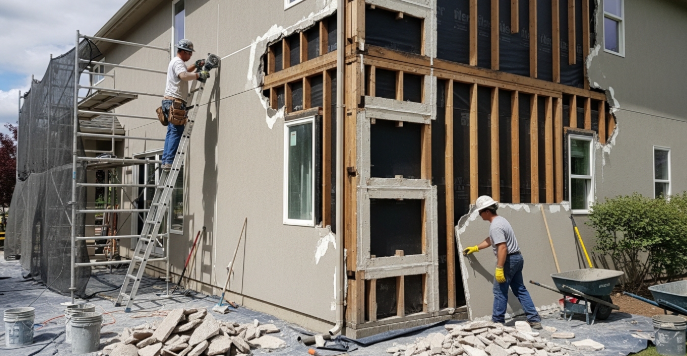
Walls often seem like unbreakable shields against wind and rain. Yet underneath the surface, layers work together drainage paths, metal strips guiding water away, hidden sheets blocking dampness all needing to cooperate silently. Failure seldom happens overnight. It creeps in through tiny flaws, wearing down defenses bit by bit without warning signs. Spotting weaknesses early stops minor drips from becoming major ruin. Once you grasp how trapped moisture moves and spreads behind cladding, fixes shift from constant repairs to smart upkeep.
The Hidden Damage From Poor Drainage Design
Hidden behind walls, the drainage plane matters more than anything else in today’s outer building layers. It gives rainwater a path out when built right. Too often, builders fill this gap without meaning to, sealing off any chance for wetness to leave. Water slips through the outside cover eventually, every time. Once inside, it sticks around, pressed into wood panels with nowhere to go. Rot takes hold fast when things stay soggy long enough. From the street, walls might look solid even though hidden beams crumble like wet cardboard. What keeps everything from failing too soon? Clear pathways that let moisture escape – this matters more than anything else.
Flashing failures cause hidden rot
Water sneaks in where protection should be strongest – flashing handles that job, quietly managing runoff at tricky spots such as window edges, door openings, and roof joints. If pieces are absent, put together wrong, or broken over time, they stop blocking moisture. Rather than guiding rain outward, faulty parts pull it inward, sliding it through cracks between outer walls and inner supports.
The Missing Kick Out Flashing Problem
Where a slanted roof touches a straight-up wall, trouble often hides. When there’s no metal redirect at the edge – called kick-out flashing each bit of runoff gets funneled right into the home’s outer layer. That steady drip doesn’t just wet the surface; it pushes deep inside. Soon enough, hidden decay creeps outward, eating through framing timber far beyond where rain first entered.
Window Sill and Header Weaknesses
A gap in protection that’s what any window really is. When the material sealing its upper edge fails to connect tightly with the house wrap, trouble follows. Water sneaks through, especially if the lower section lacks proper runoff design. Builders sometimes install high-end units only to trap dampness behind them. A thin strip of metal, left out by mistake, leads straight to decay inside the frame. Rot spreads quietly, even when glass and trim look flawless.
The Effects of Wrong Material Thickness
How long a masonry coating lasts usually comes down to how thick it is along with handling shifts from temperature changes. A skimpy layer won’t stand up to a building’s shifting, which opens paths for cracks across the surface. When piled on too heavily without added support, though, weight builds until the base can’t hold, dragging sections right off the wall. That peeling back leaves hollow gaps behind, perfect spots for dampness to gather and stay. Most problems start small how heavy the material feels matters more than you might think. Because if that weight does not match how the lath was built underneath, trouble begins right away. A mismatch here means time works against it from the first moment it goes up.
Trapped Vapor Forms Pressure Bubbles Inside
Some newer houses seal tightly to save energy, yet that sometimes backfires. When an outside layer blocks airflow while another vapor shield exists indoors, trouble follows. Moisture sneaks into walls easily enough – getting out becomes impossible. Heat from sunlight pushes that dampness to shift into steam. The buildup grows forceful over time. Blisters rise on outer surfaces when pressure builds too high. Cracks appear later, once the strain splits materials apart. Slow shifts in temperature tug at the seams inside walls, tugging apart layers bit by bit until everything gives way without warning – though it started long ago. Because air moves differently depending on where you are, picking a surface that lets moisture escape matters more than most think.
The Shift From DIY to Professional Cleanup
When these invisible failures finally become visible through bulging walls, persistent mold, or sagging window frames, the time for simple repairs has passed. Addressing systemic moisture intrusion requires a comprehensive strategy that goes beyond the surface. For those facing these challenges, a professional stucco remediation process is the only way to ensure the home is truly restored to a safe state. This involves stripping away the failed materials, treating the underlying structural rot, and rebuilding the building envelope with modern drainage technology. Unlike a patch, which only masks the symptoms, a full remediation corrects the original design flaws that led to the failure in the first place, providing a permanent solution that protects the home’s value for the next generation.
Alston Stucco Restores Integrity
Keeping a building strong means paying close attention to how it’s built and honoring the careful work behind its outer shell. Instead of just spotting damage, Alston Stucco digs into what causes problems before they grow worse. Behind every crack lies something deeper like poorly installed flashings or broken water defenses – that our crew tracks down methodically. While others stop at appearances, we test layers beneath: membranes, slopes, seals all crucial for long-term dryness.
Quality supplies get applied with care so repairs last longer than expected under current construction rules. Hidden damage can bring real worry. Yet clarity cuts through confusion when numbers tell the true story. Fixing structure often means also healing how things look. A strong fix does not have to sacrifice appearance. Protection works best when it fights dampness without standing out. Long life comes from smart choices behind the scenes. What matters most sits beneath the surface, quiet but certain.
Conclusion
Most failures outside a building happen needlessly when hidden warnings go unnoticed. Look past how walls look. Pay attention to how water moves through gutters and seals instead. This change in thinking slows damage over time. Spotting small issues early makes a big difference later. Moisture hides well but causes steady harm when ignored. Staying on top of checkups stops slow breakdowns before they start. Quality repairs done right matter more than quick fixes ever could.
Start with peeling caulk around windows, ignore it. Moisture sneaks in through tiny wall spots before you notice. Houses act like systems where each outside piece depends on another to keep wetness out. Think of siding meeting foundation it has to connect right or water wins. Fixing how components join becomes less about quick fixes, more about lasting strength. That roof flashing tucked into shingles? It matters just as much as the chimney cap above. Protect these links between materials, build resilience slowly. Safety grows when joints stay tight against storms year after year. Stability hides in details most never see.
The key to a resilient home is a deep understanding of the materials and methods used in its construction. Exploring the history and application of Mortar can offer a better perspective on how these traditional systems are designed to function. With the right knowledge and a partnership with experienced professionals, you can ensure that your home remains a secure sanctuary, free from the invisible failures that threaten so many modern structures.