

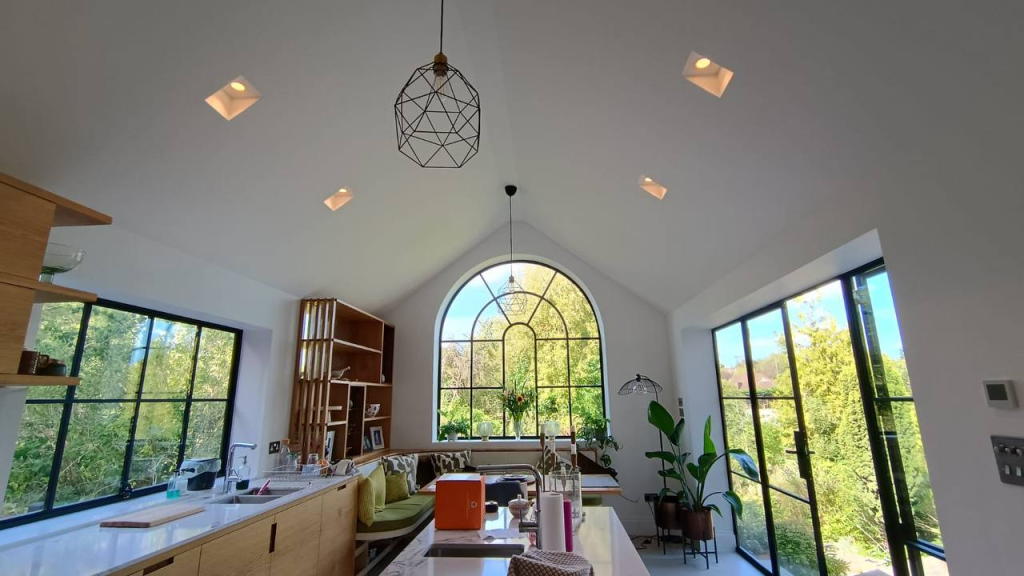
A colleague of mine spent three months researching steel arched doors before placing an order. She read everything she could find online, collected quotes from four different companies, made spreadsheets comparing specifications, and still ended up making a decision she was not entirely happy with. Not because she had not done the research. She had done more research than most people bother with. The problem was that the research she was doing was the wrong kind. She was comparing prices and lead times and RAL color options. What she was not doing was having a proper conversation with anyone who actually understood the product well enough to tell her what she needed to know about her specific situation. When she finally did have that conversation, after the doors were already installed and she was trying to work out why one of them was not hanging quite right, the answer turned out to be straightforward. The wall preparation had not been done correctly because nobody had visited the site before production. A survey would have caught it. Nobody had suggested a survey because she had not known to ask for one. That experience taught her something, and it is worth passing on.
Buying bespoke steel doors is not complicated, but it requires a different approach from buying most things. The decisions that matter most are not the ones that show up most prominently in product listings. Here is what actually matters and why.
The Survey Question You Should Always Ask First
Before anything else, before you talk about arch profiles or glass types or powder coat colors, ask any manufacturer you are considering whether they conduct a pre-production site survey. The answer to that question tells you a great deal about how seriously they take the end result.
A site survey done by someone who knows steel doors is not just about taking measurements, though accurate measurements are obviously essential. It is about assessing the opening. What is above it structurally? What is the wall construction? Is the floor level? Are there any anomalies in the existing frame that need to be addressed before a new one goes in? Is the ceiling height sufficient for the arch profile being considered? These are questions that photographs and owner-supplied measurements cannot answer reliably. They require someone physically present in the space with the knowledge to know what they are looking at.
Companies that skip this step are either cutting costs or are confident enough in their product that they believe installation will work out regardless. The former is a risk to you. The latter is a confidence that is rarely justified in older British properties, where walls are rarely perfectly plumb, openings are rarely perfectly rectangular, and surprises are a regular part of any building work.
Why the Arch Profile Decision Is Not About Preference Alone
Most people approach the arch profile question as if it were purely a matter of taste. Do you want a semicircle, a Gothic point, or an ellipse? And taste does play a role; these are objects you will look at every day, and you should like the way they look. But the profile question has a technical dimension that is at least as important as the aesthetic one.
The arch profile needs to be proportionate to the opening dimensions and the ceiling height. A semicircular arch above a standard door width requires a certain vertical clearance above the frame for the curve to read correctly. If the ceiling is too close, the arch feels pinched. A Gothic pointed arch in a space with insufficient height looks like it is trying to puncture the ceiling rather than draw the eye upward elegantly. An elliptical arch is the most forgiving of different ceiling heights, which is part of why it appears so frequently in contemporary domestic renovations.
The width of the opening also shapes the arch. A wide opening with a shallow arch can look flat and unconvincing. A narrow opening with a very tall arch can feel overdone. Getting the relationship between width, height, and arch profile right is something that becomes intuitive after seeing many installations. It is not something that is easily conveyed in a product brochure, which is another reason why experienced advice from someone who has handled these decisions many times is worth seeking out early.
Glass Types: A More Nuanced Decision Than It Looks
The glass specification of a steel arched door affects three separate things: the quantity of light that passes through, the degree of visual privacy between the spaces on either side, and the visual character of the door itself as an object in the room. Most buyers think carefully about the first two and give relatively little thought to the third. That is understandable but slightly misses the point.
Clear glass maximizes light and visual connection. It is the right choice in many situations, particularly where light flow is the primary goal and privacy between the connected spaces is not a concern. A living room opening onto a dining space, for example, where you want both rooms to feel connected and neither requires privacy from the other. Clear glass in that situation is hard to argue against.
Fluted glass is a different proposition. The vertical ribbing scatters light rather than transmitting it cleanly, creating a texture that shifts visibly with changing light conditions through the day. It provides meaningful privacy while still admitting good levels of light. And it adds a visual complexity to the door that clear glass does not have. In a hallway connecting to a more private space, or between rooms where occasional privacy matters, internal arched doors with glass in a fluted specification often achieve a better balance than clear glass would.
Frosted glass sits between the two in terms of privacy but has less visual texture than fluted. It works well in bathroom applications or anywhere that full privacy is the primary requirement. The light quality it produces is softer and more diffused than either clear or fluted, which suits certain room types and lighting schemes better than others.
Understanding Lead Times and Why They Are What They Are
One of the things that surprises people when they first inquire about bespoke steel arched doors is the lead time. Several weeks, sometimes considerably more depending on the manufacturer’s workload and the complexity of the specification. For anyone used to ordering furniture or fittings online and receiving them within days, this can feel frustrating. It is worth understanding why the lead time exists, because that understanding also helps you assess whether a manufacturer offering a significantly shorter timeline is offering something genuinely better or cutting corners you will later notice.
Bespoke steel door manufacture is not a production-line process. Each door is a discrete project. The steel is cut to the specific dimensions of the order. The arch profile is formed to the agreed specification. The frame is welded by hand and then ground smooth. The surface is prepared and powder coated. The glass is ordered and then fitted to the completed frame. The assembled door is tested before leaving the workshop. Each of these stages takes time, and the quality of the result depends on each stage being done properly rather than quickly.
A manufacturer who quotes a very short lead time is either holding stock that is not truly bespoke, in which case the dimensions and specifications will be limited to what they have available, or is running a production process that does not include the quality checks that a longer timeline reflects. Neither of those is necessarily wrong depending on what you need. But if you are having a bespoke arched door made to fit a specific opening in a specific property with a specific specification, the lead time is a reflection of the work involved rather than an inefficiency to be eliminated.
The Hardware Conversation That Most People Skip
By the time people have worked through the arch profile, the glass specification, the steel finish, and the installation timing, they are often running out of energy for decisions. The hardware, the hinges, and the handles tend to get resolved quickly at the end. This is a shame because hardware is the part of the door that is touched most frequently and contributes significantly to the overall impression of quality.
Heavy-duty hinges that are correctly specified for the weight of the door make a difference you feel every time you open it. An undersized hinge on a heavy steel door will work adequately for a while and then start showing signs of stress. The door will sag slightly. The operation will become less smooth. The gap at the top of the frame will start to look uneven. None of this happens overnight, but it happens, and it is entirely avoidable by specifying the right hardware from the start.
The handle choice is partly aesthetic and partly functional. The weight and feel of a good handle on a steel door is one of those details that contributes to the cumulative impression of quality in the way that a good pen or a good knife does. It is noticeable in use even when you are not consciously thinking about it. Given that a handle costs a relatively small proportion of the overall door investment, it is not the place to try to recover the budget.
What the Installation Day Tells You About the Manufacturer
Installation day is the moment when all the preparation either pays off or reveals its weaknesses. A well-surveyed opening, correctly prepared, receiving a precisely manufactured door from an experienced installation team, is a satisfying thing. The door goes in cleanly. The frame sits exactly as it should. The glass catches the light. The operation is smooth from the first open and close. It looks like it was always there.
When the preparation has been skimped or the manufacturing has been rushed, installation day is where the problems surface. The frame does not sit quite right in the opening. There is a gap that should not be there. The door does not close as cleanly as it should. These are not catastrophic failures, usually, but they are the kind of imperfections that nag at you every time you use the door and are disproportionately difficult to fix after the fact.
The company that installs the door should be the same company that made it or, at minimum, a team that works regularly with that manufacturer and understands the specific product. A door handed off to a generic installer who has not worked with bespoke steel before is a risk that is difficult to quantify in advance and very clear in its consequences after the fact.
Living With the Decision: What the First Year Tells You
In the first year after installation, a well-made steel arched door requires almost nothing from you. The operation stays smooth. The finish stays consistent. The glass stays clear or textured exactly as specified. You interact with it dozens of times a day, and it performs exactly as it did on day one. That consistency is not dramatic in the way that the initial visual impact is dramatic. But it accumulates into something important: the quiet confidence that a decision was made well.
The questions homeowners tend to have in that first year are mostly about cleaning and minor adjustments. Glass panels need the same care as any glazed surface. Hinges can be checked and lubricated if the operation changes slightly with seasonal temperature shifts. The powder coat finish, if it takes a knock, should be touched up promptly rather than left to develop. None of this is burdensome. Most of it takes minutes rather than hours.
What the first year rarely produces, when the door has been properly made and properly installed, is regret. The investment looks right, works well, and does exactly what it was specified to do. And the daily experience of living with a beautifully made door in a well-designed space is one of those things that are genuinely difficult to put a value on until you have them.