
In the current startup landscape, the barrier to entry for new brands is lower than ever. However, the barrier to attention has never been higher. With thousands of new products launching daily on Shopify and Amazon, simply having a product is no longer enough.
To compete with legacy giants and established luxury houses, new founders—particularly in the beauty, spirits, and beverage sectors—must master the art of “Perceived Value.” This is the psychological valuation a consumer places on your product before they even try it. To achieve this, successful Direct-to-Consumer (D2C) brands rely on four strategic pillars to transform a commodity into a covetable asset.
Visual Differentiation & Packaging Strategy
For physical products, especially perfumes, serums, and premium spirits, the “container” is effectively your first advertisement. In a digital storefront where the customer cannot touch or smell the product, the visual weight and material quality must do the selling.
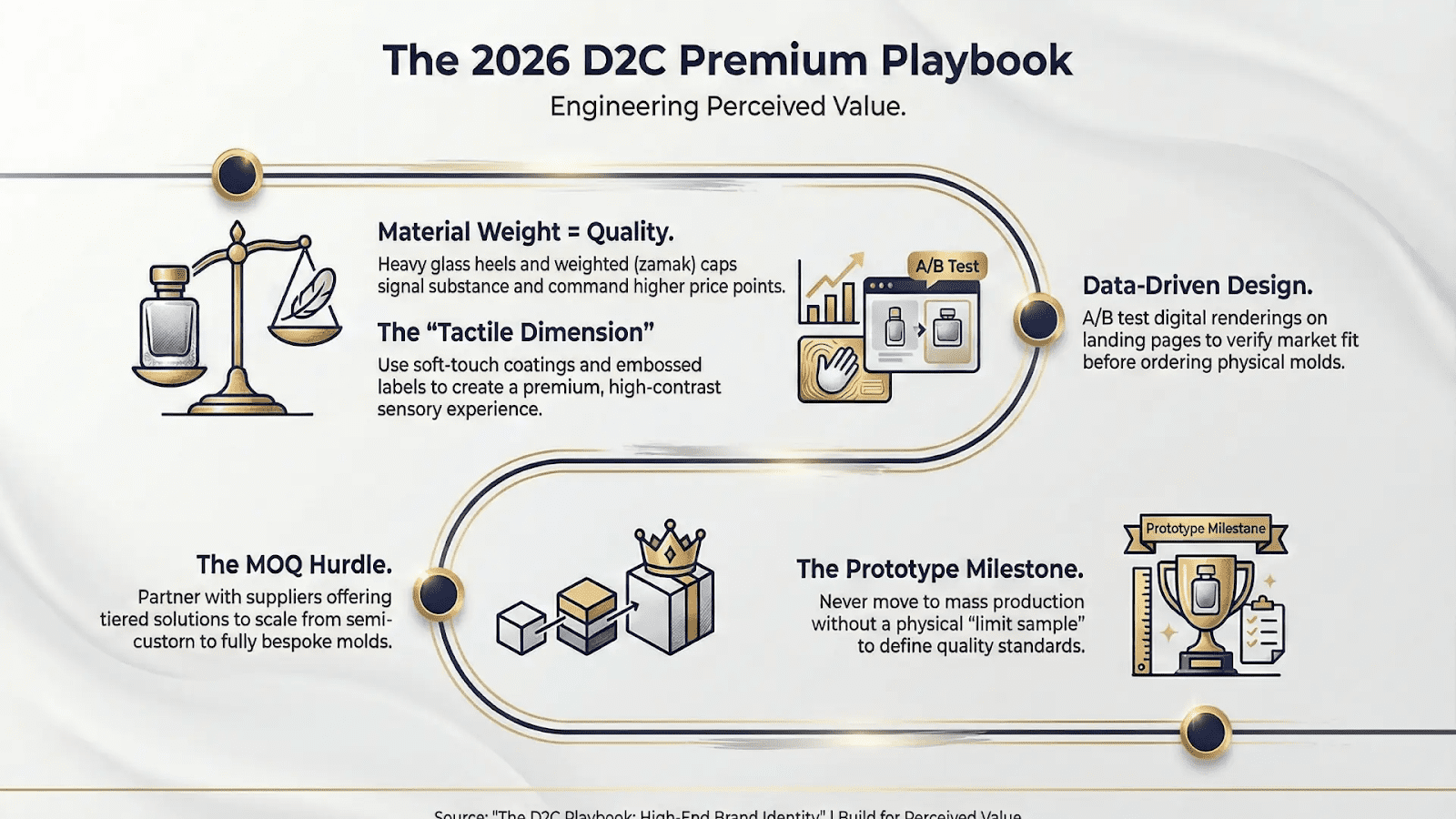
Consumers instinctively associate weight and clarity with luxury. Heavy, clear materials signal quality, whereas lightweight plastics often signal “disposable.” This is why the selection of primary packaging is the single most critical supply chain decision for a premium startup.
Your product’s physical weight and clarity directly influence the price point you can command. This is especially true in the beauty and spirits sectors, where shelf presence is everything. Instead of using generic stock molds that look “cheap,” successful startups partner with specialized manufacturers like Nuvole Glass to access high-end customization services. Whether it’s deep processing for a unique texture or utilizing high-grade super flint glass, the right manufacturing partner turns a simple concept into a shelf-ready luxury product.
The “Unboxing Experience” Psychology
Once the customer purchases the product, the battle shifts to retention and virality. Social media platforms like TikTok and Instagram have made the “unboxing experience” a crucial marketing touchpoint.
A premium brand identity extends beyond the bottle. It includes the secondary packaging—the box, the inserts, and the labels.
- Tactile Elements: Use soft-touch coatings or embossed logos on the outer box.
- Layering: Create a sense of anticipation. The product should not just slide out; it should be revealed.
The Premium Product Anatomy To maximize perceived value, ensure your product design includes at least three of the following elements:
- Heavy Cap: A weighted cap (zamak or heavy plastic) provides a satisfying “click” or feeling of substance.
- Thick Bottom Glass: Often called a “heavy heel,” this adds gravitas and stability to the bottle.
- Embossed/Debossed Label: Adds a tactile dimension that flat printing cannot achieve.
- Soft-touch Secondary Box: A matte finish that feels expensive to the touch.
Sourcing and Supply Chain Management
One of the biggest hurdles for early-stage startups is the Minimum Order Quantity (MOQ). Large manufacturers often require runs of 50,000+ units, which is prohibitive for a bootstrap launch.
How to navigate sourcing:
- Seek Scalability: Look for suppliers who offer tiered solutions—starting with semi-custom options for lower MOQs and moving to fully bespoke molds as you scale.
- Consolidate: If possible, source your bottle and cap from the same ecosystem to ensure perfect tolerance fit and reduce logistical friction.
Leveraging Data for Market Positioning
Before committing capital to mass production, validating your market fit is essential. You cannot build a brand on intuition alone. Modern D2C founders use A/B testing on landing pages to see which packaging designs yield higher click-through rates.
A study by Harvard Business Review highlights that a significant percentage of venture-backed startups fail due to a lack of product-market fit. Using data to verify that your packaging design appeals to your specific demographic reduces this risk significantly. By testing digital renderings before ordering physical molds, you save capital and ensure your brand identity resonates with your target audience.
A Checklist for Your First Product Launch
Ready to move from concept to execution? Ensure you have ticked these boxes:
- Finalize Design: Ensure 2D concepts have been converted to 3D technical drawings.
- Prototype Approval: Never go to production without a physical sample approval.
- Quality Control Audit: Establish a “limit sample” (the lowest acceptable quality standard) with your factory.
- Logistics Planning: Secure freight forwarding well in advance of your launch date.
Key Takeaways
| Area | Key Takeaway | Impact/Data |
| Packaging | Prioritize physical weight | Directly dictates maximum price point |
| Design | Embed 3+ Premium Cues | Must have: Heavy cap, thick heel, embossing |
| Marketing | Engineer the “Unboxing” | Critical for TikTok/Instagram virality |
| Sourcing | Consolidate Component Supply | Ensures tolerance fit; mitigates MOQ risks |
| Validation | A/B Test Digital Renders | Verifies market fit before mold investment |
Conclusion
Building a high-end brand in 2026 is not about outspending the competition on ads; it is about out-designing them on the shelf. “Premium” is a result of deliberate choices in sourcing, materials, and user experience. By focusing on high-quality packaging and data-driven positioning, you lay the foundation for a brand that commands attention—and a premium price tag.
