
Key Takeaways
Interior painting covers every painted surface inside a property, walls, ceilings, doors, trims, and feature walls, each requiring a specific product and sheen level.
Surface preparation is the stage that determines how long the finish lasts in both residential and commercial painting projects.
Commercial painters work to different product specifications, scheduling requirements, and consistency standards than residential painting contractors.
Interior painting looks straightforward from the outside. Pick a colour, apply the paint, done. In practice, the majority of interior painting projects that fail are those that peel, colours that read wrong, and sheen levels that age poorly, because of decisions made before the brush touched the wall. Whether the property is a home or a commercial space, the principle is the same: interior painting done correctly starts with preparation and product specification, not colour selection. This guide covers what both residential and commercial clients need to understand before starting a project.
What Interior Painting Actually Covers
Interior painting covers every painted surface inside a building. The scope varies between residential and commercial properties, but the standards for preparation, product selection, and application do not.
Residential Interior Painting
In a home, residential painting covers walls, ceilings, doors, trims, skirting boards, and architraves. It may also include feature walls, stairwells, and in older properties, decorative cornices and picture rails. Each surface requires a specific paint type and sheen level suited to its function. A bedroom wall and a bathroom wall are not the same surface from a specification perspective even if they look similar. For a full breakdown of what our residential painting service covers, see the dedicated page.
Commercial Interior Painting
Commercial painters work across a wider range of interior environments, including offices, retail stores, medical centres, warehouses, strata common areas, and childcare facilities. The brief for commercial painting differs from residential work in three key ways: paint systems must perform under heavier use and more frequent cleaning, scheduling must accommodate operating businesses, and the scope typically involves larger surface areas with tighter consistency requirements.
Surfaces That Are Commonly Missed
• Eaves and soffits: Frequently excluded from interior and exterior repaint scopes to reduce cost, but among the first surfaces to show breakdown.
• Window reveals and sills: High-exposure surfaces that take direct light and moisture, affecting both waterproofing and appearance over time.
• Feature walls: A single interior wall in a contrasting colour or finish can reframe an entire room without repainting everything.
• Stairwells and hallways: High-traffic surfaces that require more durable paint systems than living room walls, often painted with the same product, which is incorrect.
Surface Preparation The Stage Most Interior Painting Projects Get Wrong
According to the Australian Paint Manufacturers’ Federation, inadequate surface preparation is the leading cause of premature interior paint failure. This applies equally to residential painting and commercial interior painting projects. The paint system is secondary to the surface it is applied to.
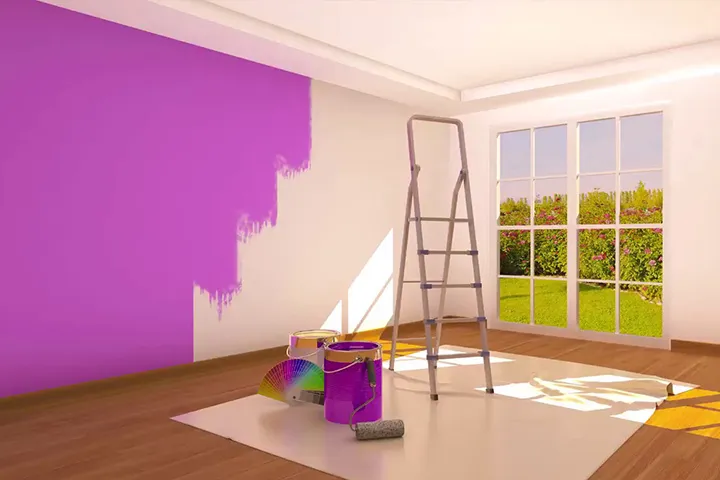
What Correct Preparation Involves
• Filling: Cracks and holes are filled with a compound matched to the substrate flexible filler for surfaces subject to movement, rigid compound for stable areas.
• Sanding: Filled areas are sanded smooth before primer or topcoat is applied. Unsanded repairs read through the topcoat as visible patches.
• Priming: Bare, repaired, or stained surfaces require primer before topcoat. Without it, topcoats fail to bond correctly, and the finish degrades faster than expected.
• Stain blocking: Water stains, smoke marks, and tannin bleed require stain-blocking primer. Without it, marks bleed through multiple coats regardless of paint quality.
• Mould treatment: Mould must be chemically treated before painting. Painting over active mould without treatment delays its return by weeks, not permanently.
Frank’s Note (Top Kat Painting):
“When an interior painting quote is significantly lower than others, the saving is almost always in the preparation stage. Fewer coats, skipped priming, no stain blocking, these shortcuts are invisible at quoting time and visible within a year of completion. The preparation is the job. The painting is the last part.”
Paint Sheen: The Variable That Changes Everything
Sheen level is as important as colour in any interior painting project. It determines how a surface looks under light, how durable it is in use, and how easy it is to clean. Applying the same sheen across every interior surface is a shortcut that affects both appearance and longevity.
| Surface | Correct Sheen | Reason |
| Ceilings | Flat / Matte | No reflectivity hides imperfections |
| Bedroom and living room walls | Low Sheen | Clean finish, lightly wipeable |
| Hallways and family rooms | Eggshell | More durable, easy to clean |
| Kitchens and bathrooms | Satin | Moisture-resistant, wipes clean |
| Doors, trims, skirting boards | Semi-Gloss | Hard and durable handles daily contact |
| Commercial high-traffic walls | Eggshell or Satin | Washable holds up under repeated cleaning |
For commercial painters, sheen selection has an additional dimension, washability. Surfaces in commercial environments are cleaned far more frequently and with stronger products than residential interiors. A finish that cannot withstand this without marking or dulling will need repainting sooner, increasing the long-term cost of the project.
Residential Painting vs Commercial Interior Painting Key Differences
Both residential painting and commercial interior painting involve the same core disciplines: preparation, priming, and application. But the specific requirements differ in ways that affect product selection, scheduling, and approach.
Product Requirements
Residential interior painting services use standard or low-VOC acrylic products suited to domestic use. Commercial interior spaces require higher-durability and higher-washability systems. In medical facilities and childcare centres, zero-VOC products are specified as standard. In warehouses, coatings must resist abrasion and, in some cases, chemical exposure.
Scheduling
Residential painting projects are scheduled around the homeowner’s availability. Commercial painters must plan around the operating requirements of the business, completing work after hours, in stages, or within specific vacancy windows. An interior painting project in an occupied office that is not scheduled correctly will either disrupt the business or produce work completed under inadequate conditions.
Scale and Consistency
Commercial interior painting projects involve larger surface areas and stricter consistency requirements. Colour variation, sheen inconsistency, and visible lap lines that might pass unnoticed on a residential wall become significant quality failures on a 200-square-metre office fit-out. Professional commercial painters apply additional quality control measures to maintain consistency across large surfaces.
Interior Wall Paint Choosing the Right Product
Dulux and Taubmans produce interior wall paint systems formulated for Australian conditions, including low-VOC and zero-VOC options, washable acrylic ranges for commercial use, and specialty products for high-moisture areas. The specific product for an interior painting project depends on:
• The substrate: Plasterboard, solid plaster, previously painted surfaces, and new render all respond differently to primer and topcoat systems.
• The room’s function: A bathroom requires a moisture-resistant system. A childcare centre requires zero-VOC. A corporate office requires a washable finish rated for commercial cleaning.
• The existing surface condition: Surfaces with staining, mould history, or significant crack repair require specific primer products before any topcoat is applied.
A professional interior painting quote specifies the exact product for each surface brand, product name, and sheen level. A quote that references ‘quality paint’ without specifics is not a specification. It is a placeholder.
Frequently Asked Questions
What is the difference between residential and commercial interior painting?
Residential painting focuses on homes’ domestic surfaces, standard paint systems, and scheduling around the homeowner. Commercial painters work with higher-durability products, stricter consistency requirements across large surface areas, and scheduling that accommodates operating businesses including after-hours and weekend work.
How long does an interior painting project take?
A full interior repaint of a three to four-bedroom home typically takes five to seven days. A standard open-plan commercial office of 200 to 400 square metres takes two to four days with a professional crew. Timeline depends on surface area, preparation requirements, and the number of coats specified.
What interior wall paint is best for high-traffic areas?
Eggshell or satin finish suits most high-traffic residential areas hallways, family rooms, and children’s bedrooms. For commercial interiors with frequent cleaning requirements, a washable low-sheen or satin formulation rated for commercial use is the correct specification. Dulux Wash and Wear and similar commercial-grade products are designed specifically for this purpose.
Do commercial painters work outside business hours?
Yes. After-hours and weekend scheduling is standard practice for commercial interior painting projects where the business needs to remain operational. Work is typically completed overnight or across weekends, with the space ready for normal use by the following business day.
Should I use the same paint for all interior surfaces?
No. Walls, ceilings, doors, trims, and wet area surfaces each require a different sheen level and, in some cases a different formulation. Applying a single product across all interior surfaces is a shortcut that affects both the appearance and the longevity of the finish.
What preparation is needed before interior painting?
At minimum: filling of all cracks and holes, sanding of repaired areas, priming of bare or stained surfaces, and mould treatment where active mould is present. The specific preparation required depends on the surface condition, which a professional painter assesses before quoting.
How do I know if an interior painting quote is thorough?
A professional interior painting quote specifies every surface to be painted, the exact paint product and sheen for each surface, the number of coats, the preparation included, the timeline, and a workmanship guarantee. Any quote that lacks these details is incomplete.