
Digital photography has transformed how people capture, edit, and share visual content. From professional photographers to everyday smartphone users, millions of people edit photos daily to improve their appearance and create unique visual experiences. Among the many editing techniques available today, color inversion remains one of the most fascinating and creative tools.
Negative image effects have been used for decades in photography and graphic design. What began as a necessary step in traditional film development has evolved into a popular artistic technique for creating dramatic and eye-catching visuals. Today, modern editing tools allow users to apply negative effects instantly and explore entirely new creative possibilities.
What Is a Negative Photo Effect?
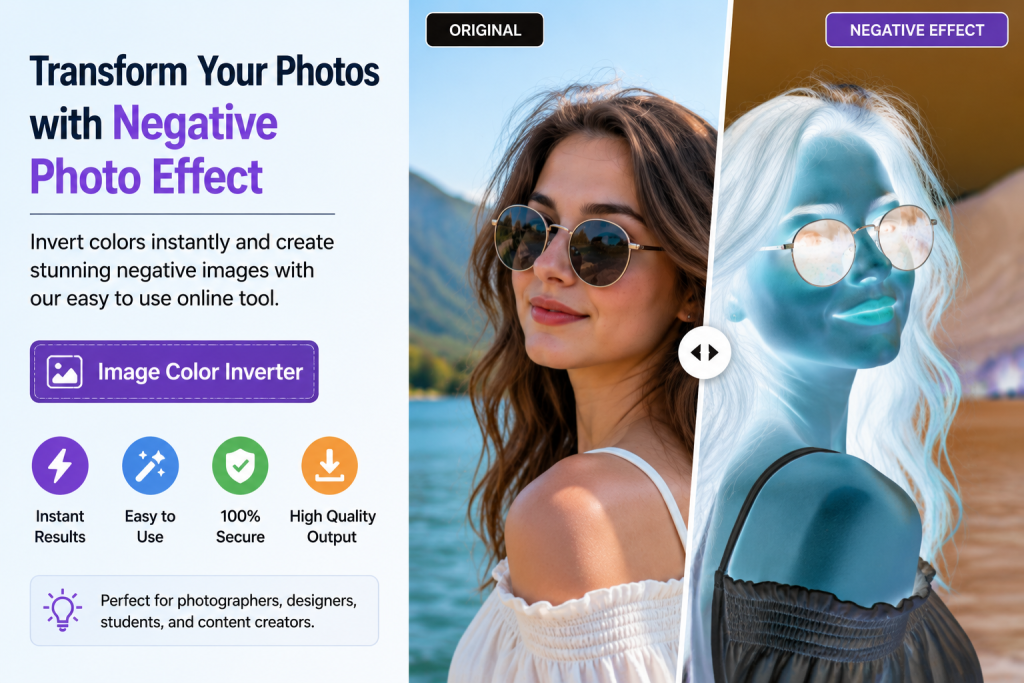
A negative image is created by reversing the colors of an original photograph. Bright areas become dark, dark areas become bright, and every color is transformed into its opposite value.
This process creates a striking visual effect that often makes familiar subjects appear unusual and artistic. Landscapes, portraits, architecture, and everyday objects can take on a completely different appearance when viewed as negative images.
Using a negative photo effect allows creators to experiment with color relationships and produce visuals that immediately capture attention.
The History of Negative Photography
Before digital cameras existed, photographers relied on film negatives to produce printed photographs. When film was exposed to light and developed, it created a negative version of the image.
These negatives were then used to create standard photographic prints.
Although modern photography no longer requires film negatives, the visual style remains popular because of its artistic and creative value. Digital editing tools now make it possible to recreate the same effect instantly without specialized equipment or technical expertise.
This combination of historical significance and creative flexibility continues to attract photographers and designers worldwide.
Why Color Inversion Is So Visually Powerful
The human brain is naturally drawn to unusual visuals. Because people are accustomed to seeing colors in their normal form, inverted images often appear surprising and intriguing.
Color inversion changes the way viewers interpret a photograph. Familiar scenes suddenly become abstract, futuristic, or surreal.
This unique visual transformation makes negative effects particularly effective for:
- Creative photography
- Graphic design projects
- Social media content
- Digital artwork
- Advertising campaigns
- Album covers
- Marketing materials
The ability to instantly create something visually different is one reason negative image effects remain popular.
How an Image Color Inverter Works
An image color inverter functions by reversing the color values within a photograph. Every pixel is transformed into its opposite color, creating a complete inversion of the original image.
For example:
- Black becomes white
- Blue becomes yellow
- Red becomes cyan
- Green becomes magenta
The result is an image that maintains its original structure while displaying entirely different color relationships.
Modern editing tools can perform this process automatically within seconds, making color inversion accessible to users of all experience levels.
A Favorite Tool for Digital Artists
Artists constantly seek new ways to express creativity and develop unique visual styles. Negative effects provide an excellent opportunity to experiment with color, contrast, and composition.
Many digital artists use inverted images as the foundation for larger creative projects. By combining negative effects with filters, overlays, textures, and other editing techniques, they can create highly distinctive artwork.
The unpredictable nature of color inversion often inspires new creative ideas that might not emerge through traditional editing methods.
This makes negative effects a valuable resource for artistic exploration.
Enhancing Social Media Creativity
Social media platforms have become increasingly competitive, with millions of images uploaded every day. Standing out requires more than simply posting high-quality photos.
Creative editing techniques help users develop a recognizable visual identity while capturing audience attention.
Negative effects can transform ordinary photos into striking content that encourages viewers to stop scrolling and engage with a post.
Content creators, influencers, and marketers often use unique visual effects to strengthen branding and increase visibility across platforms.
The dramatic appearance of inverted images makes them especially effective for creating memorable content.
Supporting Graphic Design Projects
Graphic designers frequently use color inversion techniques to produce bold visuals that attract attention.
Negative imagery can create modern, futuristic, and experimental design aesthetics that work well across various industries.
Designers often incorporate inverted photographs into:
- Posters
- Website graphics
- Promotional materials
- Advertising campaigns
- Product packaging
- Digital presentations
The strong visual contrast created by inversion helps important design elements stand out more effectively.
This versatility makes negative effects a useful addition to any designer’s toolkit.
Educational Applications of Negative Images
Negative photo effects are not limited to artistic projects. They also serve practical educational purposes.
Students studying photography, graphic design, and visual arts often use inverted images to better understand color theory and visual perception.
Teachers may use color inversion demonstrations to explain concepts such as contrast, light, color relationships, and image processing.
These educational applications highlight the broader value of image inversion beyond purely creative purposes.
The Rise of Online Editing Tools
One reason negative effects have become increasingly popular is the accessibility of modern online editing platforms.
In the past, applying advanced photo effects often required expensive software and technical expertise. Today, users can edit images directly through their web browsers.
Online editing tools provide convenience, speed, and flexibility while eliminating the need for software installation.
This accessibility has opened creative opportunities for students, freelancers, marketers, business owners, and hobbyists around the world.
The ability to apply professional-quality effects instantly continues driving the popularity of browser-based editing solutions.
Future Trends in Image Editing
Artificial intelligence and machine learning are rapidly transforming the photo editing industry.
Modern editing tools already offer automated enhancements, intelligent filters, and AI-powered creative suggestions. Future developments may include personalized inversion effects, adaptive color transformations, and advanced artistic recommendations.
As technology continues evolving, image editing will become more intuitive and accessible while providing users with even greater creative freedom.
These innovations will help creators experiment with visual styles more efficiently than ever before.
Why Negative Effects Remain Relevant
Despite the emergence of countless editing features and filters, negative photo effects continue to maintain their appeal.
Their ability to completely transform an image while preserving its original composition creates a unique balance between familiarity and surprise.
Whether used for artistic expression, marketing content, graphic design, education, or social media engagement, color inversion remains one of the most versatile techniques available in digital image editing.
Its simplicity, accessibility, and visual impact ensure that it will remain a valuable creative tool for years to come.
Conclusion
Digital editing has expanded the possibilities of visual creativity, and color inversion remains one of the most powerful techniques available. By applying a negative photo effect, users can instantly transform ordinary images into striking works of art.
An advanced image color inverter allows photographers, designers, marketers, and content creators to explore new visual styles while enhancing audience engagement. As editing technology continues to advance, negative image effects will remain an important tool for creative experimentation and visual storytelling.
For anyone seeking a unique and attention-grabbing editing technique, negative effects offer endless creative possibilities.