
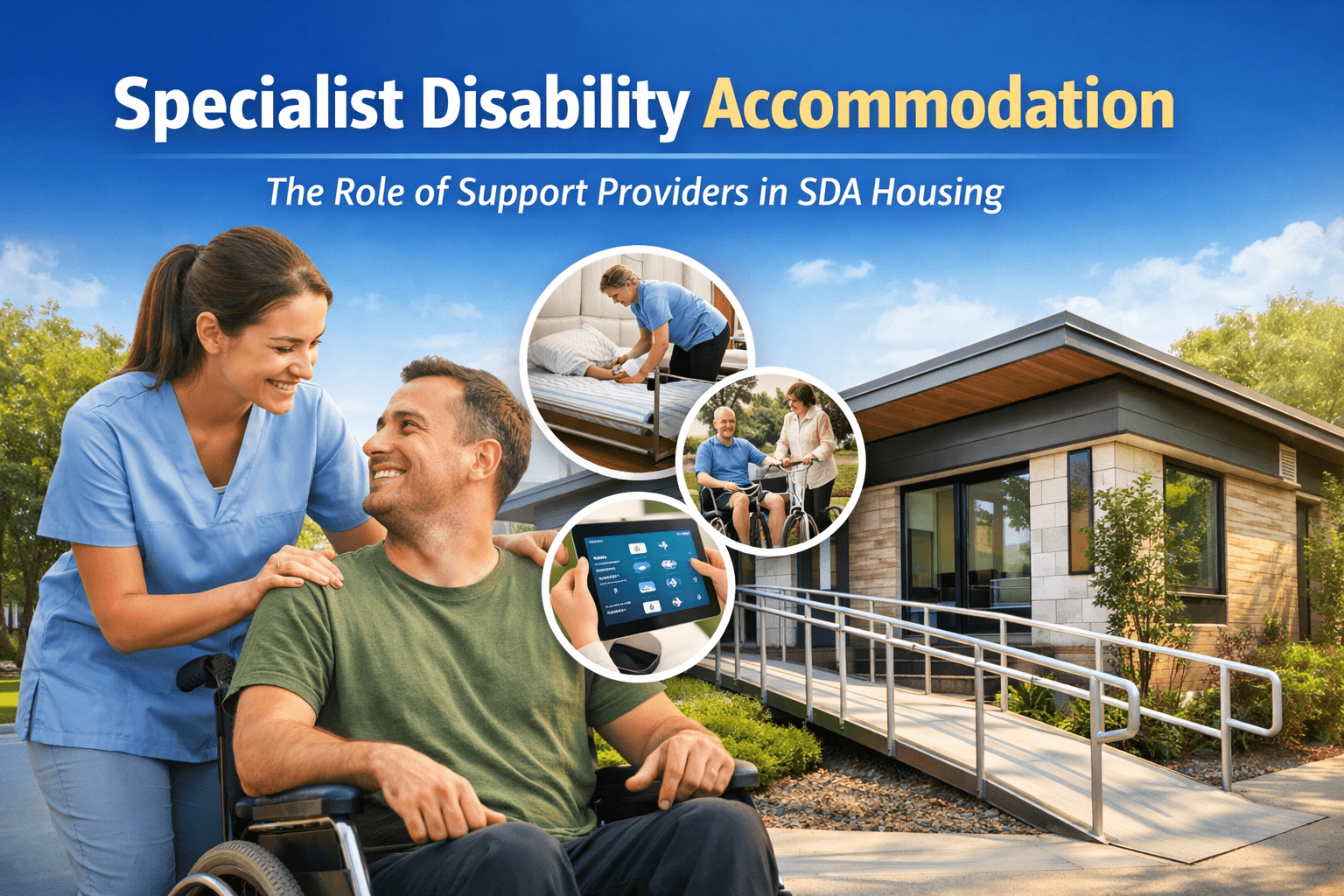
Specialist Disability Accommodation has become a vital part of modern disability support systems, offering tailored housing solutions for individuals with extreme functional impairment or very high support needs. As awareness grows and demand increases, the focus has shifted beyond just building accessible homes to ensuring the right support structures are in place. At the heart of this system are support providers, whose role is essential in making SDA housing safe, functional, and empowering for participants.
This article explores what Specialist Disability Accommodation is, how it works, and most importantly the critical role support providers play in delivering high-quality SDA housing outcomes.
What Is Specialist Disability Accommodation?
SDA refers to purpose-built housing designed to meet the specific needs of people with significant disabilities. These homes are typically funded under disability support schemes and cater to individuals who require specialist design features and ongoing assistance to live safely and independently.
Unlike standard housing, SDA includes advanced accessibility features, assistive technology, and layouts that support complex care requirements. The goal is to enable participants to live with dignity, autonomy, and improved quality of life.
Who Is Eligible for Specialist Disability Accommodation?
Eligibility for SDA is generally limited to individuals with the highest levels of support needs. Participants usually meet strict criteria based on functional impairment, mobility limitations, or complex behavioral or medical requirements.
Eligibility assessments consider factors such as:
- The level of physical or cognitive disability
- Need for 24/7 or intensive support
- Risk of injury without specialist housing
- Long-term housing stability needs
Once approved, participants can access SDA housing options that best align with their lifestyle and care requirements.
Types of Specialist Disability Accommodation Housing
SDA is not a one-size-fits-all solution. Different housing categories are designed to meet varying levels of support and independence.
Improved Liveability
These homes are designed for individuals with sensory, intellectual, or cognitive impairments. Features may include enhanced lighting, clear sightlines, and easy-to-navigate layouts.
Fully Accessible
Fully accessible SDA housing supports participants with significant physical disabilities. It includes wheelchair-accessible entrances, bathrooms, kitchens, and wide corridors for mobility aids.
Robust Housing
Robust housing is designed for individuals who may exhibit complex or challenging behaviors. These homes are built with reinforced materials and layouts that minimize risk while maintaining a homelike environment.
High Physical Support
High physical support SDA homes include advanced assistive technologies such as ceiling hoists, automated doors, and emergency response systems to support participants with severe physical impairments.
The Importance of Support Providers in SDA Housing
While Specialist Disability Accommodation provides the physical structure, support providers ensure the home functions effectively for the participant. Their role extends beyond basic care and is central to the success of SDA living.
Bridging Housing and Care
Support providers act as the bridge between housing design and daily living needs. They help participants use the features of SDA effectively, ensuring assistive technologies and accessibility features are used safely and correctly.
Without skilled support providers, even the most well-designed SDA housing may fail to meet its full potential.
Daily Living Support and Personal Care
One of the primary responsibilities of support providers in Specialist Disability Accommodation is assisting with daily living activities. This may include:
- Personal hygiene and grooming
- Meal preparation and nutrition support
- Medication management
- Mobility assistance and transfers
Support providers tailor their assistance to each participant’s needs, promoting independence wherever possible while ensuring safety and comfort.
Promoting Independence and Choice
A key objective of SDA is empowering participants to live as independently as possible. Support providers play a crucial role in this by encouraging skill development and respecting individual choice.
Rather than doing everything for participants, quality support providers focus on:
- Building confidence in daily tasks
- Supporting decision-making
- Encouraging social participation
- Respecting personal routines and preferences
This person-centered approach aligns with the broader philosophy of disability inclusion and autonomy.
Ensuring Safety and Risk Management
Safety is a major priority in Specialist Disability Accommodation, particularly for individuals with complex needs. Support providers are trained to identify risks and respond proactively.
Their responsibilities often include:
- Monitoring health and wellbeing
- Responding to emergencies
- Managing behavioral risks
- Maintaining safe living environments
By working closely with participants and families, support providers help reduce hospitalizations and prevent avoidable incidents.
Supporting Social Connection and Community Engagement
Isolation can be a significant challenge for people with disabilities. Support providers in SDA play an important role in fostering social connection.
They assist participants with:
- Attending community events
- Building relationships with housemates
- Accessing education or employment opportunities
- Maintaining family and social connections
This support contributes to emotional wellbeing and helps participants feel more connected to their communities.
Collaboration With Families and Allied Health Professionals
Effective Specialist Disability Accommodation relies on collaboration. Support providers regularly work alongside families, therapists, and healthcare professionals to deliver coordinated care.
This teamwork ensures:
- Consistent support strategies
- Clear communication about participant needs
- Better long-term outcomes
- Holistic care planning
By sharing insights and progress updates, support providers help create a stable and supportive living environment.
The Role of Support Providers in SDA Transitions
Moving into Specialist Disability Accommodation can be a significant transition. Support providers assist participants during this period by:
- Helping them adjust to a new environment
- Establishing routines
- Learning to use new accessibility features
- Addressing emotional or behavioral challenges
A smooth transition sets the foundation for long-term success in SDA housing.
Quality Standards and Professional Training
Support providers working in Specialist Disability Accommodation must meet strict quality and compliance standards. Ongoing training ensures they are equipped to handle complex care needs and evolving participant requirements.
Key areas of training often include:
- Disability support best practices
- Trauma-informed care
- Manual handling and mobility assistance
- Communication strategies
- Assistive technology usage
High-quality training directly impacts the safety and wellbeing of SDA residents.
Choosing the Right Support Provider for SDA Housing
Selecting the right support provider is just as important as choosing the right Specialist Disability Accommodation. Participants and families should consider factors such as:
- Experience with complex support needs
- Person-centered care approach
- Staff training and consistency
- Communication and transparency
- Flexibility in service delivery
A well-matched support provider can significantly enhance the SDA living experience.
Challenges Facing Support Providers in Specialist Disability Accommodation
Despite their essential role, support providers face several challenges, including:
- Workforce shortages
- Managing complex participant needs
- Balancing independence with safety
- Adapting to evolving care standards
Addressing these challenges requires investment in training, workforce wellbeing, and collaborative care models.
The Future of Specialist Disability Accommodation and Support Services
As demand for SDA continues to grow, the role of support providers will become even more critical. Future trends are likely to include:
- Greater use of smart home technologies
- More individualized housing models
- Increased focus on participant choice
- Stronger integration of housing and support services
Organizations such as EasAbility highlight the importance of combining quality housing with compassionate, skilled support to create sustainable SDA solutions.
Final Thoughts
Specialist Disability Accommodation is far more than accessible housing; it is a comprehensive support system designed to enhance independence, safety, and quality of life for individuals with high support needs. While the physical design of SDA homes is essential, it is the dedication and expertise of support providers that truly bring these spaces to life.
By delivering personalized care, promoting independence, and fostering community connection, support providers play a central role in ensuring SDA achieves its purpose. As the sector evolves, continued focus on quality support will remain key to empowering individuals to live fulfilling and meaningful lives.