
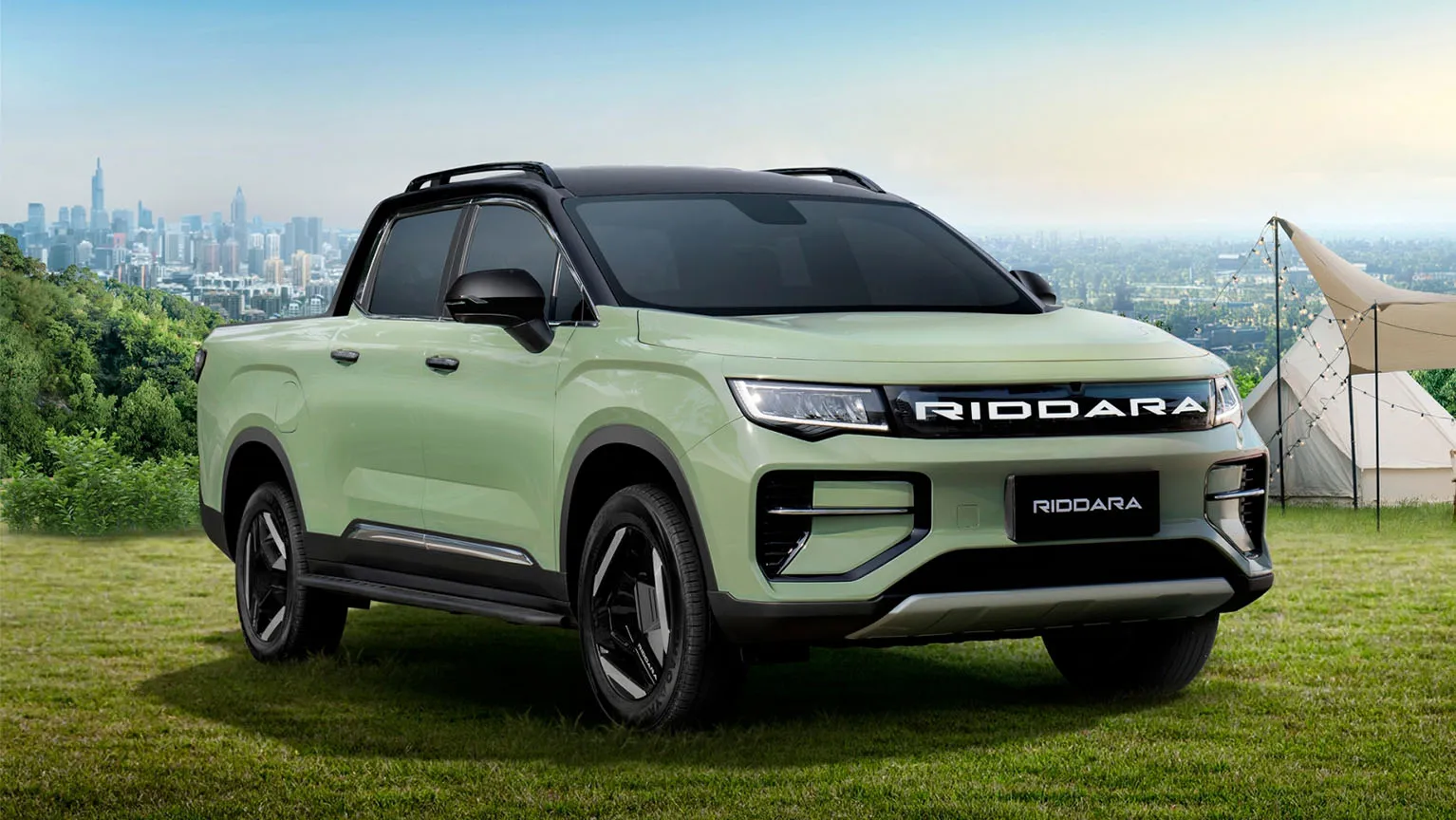
There’s a certain kind of excitement that surrounds a genuine first. Not a “first in its price range” or a “first with this particular feature”—but a true category-defining first. That’s exactly what the Riddara RD6 delivered when it arrived in Pakistan in mid-2025, becoming the country’s first fully electric pickup truck. And now, with 2026 underway, a question keeps coming up in automotive circles, online forums, and dealership conversations: is the RD6 coming back with a re-launch, or is something else going on?
The honest answer is a little more nuanced than a simple yes or no — and understanding it requires stepping back to look at the full picture.
How It All Started
The RD6 didn’t arrive quietly. Before the official launch, the truck was already being spotted on the streets of Karachi, generating the kind of organic buzz that most automotive brands can only dream about. By the time Capital Smart Motors officially introduced it to the Pakistani market, there was already a genuine audience waiting.
The launch itself was historic — not just as a marketing milestone, but as a real signal that Pakistan’s automotive market was ready to accommodate something genuinely different. Three variants were offered at launch: Econ, Air, and Pro, priced from approximately PKR 13.3 million to PKR 17 million depending on trim level. Each variant offered different battery capacities, performance levels, and features, giving buyers actual choices rather than a single take-it-or-leave-it option.
What Makes the RD6 Worth Talking About
Before getting into the re-launch question, it’s worth spending a moment on why this vehicle generated so much conversation in the first place — because the specs genuinely earn it.
The RD6 is built on a dedicated electric platform, which means it wasn’t retrofitted or converted. It was designed from the ground up to be electric. The result is a truck that can travel up to approximately 600 km on a single charge depending on the variant, sprint from 0 to 100 km/h in as little as 4.5 seconds, and tow up to 3,000 kg. Pair that with advanced safety systems and smart driving modes, and you have something that doesn’t ask you to compromise just because it doesn’t run on petrol.
Globally, the RD6 is produced by Geely under its Radar brand — so the engineering pedigree is serious, not speculative.
So, Is There Actually a Re-Launch Happening?
Here’s where the conversation gets interesting. The word “re-launch” has been floating around, but it’s worth being precise about what that actually means — because the reality is more of a continuation and expansion than a dramatic second debut.
The RD6 already launched. It’s in the market. What’s likely happening in 2026 is a second wave — and that second wave can take several forms.
Updated variants and new trims are one real possibility. Automakers routinely introduce upgraded versions within a year of an initial launch, refining features, adding options, or adjusting pricing based on early market feedback. If a refreshed or hybrid variant of the RD6 arrives in 2026, it will understandably feel like a new launch to many buyers.
Expanded marketing and dealership reach is another factor. EVs in Pakistan are still in early adoption territory, which means a large portion of the potential buying public hasn’t seriously considered one yet. A renewed push — test drive events, expanded showroom presence, promotional campaigns — can create the impression of a re-launch even when the product itself hasn’t fundamentally changed.
Infrastructure catching up plays a role too. One of the quiet reasons EVs sometimes struggle in their first year isn’t the vehicle itself but the ecosystem around it. As charging infrastructure improves in Pakistani cities, companies naturally push harder on existing models that were previously held back by that limitation. That renewed push can look and feel like a re-launch.
Global model updates are also worth watching. Riddara has been expanding the RD6 lineup internationally, including hybrid variants for different markets. If Pakistan receives one of these updated versions in 2026, it would almost certainly be positioned as something new — even if the nameplate is familiar.
The Challenges Are Real — But So Is the Progress
It would be unfair to paint an entirely rosy picture. The RD6 faces genuine headwinds in Pakistan, and acknowledging them isn’t pessimism — it’s honesty.
The price point is significant. At over PKR 1.3 crore, the RD6 is targeting a specific segment of the market, not the mass buyer. Charging infrastructure, while improving, remains thin outside major urban centers. Many potential buyers are still unfamiliar with the concept of an electric pickup, let alone confident about ownership. And the EV resale market in Pakistan is still finding its feet, which creates understandable hesitation for buyers thinking about long-term value.
None of these are insurmountable — in fact, most of them are already being worked on. Government incentives, private investment in charging networks, and growing consumer awareness are all moving in the right direction. But progress is gradual, not overnight.
Where the Real Opportunity Lies
What makes the RD6’s future genuinely promising isn’t just that it’s electric — it’s that it’s versatile. A vehicle that can serve a business owner hauling equipment during the week and an adventure enthusiast heading off-road on the weekend covers a lot of ground, literally and figuratively.
Rising petrol prices are pushing more buyers to seriously reconsider electric alternatives for the first time. Environmental awareness, while still developing in Pakistan, is a growing factor particularly among younger, urban buyers. And the RD6’s dual-purpose design gives it an audience that purely commercial or purely personal vehicles can’t reach.
For those researching the RD6 more deeply, consulting a reliable source — whether that’s the manufacturer, authorized dealerships, or credible automotive publications — is always the smart starting point before making a purchasing decision of this scale.
What 2026 Actually Looks Like for the RD6
Rather than a dramatic re-launch, think of 2026 as the RD6’s consolidation year. The groundwork was laid in 2025. Now comes the harder, quieter work of building actual market presence — expanding availability, responding to early customer feedback, potentially introducing updated variants, and pushing harder into segments that weren’t fully reached in the first year.
If charging infrastructure continues to develop and awareness keeps growing, the RD6 has a real shot at doing something genuinely significant: establishing the electric pickup truck as a legitimate, mainstream category in Pakistan’s automotive market. Not just a novelty or a conversation piece, but a practical choice that more and more buyers consider seriously.
The Bigger Picture
The Riddara RD6 arrived at a moment when Pakistan’s EV conversation was ready to move beyond small hatchbacks and city cars. A full-size electric pickup — capable, well-engineered, and backed by serious global manufacturing — raised the ambition of what’s possible here.