
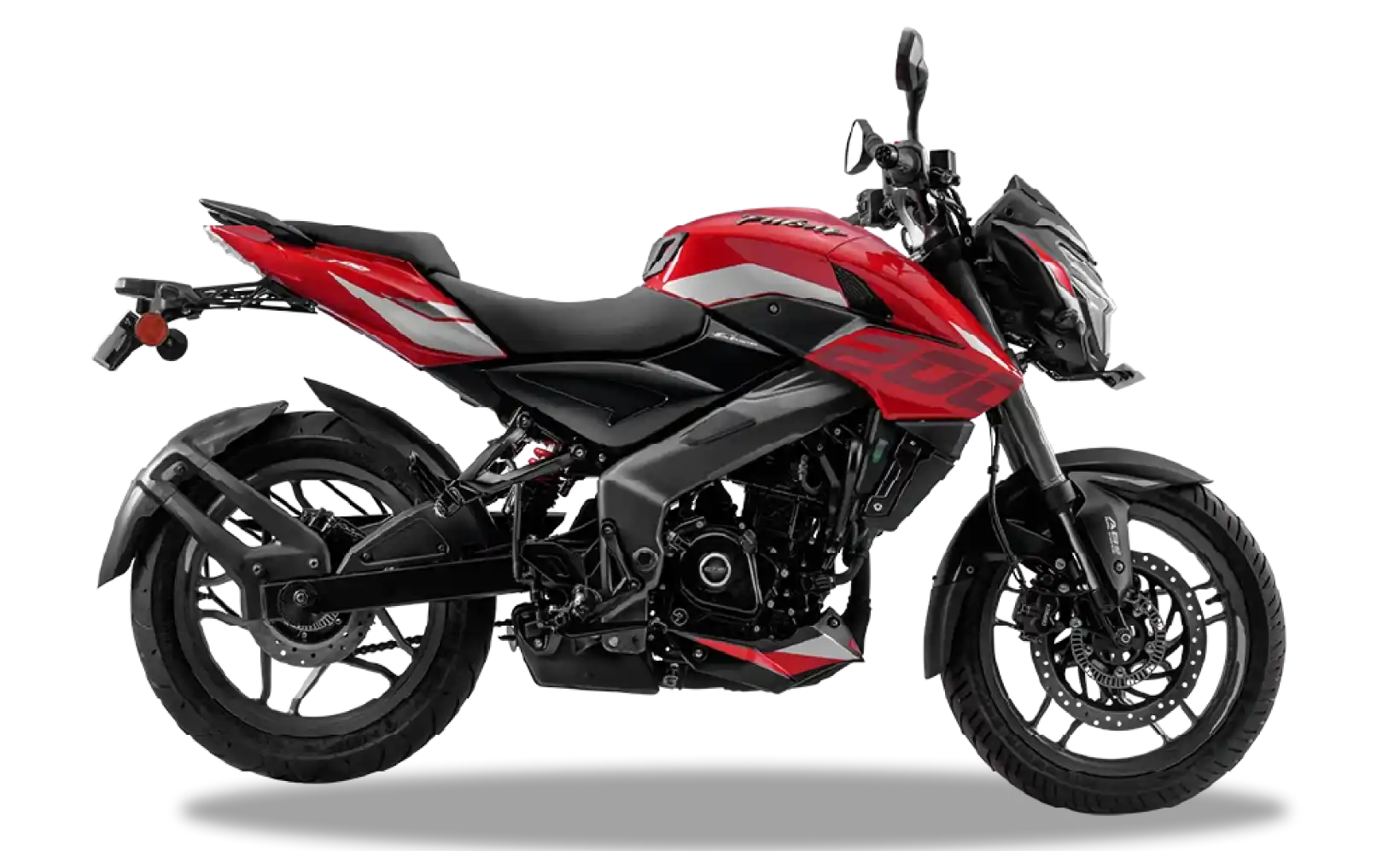
Weight is more than a number.
The specification sheet says 145 kg. But that single figure tells you almost nothing about how the Pulsar NS200 actually handles. Where that weight sits, how it’s distributed, and how the chassis manages it – these dynamics determine what you feel through every corner, direction change, and braking event.
Understanding Pulsar NS200 weight dynamics reveals why this motorcycle handles with precision that surprises riders expecting less from its displacement class.
The 145 kg Reality
At 145 kg kerb weight, the NS200 achieves remarkable lightness for its capability.
This figure includes fuel, oil, and all fluids. Compare this to competitors, often quoting dry weights that exclude these essentials. The NS200’s honest number represents what you actually manoeuvre.
What 145 kg enables:
- Effortless urban filtering through traffic gaps
- Quick direction changes requiring minimal effort
- Confident low-speed manoeuvring at intersections
- Manageable weight for riders of varied sizes and experience
- Reduced fatigue during extended riding sessions
The lightness serves daily riding practically while enabling the dynamic handling that makes spirited riding rewarding.
Mass Centralisation Philosophy
Where weight sits matters more than total weight.
The NS200’s engineering concentrates mass toward the motorcycle’s centre: both vertically and longitudinally. The engine, fuel, and major components cluster near the combined centre of gravity.
The handling translation:
The motorcycle pivots around its centre naturally. Lean initiation requires less effort. Direction changes happen quickly without fighting mass positioned at extremes. The motorcycle feels lighter than 145 kg because leverage works in your favour.
This centralisation reflects deliberate engineering rather than incidental packaging. Every component placement considered dynamic implications.
Perimeter Frame Contribution
The chassis architecture influences weight dynamics significantly.
The NS200’s perimeter frame positions mass strategically while providing structural rigidity. Unlike conventional frames adding material overhead, the perimeter design achieves stiffness through geometry rather than bulk.
Weight distribution benefits:
- Lower overall centre of gravity than taller frame architectures
- Mass concentrated within the wheelbase rather than extending beyond
- Rigid structure without excess weight penalty
- Direct load paths reduce chassis flex
The frame doesn’t just hold components; it organises them for optimal dynamic behaviour.
Power-to-Weight Excellence
The 23.50 PS output combined with 145 kg creates an exceptional ratio.
This calculation determines acceleration more accurately than horsepower alone. The NS200’s ratio competes with motorcycles of significantly higher displacement.
Real-world impact:
- Traffic light launches feel genuinely quick
- Overtaking is completed confidently without excessive planning
- Inclines climb without labouring
- The motorcycle responds eagerly to throttle inputs
Every horsepower works harder when pushing less mass. The NS200 maximises this relationship.
Suspension and Unsprung Weight
Weight dynamics extend below the springs.
Unsprung weight affects how quickly the suspension responds to surface changes. Lower unsprung weight means faster response and better surface tracking.
The NS200’s component selection considers this factor:
- Appropriately sized wheels balance strength with weight
- Brake components provide stopping power without excess mass
- Suspension components optimise the sprung-to-unsprung ratio
This attention to unsprung weight contributes to the composed ride quality and precise handling response.
Weight Transfer During Braking
Hard braking shifts the weight forward dramatically.
The NS200’s weight distribution and suspension geometry manage this transfer predictably. The front end loads progressively, increasing front tyre grip exactly when braking demands it most. The rear gets lighter but remains controlled.
What you experience:
- Stable braking without excessive dive
- Maintained steering capability during deceleration
- Confidence to brake deep into corners
- Predictable behaviour encouraging skill development
The 280 mm front and 230 mm rear discs exploit this weight transfer effectively. Braking capability matches the dynamic weight management.
Acceleration Weight Transfer
Opening the throttle shifts the weight rearward.
The NS200’s geometry uses this transfer productively. Weight moving to the rear increases rear tyre grip precisely when acceleration demands traction. The front lightens but maintains directional stability.
The riding benefit:
Strong acceleration doesn’t overwhelm rear traction. The motorcycle hooks up confidently. Wheelie tendency remains controllable rather than unpredictable. You exploit the 23.50 PS, knowing the chassis manages power delivery dynamics.
Cornering Weight Dynamics
Mid-corner, weight dynamics become most complex.
Lateral load, longitudinal forces, and suspension compression interact continuously. The NS200’s integrated engineering creates predictable behaviour through this complexity.
What riders feel:
- Neutral handling through corners without unexpected weight shifts
- Confidence to adjust the line mid-corner
- Stable response to throttle application while leaned
- Progressive feedback approaching grip limits
This predictability builds rider confidence progressively. You learn the motorcycle’s limits safely because behaviour remains consistent.
Pillion and Luggage Considerations
Additional weight changes the dynamics noticeably.
A pillion passenger shifts weight rearward, altering handling balance. The suspension compresses differently. Weight transfer characteristics change. The motorcycle feels different: not worse, but different.
Adaptation approach:
- Adjust rear preload for pillion riding when possible
- Allow increased following distances for extended braking
- Anticipate slightly different turn-in characteristics
- Moderate pace until comfortable with altered dynamics
The NS200 accommodates two-up riding competently. Understanding how added weight affects dynamics helps riders adapt confidently.
Weight Dynamics and Rider Skill
Lighter motorcycles reward and reveal rider input.
The NS200’s responsive dynamics mean your inputs matter more. Precise steering creates a precise response. Body positioning affects handling noticeably. The motorcycle amplifies rider skill.
For developing riders:
This responsiveness accelerates skill development. You feel the results of technique improvement immediately. The motorcycle teaches through direct feedback.
For experienced riders:
The NS200 rewards precision with engagement. Advanced techniques produce noticeable results. The chassis capability matches skilled inputs.
Conclusion
Pulsar NS200’s weight dynamics explain why this motorcycle handles beyond its class.
The 145 kg figure represents just the starting point. Mass centralisation, frame architecture, power-to-weight ratio, and integrated dynamic management create handling that surprises and rewards.
Every corner, every direction change, every braking event demonstrates engineering that considers weight not as a number to minimise but as a dynamic to optimise. The NS200 handles brilliantly because its weight works intelligently.
Contact us to experience how Pulsar NS200’s weight dynamics translate into riding confidence.
FAQs
1. How does the NS200’s weight compare to competitors?
At 145 kg, the NS200 ranks among the lightest in its performance class. Many competitors exceed 150 kg while offering similar or lesser performance. This makes the NS200’s power-to-weight ratio particularly impressive.
2. Does the light-weight make the NS200 unstable at highway speeds?
No. The perimeter frame provides stability that belies the light weight. The NS200 tracks confidently at sustained speeds. Weight distribution and chassis geometry ensure high-speed composure alongside low-speed agility.
3. How noticeable is the weight difference compared to heavier motorcycles?
Immediately noticeable. Riders transitioning from heavier machines find the NS200 remarkably flickable. Direction changes require noticeably less effort. The reduced mass transforms the riding character perceptibly.
4. Does rider weight significantly affect NS200 handling?
Rider weight affects all motorcycles proportionally. Heavier riders may find the suspension slightly softer than optimal, potentially benefiting from preload adjustment.
5. Can modifications reduce weight further?
Aftermarket exhausts and select components can reduce weight marginally. However, the NS200 is already well-optimised. Modifications should prioritise function over weight savings, which typically prove minimal.