

A Tragedy That Shook Florida
When Harjinder Singh, a truck driver, made an illegal U-turn on Florida’s Turnpike earlier this year, the result was catastrophic: three lives lost, families shattered, communities grieving (Desk, 2025).
For most of the public, the case became just another headline in America’s long list of fatal trucking accidents. The news cycle focused on punishment, legal fallout, and policy debates. But once the headlines fade, the deeper truth remains: the human cost of negligence lingers long after the wreckage is cleared.
Beyond Fault: The Damages We Overlook
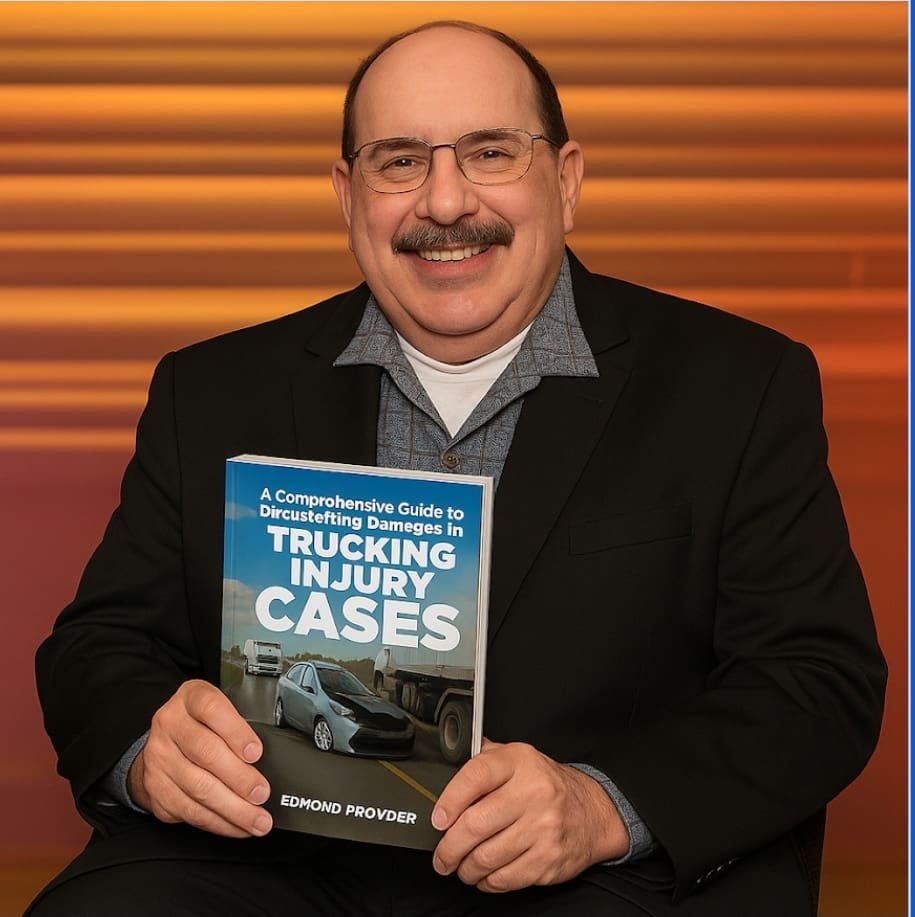
This is where Edmond Alan Provder, vocational expert and rehabilitation counselor, urges us to look deeper. In his book, Damages in Trucking Cases, he shows that true justice doesn’t stop at proving who caused a crash. It must answer a harder question: what did it really cost?
Provder has spent decades in courtrooms, testifying about injuries, employability, and long-term losses. He’s seen how the law often reduces lives to numbers — medical bills, lost wages, economic projections. But behind every statistic are shattered futures: the parent who can no longer provide, the worker forced into early retirement, the child who grows up without support.
The “House of Damages” Framework
Provder introduces the concept of the House of Damages — a model built on three crucial pillars:
- Vocational Experts – to measure employability after injury.
- Life-Care Planners – to map ongoing medical and daily living needs.
- Economists – to quantify financial loss over a lifetime.
Together, these experts create a complete picture of damages — one that juries and judges often overlook when cases focus only on liability.
What the Florida Crash Teaches Us
If Provder’s framework were applied to the Florida tragedy, the focus would shift away from just an illegal U-turn or employer negligence. Instead, it would force us to measure the true void left behind:
- Families without breadwinners.
- Dependents without care.
- Communities without contributors.
This isn’t abstract. These are the very real consequences of negligence on America’s highways.
Why Attorneys Should Rethink Strategy
Many attorneys win liability but fail to prove damages persuasively, leaving victims undercompensated. Provder’s work is a warning and a roadmap. His book equips legal teams with the tools to:
- Demonstrate how a spinal injury erases decades of earning potential.
- Prove how chronic pain undermines long-term income.
- Highlight how trauma fractures families and relationships.
It’s not just about winning a case. It’s about ensuring victims receive restitution that truly reflects what they’ve lost.
At Its Heart: Empathy in Justice
What sets Provder apart is his humanity. He doesn’t write like an ivory-tower academic. He writes like someone who has sat with victims, listened to their stories, and watched juries struggle to assign value to pain.
Even so-called “minor” injuries — a shoulder tear, a concussion, a psychological scar — can alter lives permanently. His message is clear: there are no small damages, only unseen ones.
About Edmond Alan Provder & OAS, Inc.
Edmond Alan Provder is the founder of Occupational Assessment Services, Inc. (OAS, Inc.), a nationally recognized firm specializing in vocational evaluation, life-care planning, and economic loss assessment. For decades, OAS has been the go-to resource for attorneys seeking to fully document damages in personal injury and wrongful death cases.
Featured Book
�� Damages in Trucking Cases: Comprehensive Approaches to Documenting Injury Impact
Available now on Amazon.
Final Word
The Florida crash wasn’t just another accident. It was a reminder of what Provder has argued for years: behind every case file are lives forever changed.
Until our justice system accounts for those hidden costs — not just fault, but the full impact of negligence — true justice will remain out of reach.
