
June is recognized around the world as Myasthenia Gravis (MG) Awareness Month, a time dedicated to educating people about a condition that remains widely unknown despite its profound impact on those who live with it every day. Awareness is not only about medical facts; it is about understanding the human experience behind the illness, especially for those who struggle silently while appearing “normal” to others.
Many people around us have never even heard of Myasthenia Gravis. In fact, I was one of them. Before I was diagnosed, I had no idea what MG was or how deeply it could affect a person’s life. Like many others, I had never come across the term and knew very little about autoimmune neuromuscular disorders. It was only after experiencing the condition myself that I began to understand the daily challenges faced by those living with it. This lack of awareness is exactly why MG Awareness Month matters so much. The more people understand the condition, the more support, empathy, and timely care patients can receive.
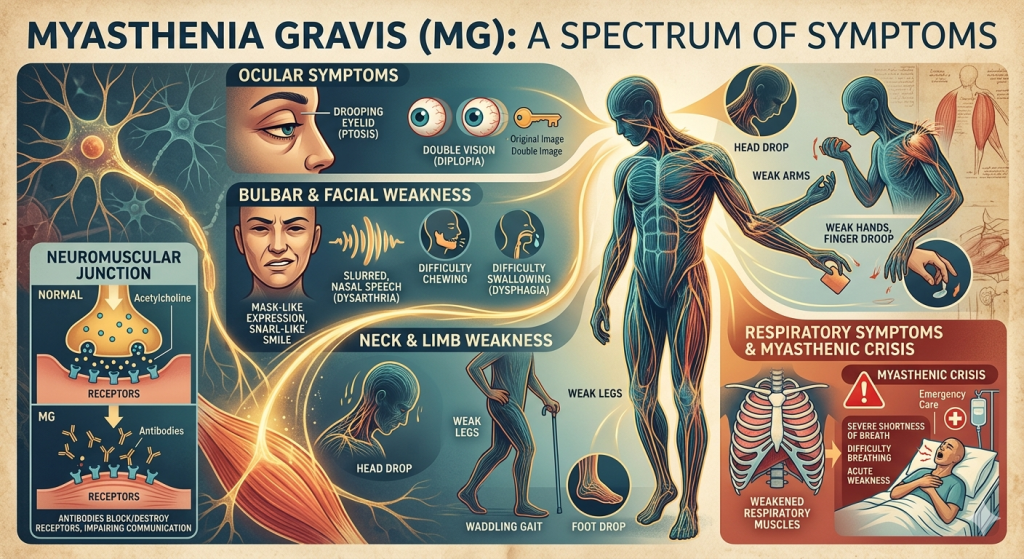
What once felt like ordinary fatigue gradually turned into something much more serious. I began experiencing increasing muscle weakness that affected my daily life. Some of the most distressing symptoms involved swallowing and neck control. At times, when drinking water, it would come out through my nose instead of going down properly. I also experienced severe cervical weakness, making it difficult to hold my head upright. These experiences were both physically exhausting and emotionally overwhelming, especially before understanding what was happening.
Myasthenia Gravis is a chronic autoimmune neuromuscular disorder in which the immune system mistakenly attacks the communication between nerves and muscles. Because of this, muscles become weak and fatigue quickly after activity. Unlike normal tiredness, this weakness does not improve easily and can affect vision, speech, swallowing, movement, and even breathing.
For many individuals, the first noticeable symptoms appear in the eyes, such as drooping eyelids and diplopia, commonly known as double vision.

As the condition progresses, it may also affect the limbs, facial muscles, throat, and respiratory muscles. One of the most challenging aspects of MG is its fluctuation symptoms can change throughout the day and often worsen with physical or mental exertion.
Another symptom that is often overlooked is brain fog. During periods of extreme fatigue, it can become difficult to process conversations or understand what others are saying, even when hearing them clearly. It feels as though the mind is temporarily slowed or disconnected. This can be frustrating and emotionally draining, especially when others cannot see or understand what is happening internally.
Heat, stress, lack of sleep, emotional strain, infections, and physical overexertion can all worsen MG symptoms. This is why summer months can be particularly challenging for many patients. Hot weather often increases fatigue, weakness, and discomfort, making daily tasks more difficult than usual.
Living with MG has taught me the importance of listening to my body instead of fighting against it. In the beginning, I often tried to push through symptoms, believing that determination alone would be enough. However, I soon realized that forcing myself beyond my limits only made my condition worse.
Now, whenever I feel fatigue or diplopia, I stop and rest. Rest is not optional for someone with MG it is essential. I also learned to avoid overburdening my body, because even small stress on energy levels can have a big impact.
Evenings are often the most difficult part of the day because symptoms tend to peak after long hours of activity. Taking medication on time and allowing proper rest during this period has become a key part of my routine. These simple habits help me manage symptoms more effectively.
Heat affects my condition significantly, so I try to stay as cool as possible. Sometimes even a shower helps when symptoms feel overwhelming and there is no other immediate relief. Small adjustments like this can make a meaningful difference in energy levels and comfort.
There are also moments when breathing feels difficult or my chest feels heavy. During these times, I practice slow deep breathing to stay calm. Panic and stress often make symptoms worse, while controlled breathing helps me regain stability.
Living with Myasthenia Gravis is not only a physical challenge; it is also an emotional journey. There are days when symptoms feel endless and even simple tasks seem impossible. There are moments when hope feels distant and self-doubt takes over. A person may begin to ask, “Why is my life like this? Why does every day bring a new struggle?” These thoughts are natural when living with a chronic illness that affects daily functioning in such an unpredictable way.
However, living with MG also develops something powerful resilience. Facing daily challenges builds patience, courage, and inner strength that many people never realize they have. The ability to continue moving forward despite physical limitations is a quiet but remarkable form of strength.
There are times when you may feel completely hopeless, overwhelmed by daily struggles and uncertain about the future. But over time, many people come to understand that these challenges also shape resilience. Daily struggle often builds more patience and courage than an easier life ever could.
What makes this journey even more meaningful is realizing that we are not alone. There are people around the world living with the same condition, experiencing similar struggles, fears, and uncertainties. When we learn how to manage our condition, it becomes important to share that knowledge with others. Something that helps you might make a significant difference in someone else’s life.
At the same time, there may be things you struggle with that others have already learned to manage. By sharing experiences, patients can support each other in ways that medical advice alone may not fully provide.
This is why MG support groups and organizations are so important. Connecting through social media communities or patient organizations allows individuals to share experiences, learn coping strategies, and feel less isolated.
As we observe Myasthenia Gravis Awareness Month this June, it is important to remember that awareness goes beyond understanding a disease it is about understanding people. It is about empathy, connection, and support.
To every person living with Myasthenia Gravis: your struggle is real, your feelings are valid, and your strength is greater than you may realize. Every day you continue despite fatigue, weakness, and uncertainty is a reflection of courage. Keep going, keep learning, and keep sharing because your story may one day become the reason someone else does not feel alone.
“You are not defined by the weight of your struggle, but by the strength you show in carrying it every day.”
Myasthenia Gravis (MG) is a chronic autoimmune neuromuscular disorder where the immune system mistakenly attacks the communication between nerves and muscles, leading to muscle weakness that worsens with activity.
No, MG is considered a rare condition. Many people are not aware of it, which is why awareness is important, especially during Myasthenia Gravis Awareness Month in June.
Early signs often include drooping eyelids, double vision (diplopia), fatigue, and weakness in facial or eye muscles. In some cases, symptoms may be mild at first and worsen over time.
Yes, in more severe cases MG can affect respiratory muscles, leading to shortness of breath or difficulty breathing, especially during fatigue or flare-ups. This requires medical attention.
Heat, stress, lack of sleep, infections, physical exertion, and emotional strain can all worsen symptoms.
MG symptoms often fluctuate. Many patients feel better after rest but worse after prolonged activity, especially in the evening when fatigue builds up.
There is currently no permanent cure, but treatments such as medications, lifestyle management, and sometimes surgery can significantly improve quality of life.
Patients manage MG by taking medications on time, resting regularly, avoiding triggers like heat and stress, and listening to their body’s limits.
Yes, living with a chronic condition can lead to stress, anxiety, emotional fatigue, and brain fog. Support systems and awareness can help reduce this burden.
Because many people, including patients before diagnosis, do not know about MG. Awareness helps with early recognition, better understanding, and emotional support for patients.
