
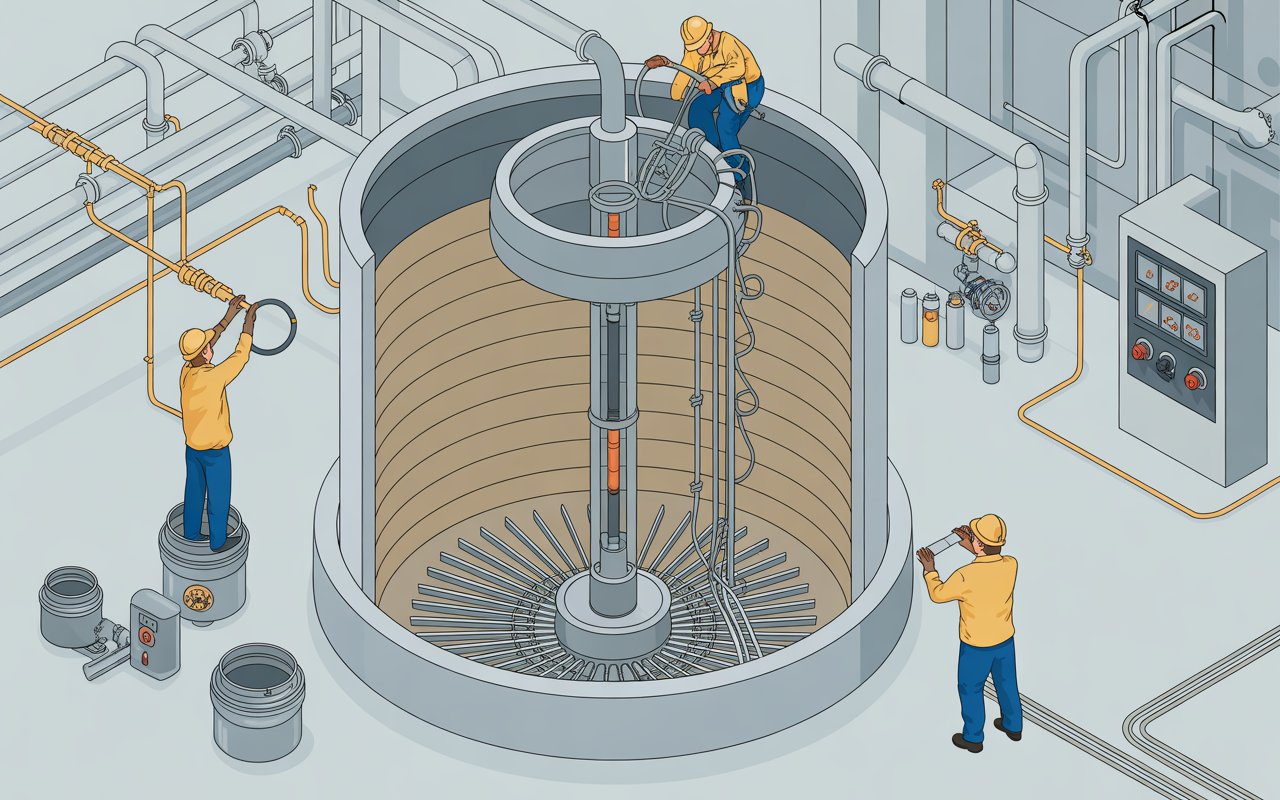
Selecting the right mixing tank for a specific manufacturing process requires a systematic analysis of process requirements that translates the needs of the application into equipment specifications that can be evaluated against available options. The consequences of selecting an inappropriate mixing tank, including inadequate mixing performance, excessive energy consumption, poor cleanability, or premature equipment failure, affect production quality and economics for the entire service life of the equipment.
Defining Your Mixing Tank Process Requirements
The first step in any mixing tank selection process is a thorough definition of what the mixing system needs to achieve. Requirements defined with insufficient precision lead to equipment specifications that may appear adequate on paper while failing to meet critical process needs in actual operation.
Product characteristics documentation should capture the complete range of products that will be processed in the mixing tank, including the viscosity range at processing temperature, the density, the tendency to foam, the presence of solid particles or fibers, temperature sensitivity, and any special handling requirements such as oxygen exclusion or light protection. This product characterization defines the technical envelope within which the mixing tank must perform reliably.
Mixing objectives must be clearly defined for each product. Homogenization of a two-phase emulsion requires a very different agitator design from suspension of settling solids in a low-viscosity liquid. Heat transfer from a jacketed vessel requires different agitator positioning and rotation speed from gas dispersion in a bioreactor. The specific mixing objectives of each application determine which agitator types and vessel configurations are technically appropriate.
Batch size and throughput requirements define the vessel volume needed and the batch frequency that determines how important cleaning and changeover efficiency is in the overall productivity calculation. A mixing tank that processes a single product in long runs has different design priorities from one that processes multiple products in short batches with frequent cleaning and changeover between products.
Temperature requirements during processing determine whether jacketed vessel construction is needed and what heating and cooling capacity the jacket system must provide. Products that require heating to reduce viscosity for mixing, or cooling to prevent degradation during extended mixing, need appropriate jacket sizing and heat exchange fluid circulation systems.
Evaluating Mixing Tank Suppliers
With process requirements clearly defined, systematic supplier evaluation identifies the manufacturers whose equipment best matches those requirements and whose organizational capabilities provide the partnership quality needed for a successful long-term equipment relationship.
Application engineering expertise is the most important organizational capability for a mixing tank supplier to demonstrate. Mixing is a complex subject where the relationship between agitator design, vessel geometry, product properties, and mixing performance is not always intuitively obvious. Suppliers who can apply genuine application engineering knowledge to your specific process requirements, rather than simply offering standard catalogue products, add substantial value to the equipment selection process.
Manufacturing quality evidence for mixing tanks should include certification to relevant quality management standards, examples of quality control documentation for similar equipment, and evidence of appropriate manufacturing capabilities including welding qualification, surface finishing standards, and dimensional inspection procedures.
Reference installations in comparable applications provide the most relevant performance evidence available. Direct contact with process engineers operating the specific mixing tank configurations you are considering in applications with similar product types, viscosity ranges, and production requirements provides honest assessment of real-world performance, cleanability, and long-term reliability.
Common Mistakes in Mixing Tank Selection
Understanding the most common mistakes in mixing tank selection helps buyers avoid costly errors that affect production operations for years after the initial investment decision.
Undersizing the agitator is the most common technical error in mixing tank specification. Buyers sometimes select agitators based on vessel volume alone without adequate consideration of product viscosity, the specific mixing objective, or the required mixing time. An undersized agitator produces inadequate mixing results that compromise product quality and may require costly equipment modification to correct.
Overlooking cleanability requirements during selection is a common mistake with serious operational consequences. A mixing tank that looks technically appropriate for the mixing application but is difficult to clean thoroughly creates ongoing food safety, product quality, and regulatory compliance problems that cost far more in operational disruption than the initial capital saving from purchasing less expensive equipment.
Neglecting future product range expansion when specifying mixing tank equipment is a mistake that limits operational flexibility. Tanks sized, designed, and equipped only for current products may be unable to handle future product additions without modification. Considering reasonable near-term product range expansion when specifying equipment provides operational flexibility that is far less expensive to build in during initial specification than to retrofit later.
Conclusion
Selecting the right mixing tank through a systematic process that begins with thorough requirements definition and moves through rigorous supplier evaluation to well-informed final selection produces equipment investments that deliver reliable performance, consistent product quality, and operational efficiency throughout the equipment’s service life. Zonesun Tech brings application engineering expertise, manufacturing quality, and customer support capability to mixing tank projects, helping manufacturers select and implement mixing solutions that genuinely meet their process requirements and support the consistent, efficient production operations their business success depends on.
