
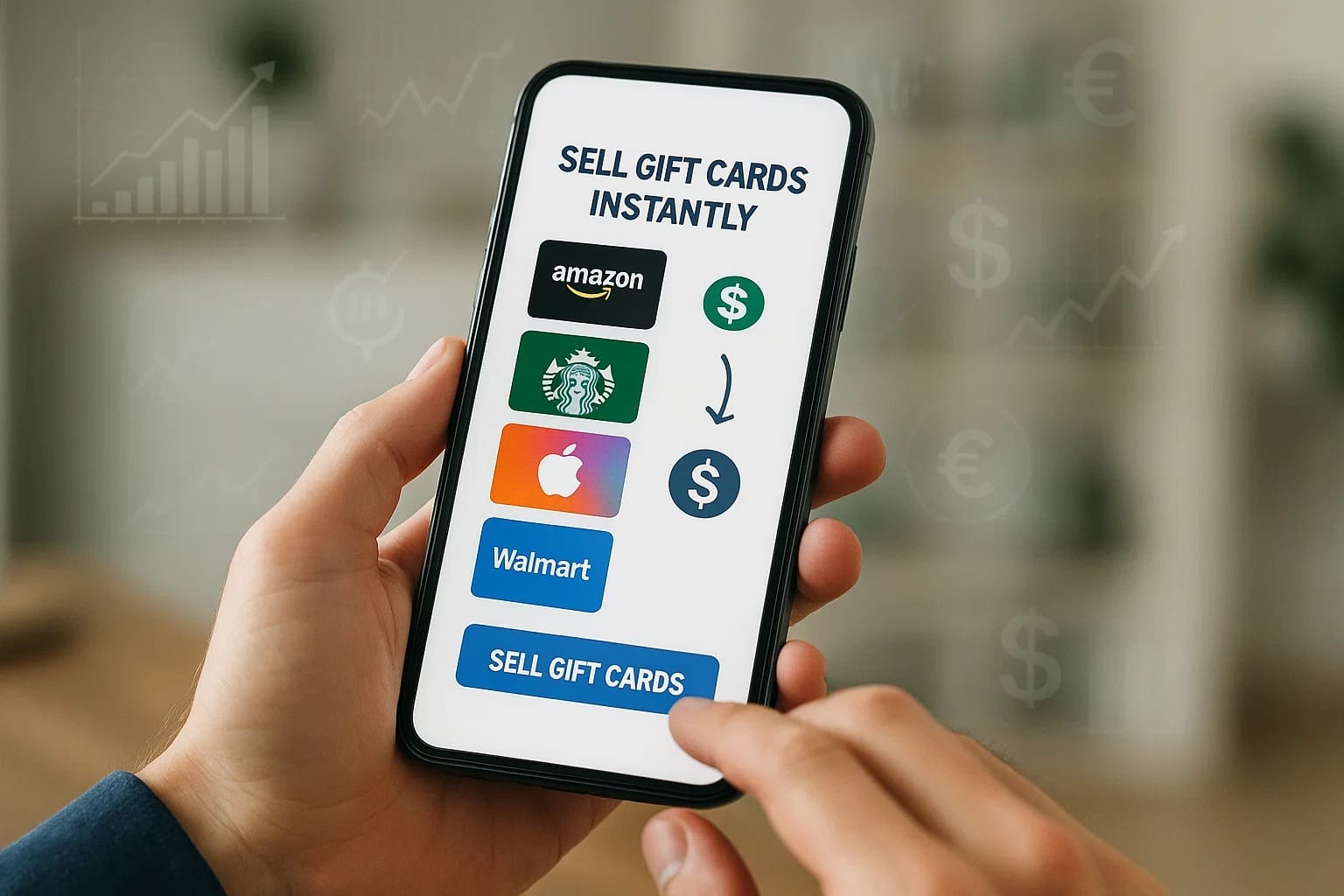
Few consumer products straddle the line between culture and finance as neatly as gift cards. Once designed as convenient tokens for birthdays and holidays, they have since grown into a massive global market. Every year, billions of dollars in value are issued as branded balances — some spent, many forgotten, and a significant portion resold.
A new pattern has emerged: people increasingly choose to sell gift cards instantly rather than let them expire. The logic is simple. In an era where liquidity is prized above all, waiting weeks to unlock value makes little sense. Gift cards, once static, have become part of a dynamic financial ecosystem where speed determines usefulness.
Gift Cards as Financial Instruments
Although marketed as gifts, gift cards act more like stored-value notes. They provide upfront revenue for companies, often remain partially unused, and sometimes generate “breakage” (unredeemed value that turns into profit). But in the hands of consumers, their meaning is different.
- Alternative money: For people without access to banks or credit, prepaid gift cards often serve as a substitute.
- Barter tokens: In online communities, they operate as tradeable units of value.
- Remittance tools: Codes are sent across borders and resold locally for spendable cash.
Once cards enter resale channels, they are no longer just corporate marketing tools — they become informal currencies.
The Shift to Instant Resale
The resale of gift cards is not new, but the speed of it is. What used to involve classifieds, forum swaps, or waiting for buyers now happens in minutes. Several trends explain why:
- Cultural impatience: The digital economy conditions people to expect immediacy. From streaming movies to same-day deliveries, waiting feels outdated.
- Financial stress: With living costs rising globally, households can’t afford to leave value idle. Liquidity is prioritized over sentiment.
- Technological integration: Mobile apps, escrow systems, and automated calculators make instant resale seamless.
- Changing attitudes: Younger generations see cards not as gifts to treasure, but as assets to optimize.
The combination has transformed gift card resale from niche to mainstream.
Examples of Real-World Use
- Household budgets: A family receives several cards for restaurants they rarely visit. By selling instantly, they consolidate value into cash for utilities.
- Students: A college student trades retail cards for cash the same day to cover course materials.
- Cross-border migrants: Workers abroad send digital codes home, where relatives sell them instantly for local currency — faster and cheaper than traditional remittance.
- Gamers: Enthusiasts sell mixed-platform cards to fund the one ecosystem they actually use.
In each case, speed is essential. Without instant conversion, the card’s value risks being wasted.
Risks and Limitations
Like any parallel economy, instant resale carries risks.
- Discounts: Cards rarely sell for full face value; urgency comes at a cost.
- Fraud exposure: Stolen or invalid cards can circulate, undermining trust.
- Regulatory scrutiny: Some governments restrict resale to prevent money laundering or consumer exploitation.
- Demand imbalance: Popular brands sell quickly, but others may not.
These challenges don’t stop resale, but they shape its development into more professionalized, secure channels.
Regional Variations
The meaning of instant resale shifts depending on where you are:
- North America: Convenience dominates. People sell to avoid waste and simplify finances.
- Africa: Cards function as financial tools where banking infrastructure is limited, making resale vital.
- Asia: Integration with digital wallets creates fluid systems where cards feel like money.
- Europe: Despite stronger regulation, resale thrives in entertainment, streaming, and e-commerce.
Each region highlights the adaptability of gift cards as informal financial bridges.
Technology Behind the Shift
Instant resale depends on secure, scalable tools:
- Escrow protection ensures fairness between buyers and sellers.
- Rate calculators show exact payouts in real time.
- Mobile-first platforms enable quick trades without paperwork.
- Blockchain innovation explores tokenized cards that can be verified instantly.
These systems professionalize what was once a risky gray market.
Future Outlook
The next decade will likely see resale fully integrated into mainstream financial behavior. Some possibilities:
- Universal, trade-ready cards designed to be sold as easily as used.
- AI-driven tools that flag unused balances and suggest selling.
- Crypto convergence where gift cards become bridges into digital asset markets.
- Global remittance solutions positioning gift cards as legitimate channels for value transfer.
In such a future, the ability to sell gift cards instantly will feel less like an exception and more like a standard option in personal finance.
Conclusion
Gift cards are no longer just seasonal extras tucked into envelopes. They are part of a living financial network — a system where liquidity defines usefulness. Selling them instantly is a logical response to modern demands for speed, clarity, and control.
Whether it’s a student stretching their budget, a family managing bills, or a worker sending money across borders, the same truth applies: locked value is wasted value. By selling instantly, people reclaim control over resources that would otherwise sit idle.
The evolution of gift cards reflects the evolution of money itself — from physical notes to digital assets to whatever form can move fastest when people need it most.