

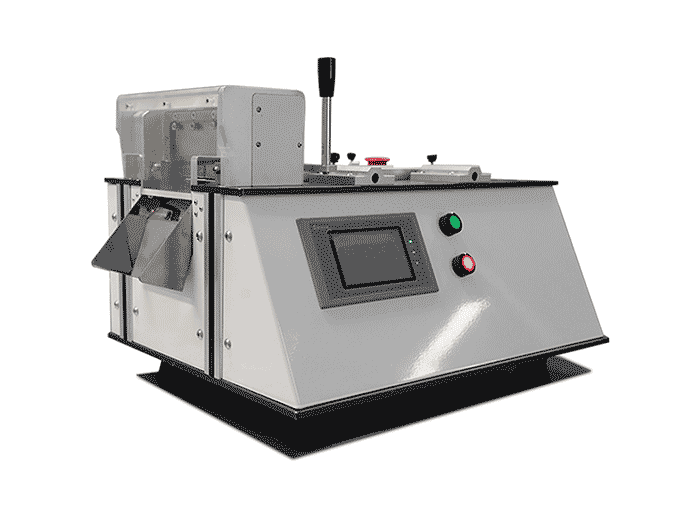
In modern medical manufacturing, accuracy is not optional. It is essential. One machine that quietly ensures this accuracy is the lateral flow strip cutter, a specialized system used to produce the core components of rapid diagnostic test kits.
From pregnancy tests to infectious disease detection kits, these devices depend on perfectly cut assay strips. Even a slight variation can affect results. That is why manufacturers rely on advanced cutting technology rather than manual methods.
This article explains how a lateral flow strip cutter works, its features, benefits, and why it plays such a critical role in diagnostic production.
Understanding Lateral Flow Strip Cutter Technology
A lateral flow strip cutter is designed to convert large laminated sheets into narrow, uniform strips used in diagnostic tests. These sheets are made up of multiple delicate layers, including nitrocellulose membranes, sample pads, and absorbent materials.
Each layer must stay aligned during cutting. If the structure shifts even slightly, it can disrupt fluid flow within the strip. That directly impacts how accurately the test performs.
Modern machines solve this problem through automation and precision engineering. They ensure that every strip is identical, which is essential for maintaining consistent test results across large production volumes.
How a Lateral Flow Strip Cutter Works
The machine operates through a carefully controlled sequence that combines speed with precision.
Key stages in the process include feeding laminated sheets into the system, aligning the material using sensors or optical systems, cutting the sheets into strips using rotary or blade mechanisms, collecting finished strips in batches, and separating waste material.
Operators can control strip width, speed, and batch size through a digital interface. Once configured, the system runs continuously with minimal supervision.
Advanced tension control keeps the material stable during cutting. This prevents shifting and ensures consistent output throughout the production cycle.
Key Features of Modern Strip Cutter Machines
Today’s lateral flow strip cutter systems are built for industrial-scale efficiency. They combine mechanical accuracy with smart controls.
Common features include high-speed automated cutting, adjustable strip width for different test designs, precision alignment using sensors, touchscreen control panels, automated counting and batching, and low-waste cutting mechanisms.
Safety is also built in. Emergency stop functions, protective covers, and error detection systems help ensure safe operation in industrial environments.
Why Precision Matters So Much
In lateral flow diagnostics, precision directly affects reliability.
Each strip controls how a liquid sample moves through the test. This movement depends on capillary action across multiple layers. If strip dimensions vary, fluid flow changes, which can lead to inaccurate or inconsistent results.
Precision ensures uniform sample flow, even reagent distribution, reduced test variability, fewer defective batches, and higher product reliability.
Because of this, manufacturers cannot compromise on cutting accuracy.
Industrial Applications
The lateral flow strip cutter is used across many sectors within healthcare and biotechnology.
Common uses include pregnancy and fertility test production, infectious disease kits such as COVID-19 and malaria, drug and substance screening tests, veterinary diagnostics, and laboratory research and prototype development.
These applications often require high-volume production with strict quality standards, making automated cutting systems essential.
Benefits for Manufacturers
Using a lateral flow strip cutter improves both productivity and product quality.
Key advantages include faster production compared to manual cutting, consistent strip dimensions, reduced material waste, lower risk of human error, and scalable output for growing demand.
Another major benefit is repeatability. Once the machine is set, it produces identical results over long runs without variation.
Maintenance and Efficiency Tips
To keep the machine performing at its best, regular maintenance is necessary.
Best practices include cleaning cutting blades routinely, checking alignment systems, monitoring wear on components, lubricating moving parts, and performing periodic calibration.
Operator training also matters. Skilled handling ensures correct settings and early detection of potential issues.
Using proper materials and avoiding overload helps extend the machine’s lifespan and maintain stable production.
The Future of Lateral Flow Strip Cutter Technology
As demand for rapid diagnostic tests continues to grow, the role of the lateral flow strip cutter is becoming even more important.
Future developments are likely to focus on greater automation, faster production speeds, smarter digital controls, and integration with fully automated production lines.
This evolution will help manufacturers produce more tests, with better accuracy, in less time.
Final Thoughts
The lateral flow strip cutter may not be the most visible part of diagnostic manufacturing, but it is one of the most critical.
Its ability to deliver precision, consistency, and efficiency makes it a core component in the production of reliable medical tests. As healthcare systems worldwide continue to depend on rapid diagnostics, this technology will remain essential in ensuring accurate and dependable results.