
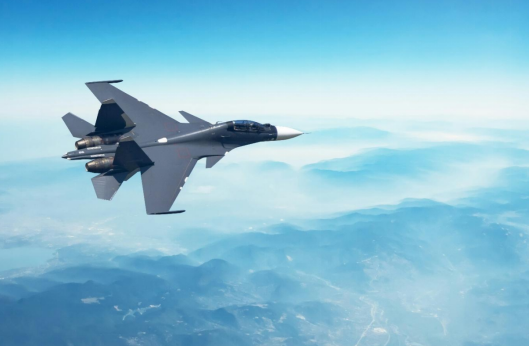
Jay Bhaumik, an investor and current Chairman of Genesis Engineering, credits his approach to aerospace markets as shaped by ownership, capital deployment, and long-term technology investment. In his role with the aerospace engineering company, he examines how defense budgets, as well as technological priorities and industrial capacity, intersect as they increasingly influence where capital is flowing across the sector.
Investors trying to interpret aerospace growth must understand that defense spending is a key signal. Government budgets determine procurement cycles, guide research priorities, and even shape demand across the supply chain.
Understanding the direction of those budgets offers insight into how the next decade of aerospace investment can unfold.
Defense Budgets as a Market Driver
Aerospace markets are rarely operating independently from public policy. In many countries, government defense budgets fund the development and procurement of aircraft, satellites, missile systems, and related technologies. Such programs often span decades, creating long planning horizons for manufacturers and suppliers.
There is a correlation between defense appropriations increases and the expansion of development pipelines and product schedules for prime contractors. Activity cascades through the supply chain and also touches supporting engineering services, materials production, avionics development, advanced manufacturing, and other areas.
“Defense spending often sets the tempo for aerospace investment,” Jay Bhaumik explains. “Large programs create long arcs of demand that ripple through multiple layers of the industry.”
Investors with their finger on the pulse of aerospace companies frequently track appropriation bills as well as procurement authorizations and multi-year program commitments, as these documents offer early signals regarding the platforms or technologies set to receive sustained funding.
Technology Priorities Are Shifting
Overall defense budgets certainly matter, but it’s the internal allocation of those budgets that could be even more important as military planners increasingly prioritize technologies that support changing operational priorities. Today’s procurement planning has moved autonomous systems, next-generation aircraft, space-based communications, and advanced sensing platforms to the forefront.
Aerospace companies answer this shift by changing where engineering resources are directed, and development teams that used to focus on traditional airframes are now collaborating with software engineers, data specialists, and systems architects. Modern aerospace platforms often combine mechanical engineering with artificial intelligence, secure communications, and satellite integration.
Supply Chain Strength Matters More Than Ever
Aerospace growth is dependent on manufacturing capacity in addition to technology. Defense programs now rely on a network of suppliers that produce a range of components, from precision-machined parts to electronic systems and specialized materials.
Recent supply chain disruptions were a reminder to investors that even well-funded programs are dependent on reliable industrial capacity. Production delays often arise when smaller suppliers are struggling with a workforce shortage or material constraints.
The result is a proactive stance by aerospace companies to strengthen their relationships with specialized engineering firms that have the potential to stabilize production pipelines. Other aerospace companies invest directly in supply chain partners to secure critical capabilities.
Bhaumik asserts that supply chain resilience is increasingly central to aerospace strategy.
“Aircraft and defense systems are built by ecosystems,” he says. “If a critical supplier struggles, the entire program feels the impact.”
Long Development Cycles Require Patient Capital
Unlike many technology sectors, aerospace development timelines are measured in years rather than quarters. Defense systems, space infrastructure, and aircraft platforms move through extended cycles frequently. These include design, testing, certification, and production.
Each timeline influences how capital is deployed, so companies must sustain engineering investment well before the revenue begins to scale. Investors who are entering the sector with the expectation of rapid returns sometimes underestimate the required patience to succeed.
Still, the same development cycles are capable of producing durable advantages for those firms that complete them. As a platform enters service, consistent revenue can be generated through maintenance contracts, upgrade programs, and long production runs.
Institutional investors and strategic partners frequently play a significant role in aerospace funding.
Space Programs Are Expanding the Sector
Defense spending no longer focuses exclusively on aircraft. Space infrastructure, satellites, launch systems, communications networks, and orbital monitoring platforms have become a growing priority for many governments.
The definition of aerospace has, with this shift, expanded, and companies that once concentrated on aviation now collaborate with firms specializing in satellite engineering, launch services, and orbital data systems.
Space-based communications, along with surveillance capabilities, support military and commercial applications that blur traditional boundaries between sectors. Investors now analyze aerospace portfolios in relation to space technology markets, and Bhaumik believes this convergence will continue.
“Space and aviation are becoming part of the same strategic conversation,” he explains. “The underlying technologies and industrial capabilities overlap more than people realize.”
Geopolitical Factors Influence Investment Trends
Defense spending rarely increases in isolation, as geopolitical tensions, alliance commitments, and regional security priorities all shape national budgets.
Governments that reassess strategic threats often adjust procurement plans accordingly. Aircraft modernization programs as well as missile defense initiatives and space surveillance networks, may accelerate in response to evolving security environments.
For aerospace investors, these shifts can produce both opportunity and volatility. Companies tied to emerging priorities may experience strong demand, while those dependent on legacy programs may see slower growth.
Monitoring geopolitical developments, therefore, becomes part of understanding aerospace investment trends.
Public-Private Collaboration Is Expanding
Defense innovation increasingly involves collaboration between governments, established contractors, and private technology firms. Startups specializing in autonomous flight, data analytics, and advanced materials now contribute to programs that historically relied on large defense contractors alone.
The broader ecosystem introduces new pathways for investment. Venture capital and strategic investors often fund early-stage companies developing technologies that later integrate into larger defense programs.
For investors, partnerships between startups and established aerospace firms may signal areas where new technology is entering the defense supply chain.
What Investors Should Watch
Several indicators can help investors evaluate aerospace growth tied to defense spending. Government budget proposals and procurement authorizations offer early clues about which programs may expand. Industrial capacity and supply chain stability reveal whether companies can execute those programs effectively.
Technology direction also matters. Firms positioned around new priorities, autonomous platforms, advanced sensors, space-based systems, and secure communications may attract greater attention as defense strategies evolve. Finally, leadership and capital discipline often determine how well aerospace companies translate opportunity into long-term performance.
Defense spending continues to shape the trajectory of aerospace markets. Government budgets influence procurement cycles, guide research priorities, and sustain the industrial base required to build complex aviation and space systems.
For investors, understanding those dynamics requires attention to technology trends, supply chain resilience, workforce capability, and geopolitical context. Aerospace growth rarely unfolds quickly, but it often develops along predictable strategic lines once programs gain momentum.
From Bhaumik’s perspective, the sector rewards careful observation and long-term thinking. Aerospace companies operate within complex systems shaped by policy, engineering capability, and industrial coordination. Investors who study those systems closely may gain a clearer view of where the next wave of aerospace expansion will originate.
