
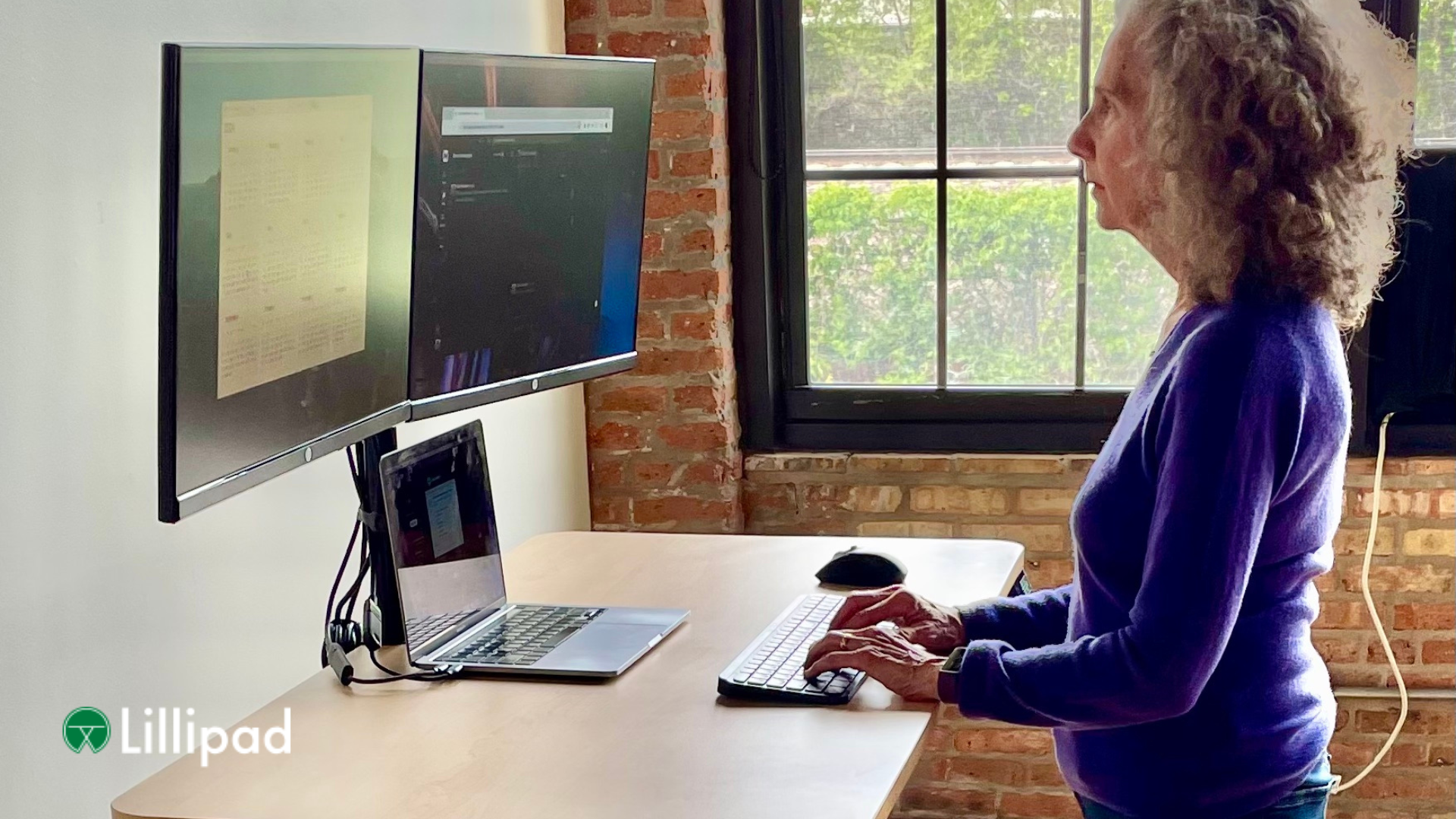
A small room or studio apartment does not have to limit your productivity. The challenge is not the square footage. It is the planning. A proper home office setup in a tight space requires the right desk, correct body positioning, and a system that puts everything away when work ends.
This guide walks through exactly how to do it. Each consideration is broken down so your workspace functions well without taking over your living area.
Start With the Desk, It Drives Everything Else
The desk is the anchor of any home office. In a small space, the wrong desk wastes floor area permanently. A standard fixed desk typically measures 48 to 60 inches wide. It sits in place all day, every day, regardless of whether you are working.
A foldable electric standing desk removes that constraint entirely. The Lillipad foldable electric standing desk adjusts from 6 inches to 48 inches in height. It collapses flat for storage under furniture or in a closet. It ships fully assembled with zero tools required. Setup takes seconds. The desk disappears completely when you are off the clock. In a small space, a desk that stores away instantly is not a luxury. It is the right starting point.
Find the Right Spot Before You Unpack Anything
Desk placement determines your lighting, noise level, and posture. Placing a desk in the wrong spot creates problems that no chair or monitor arm can fully fix.
Use these placement rules for a small-space home office setup:
- Place the desk perpendicular to windows, not facing them directly, to avoid screen glare
- Position near a wall outlet to avoid running extension cords across the floor
- Face away from high-traffic areas of the room to reduce visual distraction
- Leave at least 36 inches of clearance behind the chair for movement
- Avoid corners that trap cables or make the desk hard to roll out when foldable
If natural light is on your left and your desk faces a wall, you have the ideal baseline position for most people.
Set the Desk Height Before You Sit Down
Desk height is the single most common ergonomic mistake in home offices. Most people default to whatever height a desk ships at. That is rarely correct for their body.
The University of Pennsylvania Environmental Health and Remote Safety team recommends keeping elbows at approximately 90 degrees with wrists straight and forearms parallel to the floor when typing. For most adults, this puts the keyboard surface between 23 and 28 inches from the floor. A height-adjustable desk removes the guesswork. The Lillipad adjusts in precise increments via electric motor. Set it once, save the preset, and it returns to that exact position every session.
Position Your Monitor at the Right Level
Monitor height is directly tied to neck strain. A screen that sits too low pulls the head forward. A screen too high forces the chin up. Both create tension across the upper back and shoulders within hours.
Follow these monitor positioning rules:
- Top of the screen should align with seated eye level, not the center
- Distance should be approximately one arm’s length from the face, roughly 20 to 28 inches
- Tilt the monitor back 10 to 20 degrees to reduce neck extension
- Use a monitor arm to free desk surface and fine-tune positioning in seconds
- For dual monitors, center the primary screen on your midline
Choose a Chair That Fits the Desk Height
In a small space, a chair that cannot adjust wastes the benefit of an adjustable desk. If the desk rises and the chair stays fixed, body positioning breaks down within a session.
Key chair features for a small home office:
- Seat height adjustable between 16 and 21 inches from the floor
- Lumbar support that contacts the natural curve of the lower spine
- Armrests that drop below desk level or detach entirely
- A seat depth that allows 2 to 4 inches between the back of the knee and the seat edge
- A narrow profile that fits under the desk when not in use
A backless kneeling chair or active stool takes up significantly less floor space than a standard task chair. It works well with a height-adjustable home office setup in a compact room.
Manage the Cables From Day One
Cable chaos is not just visual clutter. Loose cords on the floor create trip hazards. They make a small space feel permanently disorganized. A cable system built into the desk removes most of this problem at the source.
The Lillipad desk integrates a power strip directly into the frame. Your monitor, laptop charger, and accessories plug in at desk level rather than floor level. For cables that do reach the floor:
- Use adhesive cable clips along the wall baseboard
- Bundle cords with velcro ties at 12-inch intervals
- Label each cable at both ends so disconnecting is fast
- Route all cables to one exit point rather than spreading them across the room
A single organized cable exit point makes the whole workspace look intentional rather than improvised.
Add Storage That Works Vertically
Small spaces run out of floor storage fast. The solution is always vertical. Wall-mounted shelving above the desk stores books, notebooks, and reference materials. It does not consume desk surface or floor space.
Storage additions that work well in a compact home office setup:
- Floating shelves mounted 14 to 18 inches above the desk surface
- A pegboard panel behind the desk for cables, headphones, and small tools
- A two-drawer under-desk unit on wheels that rolls out when needed and tucks away after
- A wall-mounted file pocket for active documents instead of a desktop tray
- A laptop stand that folds flat and stores vertically in a drawer
Avoid freestanding shelving units wider than 24 inches. They consume the floor footprint that a foldable desk is designed to reclaim.
Build a Shutdown Routine Into the Setup
The hardest part of working in a small space is mentally leaving the office when the workday ends. A shutdown routine that physically removes the workspace from view is the most effective solution.
A practical shutdown sequence for a small home office:
- Close all tabs and shut the laptop
- Coil and store any peripheral cables in a labeled pouch
- Return accessories to their hooks or slots on the desk frame
- Lower and fold the desk to its 6-inch storage height
- Roll it under the bed, sofa, or into a closet
When the desk is out of sight, the room returns to living mode. That physical separation supports the mental boundary between work and rest. It is especially important in open-plan spaces where the office and living area share the same room.
