
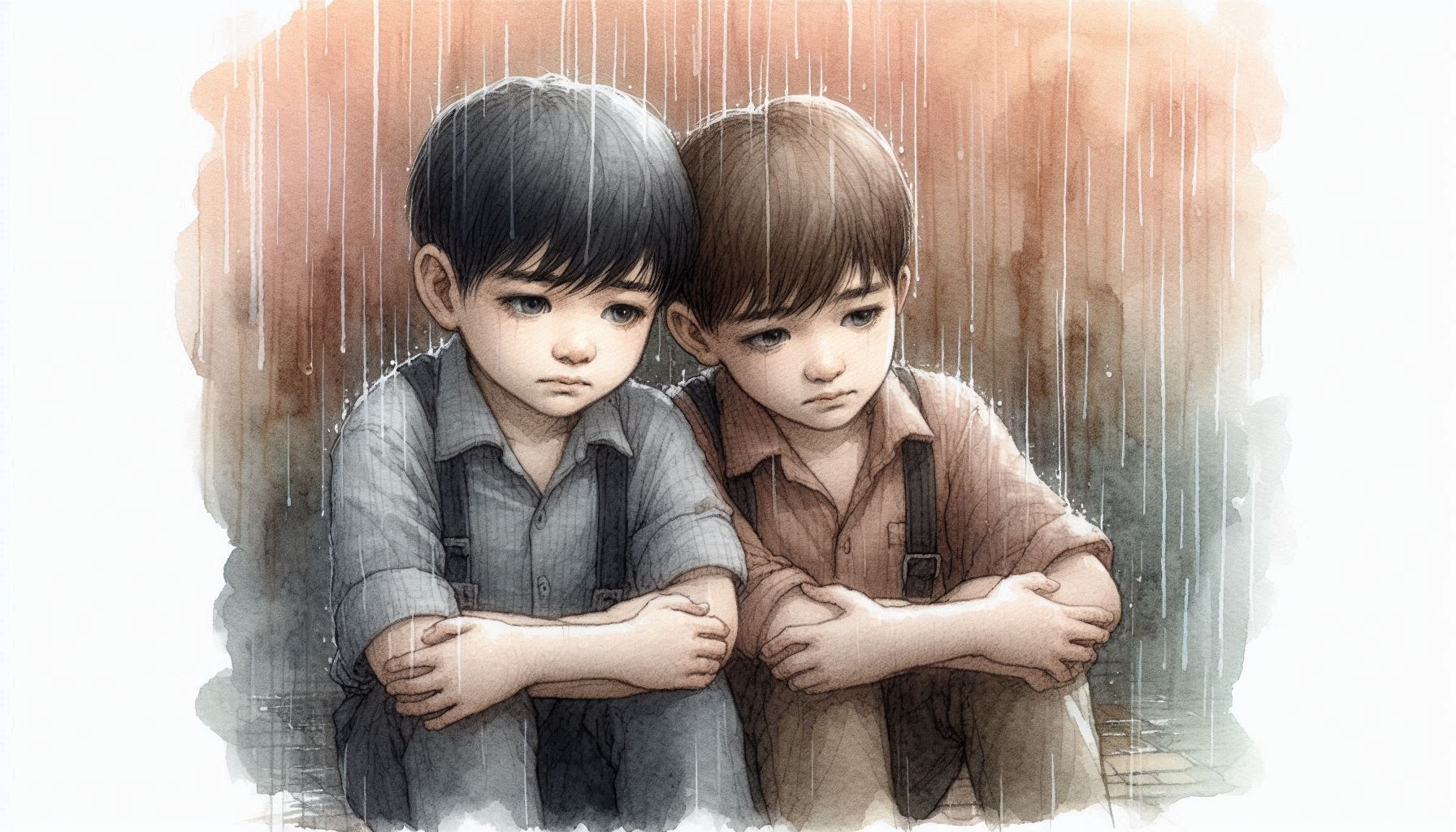
The emotional fallout from the fake death plot became one of the most disturbing parts of the Canoe Man case.
WASHINGTON, DC, John Darwin’s fake canoe death became famous as an insurance fraud, but the deepest wound in the scandal was inflicted on his sons, who were left to mourn a father both parents knew was still alive.
The family betrayal made the Canoe Man case more than a fraud story.
John Darwin disappeared off the coast near Seaton Carew in March 2002, leaving behind a damaged canoe and a public story that suggested the former prison officer had drowned in the North Sea.
Police, coastguard teams, relatives, and neighbors treated the disappearance as a tragedy, while Darwin secretly survived and Anne Darwin maintained the appearance of widowhood before insurers, pension administrators, and their own children.
The couple’s sons were allowed to believe their father had died, a lie that turned the fraud from a financial scheme into a profound family betrayal with emotional consequences far beyond the insurance money.
The public later learned through extensive reporting on the Canoe Man fraud that the staged death enabled claims worth hundreds of thousands of pounds while the sons remained outside the secret.
That is why the Darwin case remains so disturbing, because the parents did not merely mislead institutions; they forced their children to live inside a false bereavement for years.
The sons mourned while their father hid nearby.
The most painful detail in the case is that John Darwin was not immediately living in some distant foreign hideout, because he spent long periods concealed close to the family home.
He reportedly hid in a bedsit next door and inside the couple’s property, creating a physical closeness that made the emotional deception even harder to comprehend.
For the sons, the death was real because every trusted signal pointed in that direction, including their mother’s grief, the search operation, the smashed canoe, and the absence of any honest correction from their father.
A child mourning a parent builds memories, rituals and emotional defenses around that loss, which means the later discovery of the truth becomes a second trauma rather than a simple reversal.
Darwin’s survival did not undo the grief he caused because the grief had been deliberately imposed by the two people most responsible for protecting their sons from harm.
Anne Darwin’s role intensified the emotional damage.
Anne Darwin’s participation made the betrayal especially severe because she was the surviving parent who could have ended the lie at any moment, yet continued presenting herself as a widow while her sons believed their father was gone.
Her public role gave the death story credibility because grieving spouses are usually treated with compassion and trust by family members, neighbors, insurers, and public agencies.
Inside the family, that role carried even greater power because the sons had no reason to believe their mother was helping conceal their father’s survival for financial gain.
The emotional force of the case came from that inversion of trust, because the mother who appeared to share their grief was actually maintaining the secret that produced it.
The scandal showed how fake death fraud can turn family roles into instruments of deception, with the closest relatives used as unwilling witnesses to a tragedy that never happened.
The lie robbed the sons of honest grief.
Grief after a real death is painful, but it is rooted in truth, memory, and the knowledge that the loss was not manufactured by the person being mourned.
The Darwin sons were denied that basic dignity because they were grieving a father who had chosen to remain hidden while they absorbed the emotional consequences of his supposed drowning.
That kind of deception distorts every part of mourning, including how a family speaks about the dead, how anniversaries are marked, and how children understand the parent who is no longer present.
When the truth emerged, the sons had to reinterpret years of sorrow as years of manipulation, which made the discovery emotionally devastating rather than relieving.
The cruelty of the case lies in that reversal, because learning a parent is alive should bring joy, yet here it revealed betrayal by both parents.
The fraud depended on their ignorance.
John and Anne Darwin could not have maintained the scheme safely if their sons had known the truth, which meant the children’s grief was not accidental but necessary to the fraud.
Their ignorance helped preserve the public credibility of the death, because grieving sons made the disappearance look genuine to outsiders who might otherwise have questioned the absence of a body.
That reality made the sons unwilling participants in the deception, not by action, but by being used as emotional evidence that the death was real.
Fake death schemes often require more than documents and money because they depend on people around the supposed deceased behaving exactly as genuine mourners would behave.
The sons’ pain, therefore, became part of the fraud’s architecture, which is one of the reasons the case remains a benchmark for the human cost of pseudocide.
The insurance money came at a family cost.
The Darwins were under heavy debt pressure before the staged death, and the insurance and pension claims offered a criminal route out of financial trouble.
Those payments were not abstract numbers because they were obtained through a lie that required the couple’s sons to believe their father had drowned and their mother had been widowed.
The money carried an emotional price that was paid by the children, who were deprived of truth, while insurers and pension systems were deprived of honest claims.
Identity and benefit fraud are treated seriously because false personal information can be used to obtain money or avoid obligations, a principle reflected in the U.S. Department of Justice’s explanation of identity theft and identity fraud.
In the Darwin case, the false information was not simply a name or number, but the supposed death of a living father.
The hidden room became a symbol of family deception.
The secret space where Darwin hid near the family home became one of the defining images of the case because it showed how physically close the truth had been all along.
That hidden room represented the family’s divided reality, with the sons living in one world of loss while their parents operated in another of concealment, money, and future plans.
The room was not only a hiding place but also the domestic center of the fraud, allowing John Darwin to remain present while officially absent.
The image remains powerful because it collapses the distance between tragedy and betrayal, showing that the supposed dead man was not lost to the sea, but concealed behind a door.
For the sons, that detail made the deception even more painful because the father they mourned had been near enough to end their suffering and chose not to.
The Panama plan revealed the parents’ private future.
The Darwins eventually looked toward Panama as a place to build a new life funded by the proceeds of the fake death scheme, showing that the hidden domestic phase was never meant to be permanent.
Their overseas plans deepened the family betrayal because they suggested the couple were preparing for a future together while their sons remained trapped in the past, believing their father had died.
The famous photograph of John and Anne Darwin together in Panama became devastating public evidence because it showed the supposedly dead man alive beside the woman who had claimed widowhood.
That image ruled out the possibility that Anne Darwin was simply deceived by her husband, and confirmed that the couple had shared the secret while their sons mourned.
The Panama chapter showed that the fraud was not only about escaping debt, but about building a future that excluded the truth owed to their children.
The amnesia claim added another insult to the sons’ grief.
When John Darwin walked into a London police station in 2007, claiming to have no memory of the missing years, he made one final attempt to control the story before the truth fully emerged.
That claim was not only legally weak, but it was also emotionally offensive because it implied mystery where there had been calculation, and confusion where there had been sustained deception.
For his sons, the amnesia story could not explain why their mother had collected money, why their father had hidden near home, or why the couple appeared together abroad.
The claim collapsed quickly because records, photographs and financial evidence showed a planned fraud rather than a lost man returning from an unexplained absence.
The failed amnesia narrative became another example of how the Darwins tried to manage public perception while delaying honest accountability to the people they had hurt most deeply.
The court case exposed the emotional victims behind the financial crime.
The prosecution of John and Anne Darwin focused on fraud, insurance claims, pension money, and the elaborate steps used to create the false death.
Yet the public response focused heavily on the sons because their suffering showed the moral dimension of the crime more clearly than financial totals ever could.
The court convictions confirmed that the disappearance was a criminal conspiracy, but the family fallout confirmed that the scheme had damaged relationships in ways no sentence could fully repair.
John and Anne Darwin were imprisoned, but the sons were left with the knowledge that both parents had treated their grief as an acceptable cost of financial survival.
The case remains powerful because it shows that the victims of fake death fraud include not only institutions but also the people who loved the supposed deceased most.
The scandal became a warning about unlawful reinvention.
There are lawful reasons why people seek privacy, relocation, or protected identity, including domestic violence, stalking, political persecution, witness security, and serious personal safety threats.
The Darwin case belonged to the opposite category because the false death was created to obtain money, escape debt, and manipulate institutions and relatives through a fabricated tragedy.
Professional discussions of new legal identity planning emphasize lawful authority, verified documentation, and compliance, while the Canoe Man fraud depended on staged death, hidden living, and emotional deception.
That distinction matters because a lawful identity change preserves accountability, while a fake death attempts to make accountability disappear by forcing others to accept a false ending.
Darwin’s case shows that criminal reinvention does not create a new life, because it leaves emotional wreckage behind in the lives of those forced to believe the lie.
The sons’ reaction shaped the public memory of the case.
The Canoe Man scandal could have been remembered mainly as an eccentric insurance fraud if the sons had not been so visibly and brutally deceived.
Their experience turned the case into a story about parental betrayal, not only financial greed, because the people most entitled to the truth were the people most deeply misled.
That emotional center helped explain why the public remained fascinated and angered long after the mechanics of the insurance claims were understood.
The sons represented the ordinary human cost of a scheme that otherwise might have seemed bizarre, almost comic, or merely audacious from a distance.
Their grief made clear that fake death is not a clever trick; it is a deliberate act that forces real people to suffer a real loss built on a lie.
The case shows why fake death is never private.
John and Anne Darwin may have imagined the fraud as a solution to their own debts, but the fake death quickly spread beyond those who planned it.
Police search, insurers pay, relatives mourn, neighbors worry, employers respond, public records change, and children absorb the emotional reality that the lie creates.
That is why pseudocide differs from many other forms of fraud, because it requires an entire circle of people to believe a life has ended.
Legitimate anonymous living depends on lawful structures and valid records, whereas Darwin’s hidden life depended on deceiving his family and community into grieving.
The sons’ suffering proves that the private desire to escape can become a public and emotional injury carried by others for years.
The bottom line is that Darwin’s sons paid the emotional price for the fraud.
John Darwin’s fake canoe death was designed to solve financial problems through insurance and pension claims, but it worked only because his own sons were left to believe their father had drowned.
Anne Darwin’s participation made the deception even more painful because she maintained the role of grieving widow while knowing her husband was alive and hidden nearby.
The sons mourned, adjusted to a false loss, and later discovered that both parents had used their grief as part of a scheme to escape debt and fund a new life.
The court punished the fraud, but the emotional damage became the scandal’s most disturbing legacy because it revealed how deeply fake death can injure the people closest to the lie.
For the public record, the Canoe Man case remains a warning that a staged death can fool insurers and police, but its most lasting damage may be the grief it forces innocent family members to carry for a person who was alive all along.
