
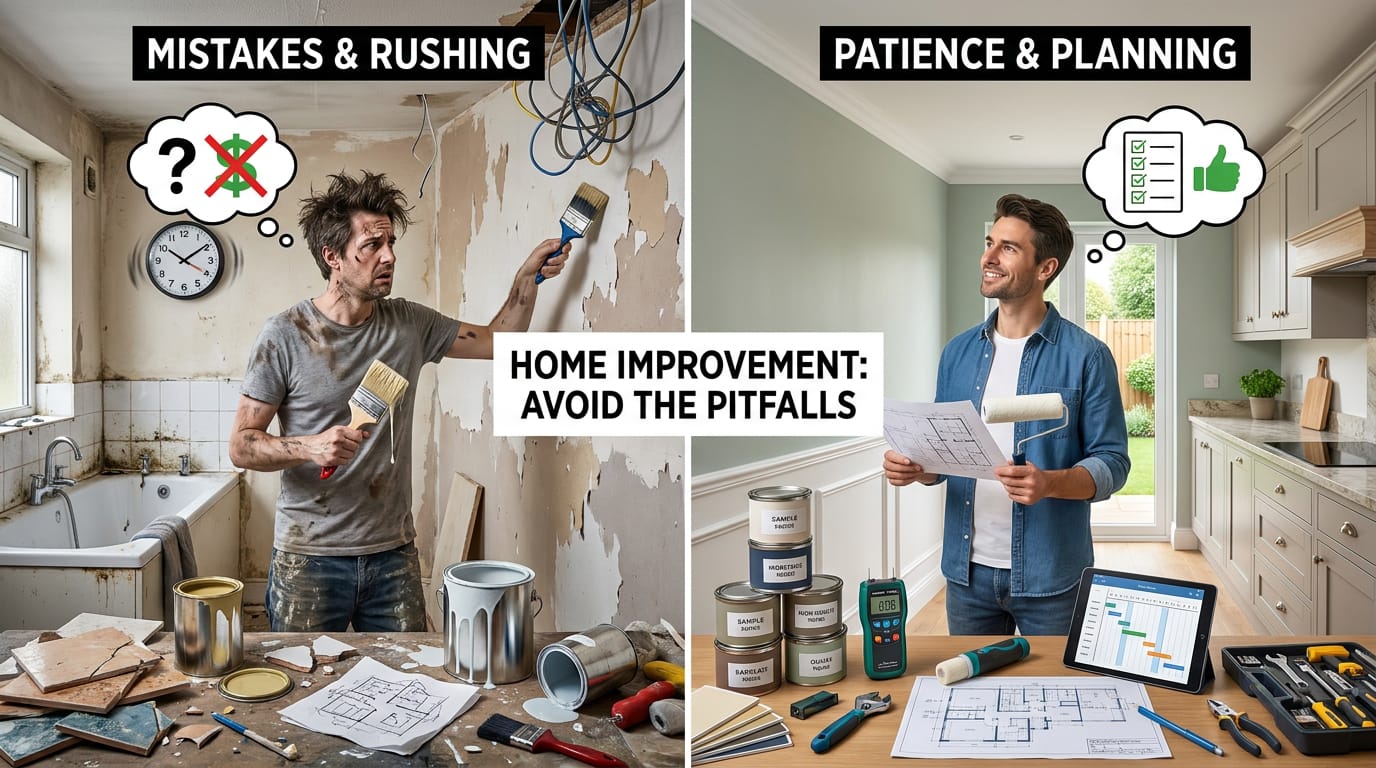
I have made most of these mistakes myself. I have also watched friends make them, read about them in renovation forums, and seen the expensive consequences play out firsthand. Home improvement is one of those areas where enthusiasm regularly outpaces judgment, and the result is wasted money, wasted weekends, and results that make you feel worse about your home than before you started.
This is not a pessimistic article. Most home improvement projects go well. But the ones that go badly tend to go badly in predictable, avoidable ways. If you go in knowing the common failure points, you can sidestep most of them. That is what this article is for.
Mistake One: Starting Without a Clear Plan
The number one reason home improvement projects go wrong, run over budget, or never get finished is that they start without a clear and specific plan. People have a vague idea of what they want — the kitchen should feel more modern, the bathroom needs freshening up, the garden could be nicer — and they start acting on that vague idea without translating it into specific decisions and a realistic budget.
A clear plan means you know exactly what is being changed, in what order, what materials you are using, where you are buying them, and what the total cost will be before you have spent a cent. It means you have identified every step in the process and thought through the dependencies — you need to finish the tiling before you can grout, you need to grout before you can reinstall the fittings, you need the fittings installed before you can put the room back to use.
The time you invest in planning is paid back multiple times over in avoided mistakes and wasted materials. This is true of small weekend projects and major home improvement renovations alike.
Mistake Two: Underestimating Time
Every home improvement project takes longer than you think it will. This is so consistently true that it should be treated as a law rather than a tendency. The YouTube video makes the project look like a three-hour Saturday morning job. The reality, accounting for prep, unexpected complications, drying times, mistakes, and cleanup, is often two or three times that.
Underestimating time leads to projects being half-finished at the end of a weekend, which leads to living with chaos for longer than expected, which leads to cutting corners to get the thing done so life can go back to normal, which leads to a result you are not happy with.
The remedy is simple but requires discipline: double your time estimate before you start. Then give yourself extra buffer on top of that. If the project genuinely finishes faster than expected, you have gained time. If it takes as long as a realistic estimate suggested, you are not under pressure.
Mistake Three: Buying Cheap Materials
There is a version of frugality that ends up being expensive. Buying the cheapest paint, the cheapest tiles, the cheapest adhesive — these decisions save money upfront and cost more in the long run through poor results, faster degradation, and the eventual need to redo the work with better materials.
This does not mean you need to buy the most expensive option. It means you should research what material quality is genuinely required for the job, and then buy the cheapest product that meets that standard rather than just the cheapest product available.
For paint: mid-range is usually fine, but avoid the very bottom tier which covers poorly and does not last. For adhesives and sealants: use the product specified for your application — using wall adhesive where floor adhesive is needed will fail, regardless of brand. For tools: buy quality if you are using them more than once; borrow or rent for single-use projects.
Mistake Four: Skipping the Prep Work
Preparation is where most DIY quality actually gets determined, but it is also the least visible and therefore the most tempting to rush. Filling holes before painting. Cleaning surfaces before tiling. Sanding between coats. Priming surfaces that need priming. Letting things dry fully before proceeding to the next step.
Skip the prep and the finished result looks amateur. The paint peels, the tiles pop off, the surface looks textured where it should be smooth. And the frustrating thing is that the additional time that proper preparation takes is usually not enormous — it is often an extra hour or two spread across a two-day project. But that hour or two is often the difference between a result you are proud of and one that quietly bothers you every time you look at it.
Mistake Five: Ignoring Moisture in Bathrooms and Kitchens
Moisture is the enemy of almost every material used in bathrooms and kitchens. Failing to properly seal, ventilate, and address damp in these rooms leads to problems that start invisible and end up as serious structural damage. A lot of the home improvement news stories about renovation disasters trace back to moisture that was not properly managed at some earlier point.
Always use appropriate products for wet areas — bathroom-specific paint, mold-resistant grout and caulk, properly waterproofed tile adhesive. Always ensure adequate ventilation — an extractor fan that actually vents outside rather than just recirculating air. Always seal grout and caulk and reseal regularly as they age.
When you are redoing a bathroom or kitchen, check carefully for any existing moisture damage before laying new surfaces over old ones. Tiling over damp or damaged substrate just hides the problem and allows it to continue developing underneath.
Mistake Six: Choosing Colors Without Testing
Paint color is one of the most common and most avoidable sources of home improvement disappointment. People pick a color from a tiny swatch card, paint an entire room, and find that the color they liked on a piece of card looks completely different on four walls under the actual light conditions of their home.
Always test paint colors on the actual wall with proper-sized sample patches — not a small square in the corner but a generous patch somewhere prominent. Look at it at different times of day and in different light conditions. Live with it for a day or two before committing to the full room. The cost of a few sample pots is trivial compared to the cost of repainting a room because the chosen color turned out to be wrong.
The same principle applies to tiles, flooring, and fabric choices — whenever possible, get samples and see them in your actual space before committing.
Mistake Seven: Poor Kitchen Decor Decisions Based on Trends
Kitchen renovations are expensive, and trends move faster than most people expect. The kitchen decorations choice that felt modern and exciting when a renovation was done can feel dated within five years if it was led primarily by trend rather than by personal taste and proven design principles.
This does not mean avoiding anything contemporary. It means making the bones of your kitchen — the cabinet style, the countertop material, the layout — in choices that are classic enough to have staying power, and allowing trends to influence the accessories and easily changed elements rather than the structural ones.
A kitchen with simple Shaker cabinets, a good natural stone or quality laminate countertop, and classic hardware will look good for twenty years. The same kitchen with a very trend-specific cabinet color or an unusual finish that was fashionable in a particular year might look dated quickly. Express personality through the things that can be changed; invest in the timeless for the things that cannot.
Mistake Eight: Tackling Projects Beyond Your Skill Level
There is a DIY overconfidence trap that catches a lot of people. You successfully paint a room, and this success gives you confidence. You then tile a bathroom, and this goes reasonably well. By the time you are watching YouTube videos about rewiring a circuit or moving a load-bearing wall, the accumulated confidence from smaller projects has created a dangerous illusion of competence in areas that require professional knowledge.
The test for whether to DIY or hire a professional is not whether you feel capable but whether the consequences of getting it wrong are serious. Painting badly means repainting. Tiling badly means re-tiling. Electrical work done badly means fire risk. Structural work done badly means collapse risk. Plumbing done badly means water damage to your home and possibly your neighbours’ homes.
For anything involving electrics beyond simple fitting changes, gas, load-bearing structure, or plumbing beyond tap replacements — hire someone qualified. The money you save doing it yourself is not worth the risk.
Mistake Nine: Neglecting the Garden
One of the most overlooked garden decor mistakes is treating the outdoor space as an afterthought after all indoor improvements are done. People pour time and money into perfect interiors and then leave the garden in a state that undermines the whole impression of the home — both for their own enjoyment and for resale value.
The garden is visible from multiple rooms in most homes. A well-maintained, thoughtfully decorated garden improves the view from inside the house, not just the outdoor experience. And for anyone selling a home, the garden is often the first impression — it is what people see arriving and it sets their expectations for everything that follows.
You do not need to be a gardener to have a good garden. Clean lines, well-maintained surfaces, healthy plants, and thoughtful outdoor furniture go a long way. The key is consistency of care rather than elaborate design.
Mistake Ten: Not Finishing Properly
This is the mistake that turns a project from something you are proud of to something that quietly bothers you. The room is painted but the light switch cover was not replaced, so there is an old yellowed fitting against a fresh white wall. The bathroom was retiled but the trim around the edge was not done properly, so there is a messy grout line visible where the tiles meet the bath. The shelves were installed but the wall damage from the old fixings was not filled, so there are two obvious holes a foot from the new shelves.
These finishing details are small in themselves but they communicate attention and care — or the lack of it. When a space has been properly finished, every element says that someone cared enough to complete the job. When finishing details are missed, the whole project has an amateurish quality that diminishes the overall result.
Build time into every project for finishing. Do not consider a project done until everything is genuinely done — holes filled, edges neat, hardware installed, surfaces clean, everything that was moved restored to its place. The last ten percent of a project often determines seventy percent of how it looks.
The Common Thread
Looking at all of these mistakes together, the common thread is rushing — rushing into projects without planning, rushing through preparation, rushing to finish. Good home improvement is patient. It plans thoroughly, executes carefully, and finishes completely. Take your time, do each step properly, and the results will consistently be worth the effort.
