

A friend of mine sold his family’s second car fourteen months ago. Not because he had to. Because he did the math one Sunday afternoon and realized the second car was costing his family just over 9,400 dollars a year to run, and that for the previous six months he had been using it almost exclusively for a 2-mile school run and a weekly supermarket trip.
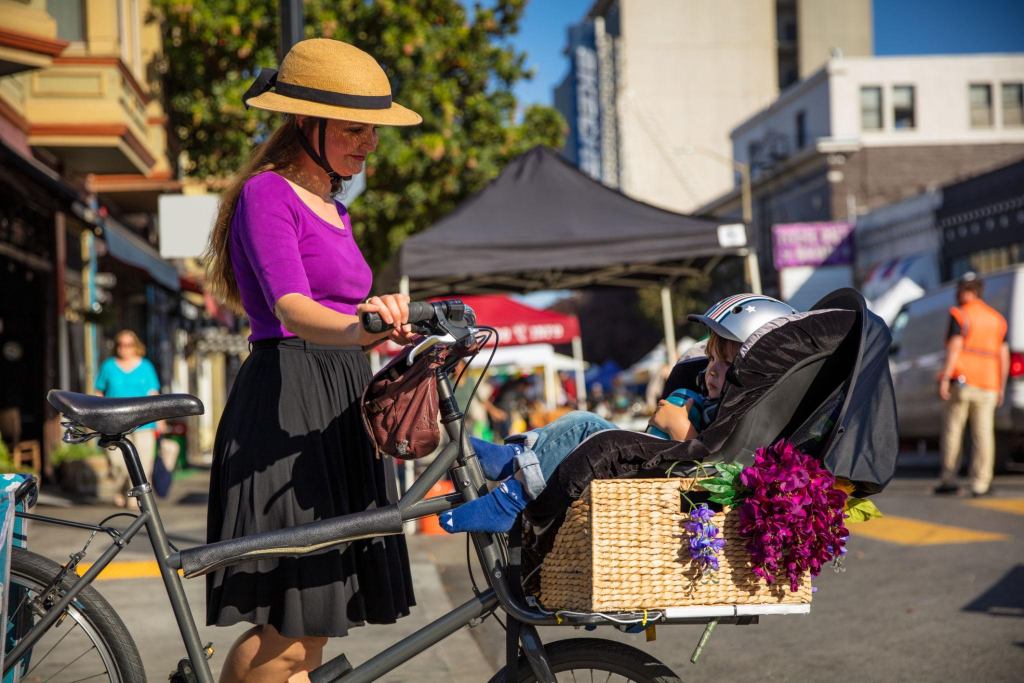
He bought a high-capacity family cargo e-bike for 4,200 dollars. Fourteen months later he has not once wished he had the car back. His wife uses the bike three days a week. His oldest daughter, now eleven, rides alongside on her own bike. The youngest two, seven and four, ride in the cargo area. The supermarket run happens on Friday mornings before school. It takes 25 minutes, including the shop.
What made this possible was not just any cargo bike. It was specifically a bike with the payload capacity to carry two children, a week of groceries, and school bags simultaneously without feeling overloaded. That capacity number, which most buyers treat as a secondary specification, turned out to be the primary reason the whole arrangement worked.
What High Payload Capacity Actually Enables
Most people think about payload capacity as a safety limit. Do not exceed this number, or something bad happens. That framing misses the more useful way to think about it.
Payload capacity is the difference between a bike that covers some of your car trips and a bike that covers most of them. A bike rated to 120 kilograms handles one child and a light shop. Comfortable, useful, limited. A bike rated to 200 kilograms handles two children, a full grocery run, sports equipment, and a rider of any size, all on the same trip. That difference in capability is the difference between a supplementary transport option and a genuine car replacement for local journeys.
The families who successfully go car-free or car-light in cities are almost universally the ones who bought bikes with more payload capacity than they initially thought they needed. The ones who bought to their current minimum requirement found themselves turning back to the car for the trips that exceeded it, which turned out to be more trips than expected.
How Modern Frames Achieve High Capacity Without Excessive Weight
The engineering challenge with high-capacity cargo bikes has always been the same: making a frame strong enough to carry very heavy loads without making the bike itself so heavy that it becomes difficult to handle when unloaded.
The current generation of family cargo bikes solves this better than any previous generation. Hydroformed aluminum tubes, which are shaped under internal pressure rather than welded from flat stock, produce lighter and stronger frame sections than traditional fabrication methods. Finite element analysis lets engineers identify exactly which parts of the frame carry the most stress and reinforce specifically those areas rather than adding weight uniformly across the whole structure.
The result is bikes that carry 180 to 200 kilograms of payload while weighing 24 to 28 kilograms themselves. Five years ago achieving those payload figures typically meant a bike weighing 32 to 38 kilograms. That weight reduction changes the riding experience meaningfully. particularly in the situations where the motor assist is not available or is at its limits.
Why the unloaded weight matters as much as the payload rating
A heavy bike that is easy to ride when the motor is running becomes a problem when the battery dies three streets from home, when you need to lift it over a kerb, or when you are carrying it into storage. The unloaded weight of a cargo bike is the weight you deal with in all the moments that are not the actual ride. It deserves as much attention as the payload figure.
The Grocery Run: Where Payload Capacity Gets Tested Weekly
The school run gets most of the attention when people talk about family cargo bikes. The grocery run is where payload capacity is actually tested regularly in practice.
A typical family weekly shop weighs somewhere between 15 and 25 kilograms depending on family size and whether you are restocking heavier items like drinks, cleaning products, and bulk dry goods. Combined with one or two children riding in the cargo area, that weekly shop pushes total payload toward 80 or 90 kilograms before the rider’s weight is added.
On a bike with a 120-kilogram payload limit and an 80-kilogram rider, that combination is already at or near the limit. On a bike with a 200-kilogram limit, there is 40 kilograms of comfortable headroom. The rides feel completely different. One feels like the bike is working at capacity. The other feels like the bike has not noticed the load.
This matters for the motor too. A well-matched motor on a bike with appropriate payload capacity runs within its comfortable operating range. A motor working near its limits generates more heat, wears faster, and delivers less consistent performance over time. High payload capacity is not just a structural specification. It has downstream effects on every other part of the bike’s performance.
Before buying, try this calculation: add your own weight, your children’s combined weight, your typical grocery load, and the weight of bags and accessories. Then check where that total sits relative to the bike’s stated payload limit. If you are within 20 kilograms of the limit on a typical loaded trip, the bike is undersized for your actual use. Look for a bike where your typical load sits 40 kilograms or more below the limit. That margin is what a comfortable, well-performing loaded ride actually feels like.
Cargo Configuration for High-Capacity Use
High payload capacity is only useful if the cargo area can actually accommodate what you need to carry. Payload limit and cargo volume are related but different things.
A bike with a 200-kilogram payload but a small cargo box that fits one child and one shopping bag has theoretical capacity that cannot be practically used. The bikes that enable genuine car replacement have both the payload rating and the cargo volume to match: front boxes wide enough for two children side by side, rear platforms long enough for panniers alongside child seats, and mounting systems that let you configure the space differently depending on whether you are doing a school run or a shopping run or both.
Pannier capacity alongside the main cargo area is worth specifically checking. Rear panniers on a longtail or alongside the front box on a box bike add meaningful grocery-carrying capacity without taking space away from the passenger area. A bike where the main cargo area is fully occupied by children and the pannier mounts are absent or poorly positioned for loaded bags forces you to choose between passengers and cargo. That choice defeats the purpose.
The Weekend Trip Possibility
Once a family cargo bike with genuine high payload capacity becomes part of daily life, something interesting happens. The range of trips it gets used for gradually expands beyond the original use case.
Weekend trips to the park with a picnic. Trips to the library with a bag of books to return and a bag of books to bring home. The farmer’s market on Saturday morning. A trip to a friend’s house across town with children, overnight bags, and a bottle of wine in the pannier.
None of these trips individually seems like a car replacement moment. Collectively, over a year, they add up to a significant reduction in short car journeys, which are both the most expensive per kilometer and the most polluting per kilometer of any driving.
The families who find this happening naturally, rather than forcing it, are almost always the ones whose bike has enough payload capacity that loading up for an unplanned trip feels easy rather than requiring calculation. Spontaneous use depends on effortless capacity.
Reading the Current Market Carefully
High payload capacity has become a marketing term as well as an engineering specification in the current market. Some bikes list impressive payload figures that reflect theoretical structural limits rather than the comfortable operating range for daily family use. A bike technically rated to 180 kilograms but optimized for 100 kilograms of daily use will feel and handle differently from one genuinely engineered for 180-kilogram loads day after day.
The guide to the best family ebikes for 2026 goes into the detail of how current-generation family ebikes compare on payload capacity, extended range, and the engineering decisions that determine whether high-capacity claims translate into high-capacity daily performance. It is worth reading before finalizing any comparison between models at similar price points.
For families who want to see high-capacity family cargo engineering applied across a complete product range, the guide to Urban Family Cargo Bikes covers how front-load and longtail configurations handle real payload demands in city environments, including the safety features and structural details that matter most when the bike is doing genuine daily heavy-load work.
What Car-Free Family Travel Actually Looks Like After a Year
My friend with the sold second car described the adjustment period as about six weeks of occasionally wishing he had not done it, followed by eight months of not thinking about it at all, followed by the realization last month that he genuinely could not remember the last time he wished the car was back.
The cargo bike did not replace every car trip. They still hire a car for longer journeys and the occasional large purchase. What it replaced was the daily fabric of short local journeys that had been using the second car for most of its life. Those trips are simply better by bike: faster in traffic, easier to park, cheaper per kilometer, and considerably more pleasant for the children who are in the cargo area rather than a car seat.
High payload capacity is what made that possible. Not motor power, not battery range, not connectivity features. The simple ability to load the bike fully without it feeling strained is what turned a useful cycling option into a genuine car replacement for the journeys that mattered most.