
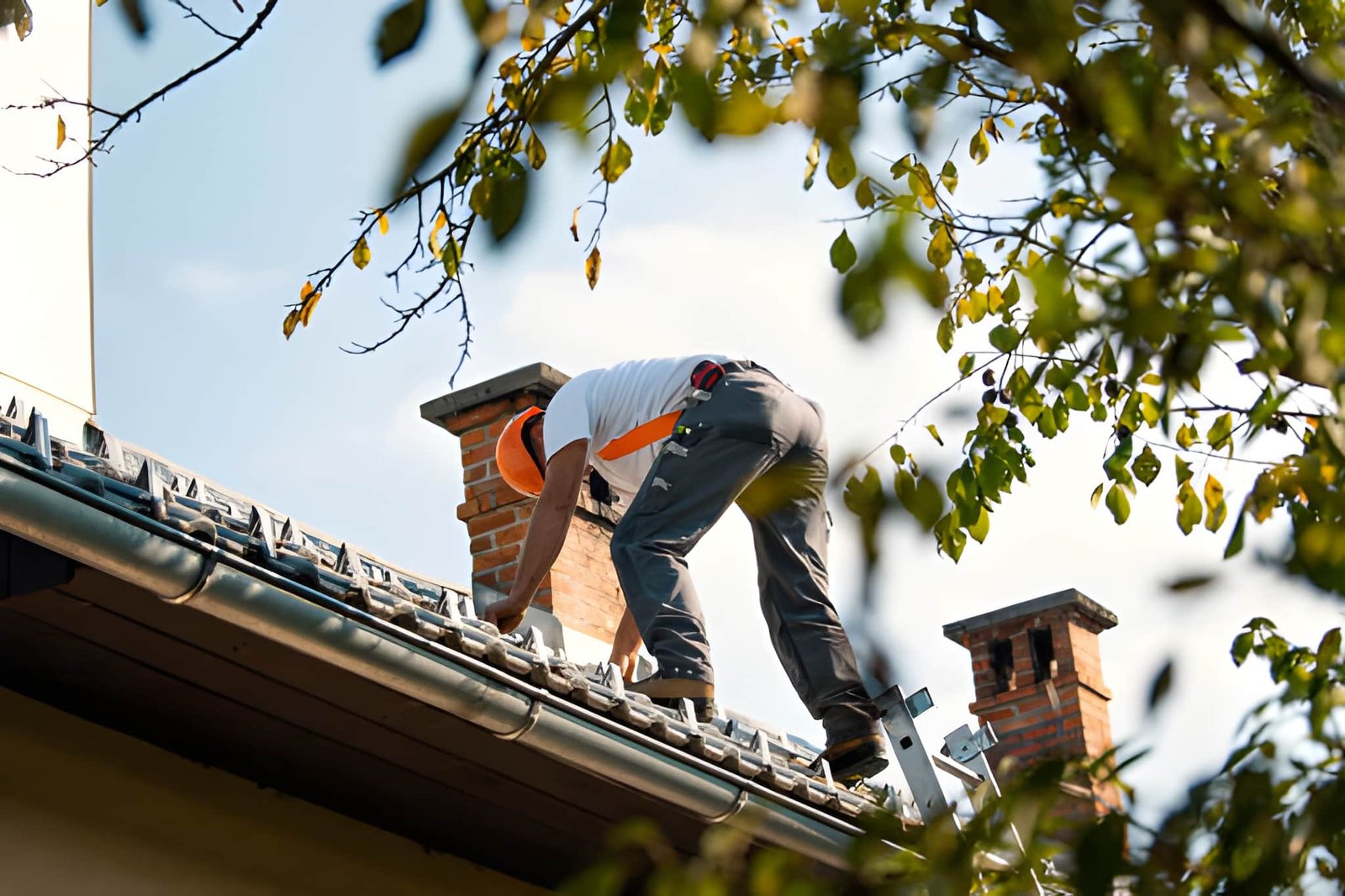
Why Northwest Indiana Exteriors Take a Harder Hit Than Most
The stretch of Indiana that runs from Hammond to Michigan City gets weather from two directions and neither one is gentle. Lake-effect snow off Lake Michigan can pile up fast—sometimes exceeding 30 inches over a single December weekend in communities like Chesterton and Portage—while summer brings hailstorms, high wind events, and UV intensity that accelerates the aging of every exterior surface on your home. That combination means your roof, siding, windows, doors, and gutters are all under more sustained stress than comparable homes in, say, central Indiana or the southern half of the state. The freeze-thaw cycle alone is responsible for an enormous amount of hidden exterior damage that homeowners don’t catch until it’s already become expensive. Water finds its way into a gap along a soffit, freezes, expands, and widens that gap. By the time a stain appears on your ceiling, the damage has typically been building for months. This is why choosing a contractor who actually works in Northwest Indiana—and understands the specific failure patterns these weather conditions produce—makes a real practical difference. A company that knows how lake-effect moisture collects in certain roof valleys, or how freeze-thaw expansion stresses vinyl siding seams differently than in drier climates, will diagnose and fix problems that a less experienced crew might patch incorrectly or miss entirely. Goodwin Construction LLC is a family-owned exterior remodeling company based in Wanatah that serves homeowners across Porter County, LaPorte County, and Starke County. Their full range of services—roofing, siding, windows, doors, and gutters—covers everything your home’s exterior needs under one contractor relationship, which matters more than most people realize when projects overlap or complications arise mid-job.
Roofing: The Project Most NWI Homeowners Delay Too Long
Roofing is the exterior project homeowners most consistently put off, and it’s also the one with the steepest consequences for waiting. A failing roof doesn’t just leak—it invites moisture into the wall assembly, attic insulation, and ceiling structure, where it quietly degrades materials that cost far more to repair than the roof itself would have. The typical asphalt shingle roof in Northwest Indiana has a real-world lifespan of 20 to 25 years under normal conditions, but that clock runs faster on north-facing slopes that stay wet longer and on homes without adequate attic ventilation. Ventilation is actually one of the most overlooked variables in roofing performance: an attic that traps heat in summer can push interior roof temperatures past 150°F, which dramatically accelerates shingle oxidation and granule loss even on premium products. Architectural shingles—the dimensional, laminated style that’s become the residential standard—are the right choice for most homes in this region. They handle wind better than older three-tab designs, carry longer warranties, and simply look better on the kinds of homes common in Porter and LaPorte counties. Owens Corning and CertainTeed both manufacture lines rated for 130-mph wind resistance, and a certified installer can access extended warranty tiers that regular installers can’t offer. Metal roofing is worth considering for homeowners planning to stay in their house for 30-plus years—the material cost is two to three times higher than architectural asphalt, but the lifespan, snow-shedding performance, and near-zero maintenance requirement make it competitive over a long horizon. Whatever material you choose, installation quality determines performance more than any other variable. The best shingle on the market underperforms when nailed at the wrong depth or laid over a compromised deck.
How to Vet an Exterior Contractor Before You Sign Anything
The exterior remodeling industry attracts storm chasers and fly-by-night operators at a higher rate than almost any other home trade, especially after significant weather events when demand spikes quickly and homeowners feel pressure to act fast. Protecting yourself takes a little time upfront but saves enormous headaches later. Here’s a practical checklist:
- Verify current insurance certificates directly. Ask for a certificate of insurance for both general liability and workers’ compensation, and request that it come straight from the insurer rather than a copy the contractor hands you. Coverage lapses happen, and a contractor working on your roof without active workers’ comp leaves you exposed to liability if someone gets hurt on your property.
- Look for manufacturer certifications. CertainTeed ShingleMaster and Owens Corning Preferred Contractor designations require documented training and installation standard adherence. These certifications unlock extended warranty tiers that generic installers simply can’t offer your home.
- Get three itemized written estimates. Not to find the lowest number, but to understand what each contractor is actually planning to do. Differences in ice-and-water shield coverage area, underlayment type, and decking inspection scope reveal a lot about how thorough each crew will be.
- Check their BBB accreditation and review history across platforms. Google, Facebook, and the BBB together paint a more complete picture than any single source. Pay attention to how a company responds to criticism—that’s often more informative than the positive reviews.
- Ask specifically about decking and wood rot procedures. Any honest contractor will tell you upfront that damaged decking discovered mid-job costs extra and give you a per-sheet price. If that conversation is vague or uncomfortable for them, keep looking.
Running through this list adds a few hours to your process and can realistically save you thousands.
Siding: More Than Just Curb Appeal
Siding does three things simultaneously: it protects your wall assembly from moisture intrusion, contributes meaningfully to your home’s thermal performance, and shapes the visual identity of the exterior. When one of those functions starts failing—usually moisture protection first—the others follow. Vinyl siding is the most common choice in Northwest Indiana and for good reason: it’s cost-effective, low maintenance, and the premium grades from manufacturers like CertainTeed and James Hardie’s vinyl lines resist fading and impact far better than builder-grade products. One thing worth knowing from field experience: a bad siding installation with good material will still fail. Specifically, siding that’s nailed too tightly doesn’t allow for thermal expansion, and on a cold January morning in Portage, that means panels buckle, gaps open, and moisture gets in exactly where it isn’t supposed to. Proper installation leaves a small gap at each fastener so the panel can move seasonally. Fiber cement siding—most commonly James Hardie board—is worth serious consideration for homeowners who want something that truly mimics wood aesthetics without wood’s vulnerability to rot and insects. It’s heavier than vinyl, costs more to install due to the labor involved in cutting and priming, and requires periodic painting, but it handles the NWI climate exceptionally well. Quality siding installation also requires attention to the details around windows, doors, and corners—exactly where moisture most commonly finds its way in. Corners cut at those intersections are where cheap work shows up three years later. Getting exterior work done by a crew that understands these junctions and executes them correctly is the difference between a 30-year exterior and one that needs remediation in a decade.
Gutters, Windows, and Doors: The Projects Homeowners Underestimate
Several exterior projects consistently get treated as afterthoughts even though they carry significant consequences when they fail. Watch for these signals that something needs attention:
- Gutters pulling away from the fascia or sagging between hangers. This usually means the original installation used too few hangers, or the fascia board behind the gutter has softened from moisture damage. Either way, a gutter that doesn’t drain properly is directing water toward your foundation, which is a problem that compounds over time.
- Window frames with soft spots, peeling paint, or visible gaps at the sill. Wood window frames in NWI homes built before the 1990s are commonly at or past the end of their useful life. Once moisture infiltration reaches the interior rough opening, you’re not just replacing a window—you’re replacing framing.
- Doors that stick in humid months and gap in dry ones. Some seasonal movement is normal, but excessive shifting means the door frame has moved—often due to settled framing or moisture in the threshold area—and a new weatherstrip won’t solve it.
- Ice dams forming along the eave edge every winter. While attic insulation and ventilation are the root cause, inadequate gutter installation that directs meltwater back toward the fascia accelerates the damage significantly.
- Drafts near window or door frames even after weatherstripping replacement. This often means the frame itself has shifted and no longer sits square in the rough opening, allowing conditioned air to escape along the entire perimeter.
Catching any of these early keeps a manageable project from becoming a cascading one. Each issue, left alone, invites moisture into an adjacent system.
What a Full Exterior Project Actually Costs in Porter County
Exterior remodeling costs in Northwest Indiana have shifted noticeably over the past several years, driven by material price increases, supply chain adjustments, and labor market changes in the construction trades. Homeowners who last replaced major exterior components a decade ago are often genuinely surprised by current numbers. Roofing on a typical 25-square home in Porter County currently runs between $9,000 and $16,000 for architectural asphalt, depending on pitch complexity, decking condition, and material grade. Siding a 2,000-square-foot home in vinyl runs roughly $8,000 to $14,000; fiber cement adds 30 to 50 percent to that range due to additional labor. Window replacements vary the most by product tier—a basic double-hung vinyl replacement window runs $400 to $700 installed, while a premium triple-pane unit in a larger size can push $1,200 to $1,800 per opening. Entry door replacement runs $1,200 to $3,500 depending on door material, glass content, and hardware package. Gutter replacement on a typical home is comparatively modest—$1,000 to $2,500 for standard K-style aluminum in most configurations, with seamless gutters being the right choice for this climate since the absence of seams dramatically reduces the leak points that matter most in freeze-thaw conditions. Bundling projects often creates real savings because contractor mobilization costs get shared across multiple scopes of work, and disruption to your home’s schedule is consolidated into a shorter window. I’ll be direct about one limitation: no estimate delivered before a full inspection is completely accurate. Hidden wood rot, damaged sheathing, and compromised flashing are only visible when material comes off, and any contractor who gives you a price without that caveat is either overestimating to cover unknowns or setting you up for a surprise conversation mid-project.
Working With a Family-Owned Company vs. a National Chain
The differences between a locally rooted family-owned exterior contractor and a national brand or regional franchise show up in specific, concrete ways that aren’t always obvious in the estimate phase. The first is accountability. A family business in Wanatah that’s been serving Porter and LaPorte counties for years has a reputation that lives entirely in that service area. Every job they do either adds to or subtracts from what neighbors, local insurance agents, and real estate professionals say about them. That accountability loop simply doesn’t function the same way for a franchise operation whose crews may rotate from a regional labor pool and whose reviews are aggregated across multiple states. The second difference is institutional knowledge. A contractor who’s worked on hundreds of homes in Chesterton, Valparaiso, and Michigan City knows which neighborhoods have clay soil drainage issues that back up against foundations in wet springs, which older subdivisions commonly have original 1960s-era decking that hides faster than expected, and which local building department has specific requirements around permit pulls that can hold a project if not handled correctly from the start. Third, and this is frankly my opinion: the communication style with a family-owned crew tends to be more direct. You typically deal with the same person from estimate through final walkthrough rather than bouncing between a sales rep, a project manager, and a crew supervisor who’ve never all met. That continuity reduces mistakes and makes problem-solving faster when something unexpected comes up. None of this means every local contractor is automatically better than every national one—the vetting steps in Section 3 still matter regardless of company size. But when the quality and pricing are comparable, I’d take the local relationship every time.
Planning Your Exterior Project Timeline: What to Know Before You Start
Exterior remodeling in Northwest Indiana has a clear seasonal rhythm, and understanding it helps you plan realistically rather than being frustrated by a process that feels slower than expected. Spring is the busiest booking season—homeowners who dealt with winter damage start calling as soon as temperatures climb, which means quality contractors often fill their April through June schedules by February or March. If you’re planning a spring project, you’re making a real mistake by waiting until April to start getting estimates. Summer offers the most predictable installation conditions—warm temperatures cure sealants properly, dry weather reduces the risk of moisture being trapped under new materials, and longer daylight hours give crews more working time per day. Fall is actually an excellent window that’s underutilized by most homeowners. September and October often have favorable weather, reduced booking competition compared to spring, and materials that install cleanly before temperatures drop enough to affect adhesive products. Winter projects are possible but come with real constraints: roofing adhesives have reduced effectiveness below 40°F, and some manufacturers won’t honor warranty claims on installations performed outside their minimum temperature guidelines, which is something worth confirming before any cold-weather project proceeds. For complex multi-trade projects—say, a roof replacement combined with full siding and gutter work—expect the planning and material lead time alone to take two to three weeks before physical work begins. Scheduling adjustments for weather, material delivery delays, and permit processing are normal, so build flexibility into any timeline that has a hard deadline. The projects that go smoothest are the ones where homeowners plan for the unexpected rather than assuming everything will proceed on the original schedule.
Final Words
Your home’s exterior is both its first defense and its first impression, and Northwest Indiana’s climate doesn’t give it an easy job. Whether you’re dealing with a single failing component or planning a comprehensive refresh, the contractor you choose matters more than almost any other variable. Ask the right questions early, get everything in writing before work starts, and give preference to crews with documented experience in this specific market. The projects that go well almost always have one thing in common: the homeowner took the time to choose carefully before the first nail went in.
Frequently Asked Questions
Q: Does Goodwin Construction LLC handle all exterior projects, or just roofing? A: Goodwin Construction handles roofing, siding, windows, doors, and gutter installation as a full-service exterior remodeling company. Taking on multiple exterior trades under one contractor simplifies scheduling and eliminates the coordination problems that come with managing several separate crews.
Q: How far does Goodwin Construction serve in Northwest Indiana? A: Their service area covers Porter County, LaPorte County, and Starke County, including communities like Valparaiso, Portage, Chesterton, Michigan City, Knox, and dozens of smaller towns throughout the region.
Q: Is financing available for larger exterior projects? A: Yes. Goodwin Construction has partnered with GreenSky to offer monthly payment plan options, which makes larger projects like full roof replacements or siding installations more accessible without requiring full payment upfront.
Q: What certifications does Goodwin Construction hold? A: They hold CertainTeed and Owens Corning certifications, are BBB accredited, and maintain a 5.0 rating across 50-plus Google reviews. Manufacturer certifications matter because they unlock extended warranty coverage beyond what uncertified installers can offer.
Q: What’s the best time of year to schedule an exterior project in NWI? A: Late summer through early fall is often the best combination of favorable weather and slightly reduced booking competition compared to spring. If you’re targeting spring work, contact contractors in January or February—quality crews in Porter and LaPorte counties typically fill their spring schedules well before the weather warms.
